
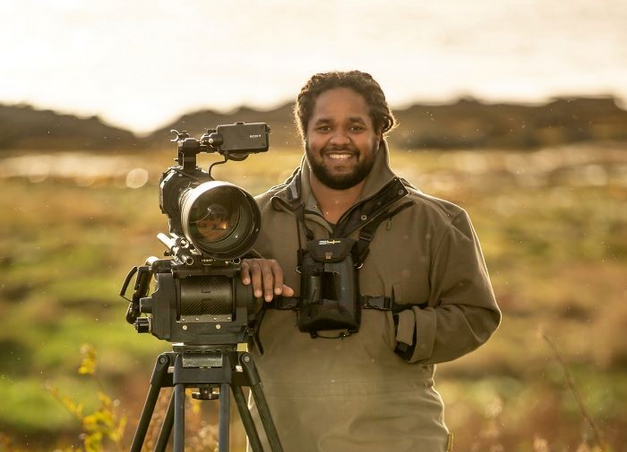
Hamza Yassin has emerged as one of the most recognisable and influential nature communicators in the UK. A wildlife cameraman, conservationist, and broadcaster, Yassin represents a new generation of environmental storytellers—those who combine scientific knowledge, lived experience, and media fluency to reconnect people with the natural world. His rise to prominence reflects not only his personal talent and passion but also a broader cultural shift toward environmental awareness, inclusivity, and authenticity in science communication.
Early Life and Background
Hamza Yassin was born in Sudan and moved to the United Kingdom at a young age. Growing up in Britain, he experienced the complexities of migration, identity, and belonging—experiences that would later inform his approach to communication and education. From an early age, Yassin developed a fascination with wildlife, particularly birds. This interest was not limited to casual observation; it became a deep and sustained passion that shaped his educational and professional choices.
He went on to study zoology, gaining a formal academic grounding in animal behaviour, ecology, and conservation science. Unlike some media figures who approach nature from an aesthetic or entertainment-driven perspective, Yassin’s work is rooted in scientific understanding. This combination of enthusiasm and expertise has become one of his defining characteristics.
From Science to Storytelling
Yassin’s early career focused on conservation education and wildlife filmmaking. He worked as a wildlife cameraman, a role that requires patience, technical skill, and a profound respect for nature. Wildlife filmmaking is often romanticised, but it is physically demanding and frequently involves long periods of isolation and uncertainty. Yassin has spoken about the challenges of the work, including harsh environments and the emotional toll of witnessing environmental degradation firsthand.
These experiences shaped his storytelling style. Rather than presenting nature as a pristine, untouched spectacle, Yassin often emphasises its fragility and interconnectedness. His work highlights not only the beauty of wildlife but also the threats it faces—from habitat loss and climate change to pollution and human encroachment.
Breakthrough into Broadcasting
Hamza Yassin became widely known to the British public through his appearances on television, particularly on nature and factual programmes. His ability to communicate complex ecological ideas in an engaging, accessible way quickly set him apart. He speaks with clarity and warmth, avoiding both condescension and excessive jargon.
A major turning point in his public profile came through his participation in Strictly Come Dancing. While at first glance this might seem unrelated to conservation, it proved transformative. His appearance on the show introduced him to a much broader audience, many of whom might not typically engage with wildlife documentaries or environmental issues.
What made Yassin’s presence on Strictly particularly striking was his authenticity. He spoke openly about his background, his love of nature, and his experiences as a person of colour in predominantly white rural and scientific spaces. Rather than diluting his identity to fit mainstream expectations, he brought his whole self to the platform—something that resonated deeply with viewers.
Representation and Inclusivity in Nature Media
One of Hamza Yassin’s most significant contributions lies in representation. Traditionally, British nature broadcasting has been dominated by a narrow demographic, often reinforcing the perception that conservation is a pursuit for a privileged few. Yassin challenges this narrative simply by existing in the space—and by excelling within it.
His visibility sends a powerful message: nature belongs to everyone. This is particularly important for young people from urban or minority backgrounds who may feel disconnected from the countryside or excluded from environmental careers. Yassin frequently speaks about the importance of access to green spaces and education, emphasising that love for nature does not require a rural upbringing or elite background.
By normalising diversity in conservation media, Yassin helps broaden the movement itself. Environmentalism, he shows, is not a niche interest but a collective responsibility.
Communication Style and Public Engagement
Hamza Yassin’s communication style is marked by enthusiasm, curiosity, and joy. He frequently expresses wonder at the natural world, reminding audiences that science is not just about data and analysis but also about emotional connection. This sense of joy is not naive; it coexists with a clear-eyed understanding of ecological crises.
He is particularly effective at engaging younger audiences, using social media and public appearances to make wildlife relatable and exciting. Whether explaining bird migration, animal behaviour, or conservation challenges, Yassin avoids alarmism while still conveying urgency. His approach aligns with a growing recognition in environmental communication that fear alone is not an effective motivator for long-term change.
Conservation Ethics and Environmental Advocacy
At the heart of Yassin’s work is a strong ethical commitment to conservation. He consistently emphasises the interconnectedness of ecosystems and the responsibility humans bear as stewards of the planet. Rather than framing conservation as a purely scientific or political issue, he presents it as a moral one—rooted in care, respect, and responsibility.
Yassin also highlights the social dimensions of environmental issues. Climate change, habitat destruction, and biodiversity loss do not affect all communities equally. By acknowledging these inequalities, he situates conservation within a broader framework of social justice.
Importantly, his advocacy is constructive rather than accusatory. He encourages practical action—supporting conservation efforts, engaging with nature locally, and making informed lifestyle choices—without positioning himself as morally superior.
Challenges and Criticism
Like many public figures, Hamza Yassin has faced challenges and criticism. Some skeptics question whether mainstream television platforms dilute the seriousness of environmental messaging. Others worry that celebrity involvement risks turning conservation into a branding exercise.
However, Yassin’s credibility rests on his genuine expertise and long-standing commitment to wildlife work. His media presence did not precede his conservation career; it emerged from it. This distinction is crucial and helps explain why he is widely respected within both scientific and public communities.
There is also the broader challenge faced by all nature communicators today: how to inspire hope in the face of accelerating environmental decline. Yassin navigates this tension carefully, balancing realism with optimism.
Cultural Impact and Future Influence
Hamza Yassin’s cultural impact extends beyond broadcasting. He represents a shift in how nature and science are communicated in the UK—toward greater inclusivity, emotional honesty, and accessibility. His success suggests that audiences are eager for voices that reflect the diversity of modern society and address environmental issues without elitism.
Looking ahead, Yassin is well positioned to shape the future of conservation communication. Whether through television, education, or advocacy, his influence is likely to grow as environmental challenges become ever more central to public life.
Conclusion
Hamza Yassin is more than a wildlife presenter or television personality. He is a bridge—between science and storytelling, between nature and urban life, between tradition and change. Through his work, he invites people to see the natural world not as something distant or decorative, but as something deeply connected to their own lives.
In an age defined by ecological uncertainty, Yassin offers a model of engagement rooted in knowledge, empathy, and joy. His message is clear: caring for nature is not the responsibility of a few specialists, but a shared human task—and one that begins with curiosity, connection, and respect.
