
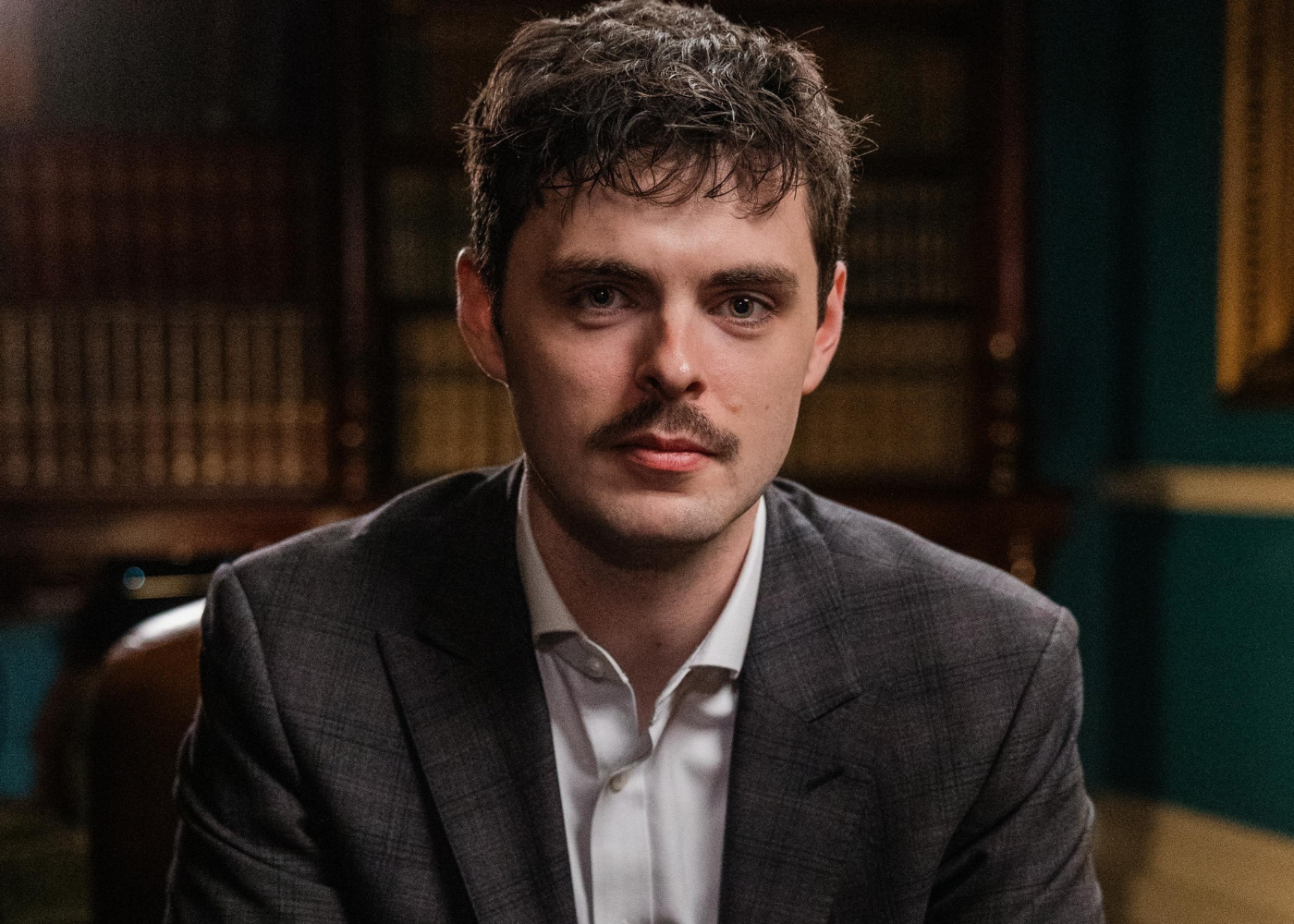
Alex O’Connor is one of the most prominent philosophical communicators to emerge from the digital age. Known online for many years as Cosmic Skeptic, O’Connor has played a significant role in bringing philosophy, theology, ethics, and rational debate to a broad audience, particularly younger people engaging with ideas through platforms such as YouTube, podcasts, and public debates. His work sits at the intersection of classical philosophy and modern cultural issues, making him a key figure in the contemporary revival of public philosophy.
Early Life and Intellectual Formation
Born in 1999 in the United Kingdom, Alex O’Connor showed an early interest in philosophical and ethical questions. Like many thinkers of his generation, his intellectual journey was shaped by online access to debates, lectures, and discussions that would previously have been confined to academic settings. He launched his YouTube channel as a teenager, initially focusing on atheism, skepticism, and critiques of religion, drawing inspiration from figures such as Christopher Hitchens, Richard Dawkins, and Sam Harris.
O’Connor later studied philosophy at the University of Oxford, a formative experience that deepened and refined his thinking. His academic background is evident in the increasing sophistication of his arguments over time. While his early content often adopted a polemical tone common in online atheist spaces, his later work reflects a greater emphasis on nuance, intellectual humility, and engagement with opposing views in good faith.
From “Cosmic Skeptic” to Alex O’Connor
One of the most telling developments in O’Connor’s career was his decision to move away from the “Cosmic Skeptic” branding and use his real name more prominently. This shift symbolized a maturation in both tone and purpose. Rather than positioning himself primarily as a critic of religion, O’Connor increasingly framed his work as an exploration of philosophy more broadly—covering ethics, metaphysics, political philosophy, and the philosophy of mind.
This transition reflects a broader trend among serious online thinkers: a movement away from identity-based labels (such as “atheist YouTuber”) toward a more open-ended intellectual identity. O’Connor has been explicit about this change, emphasizing that his goal is not to attack belief systems but to understand and critically examine the ideas that shape human life.
Engagement with Religion and Theology
Despite this broader scope, O’Connor remains best known for his engagement with religious belief, particularly Christianity. He has conducted numerous long-form interviews and debates with theologians, philosophers, and public intellectuals, including figures such as William Lane Craig, Bishop Robert Barron, and Jordan Peterson. These conversations are notable for their civility and depth, standing in contrast to the more adversarial style that often characterizes online religious debate.
O’Connor’s critiques of religion typically focus on philosophical arguments rather than caricatures. He engages seriously with classical arguments for the existence of God—such as the cosmological, teleological, and moral arguments—while articulating objections grounded in logic, epistemology, and moral philosophy. Importantly, he often acknowledges the emotional, cultural, and existential dimensions of religious belief, even when he ultimately rejects its truth claims.
This approach has earned him respect from both supporters and critics. While committed believers may disagree with his conclusions, many recognize his sincerity and intellectual honesty. Likewise, secular audiences often appreciate his willingness to concede uncertainty and avoid overconfidence—traits that are sometimes lacking in public debates about religion.
Ethical Thought and Veganism
Another major theme in O’Connor’s work is ethics, particularly animal ethics and veganism. He has been a vocal advocate for veganism on moral grounds, arguing that causing unnecessary suffering to sentient beings is indefensible. Drawing on utilitarian reasoning, as well as broader considerations of moral consistency, O’Connor challenges common justifications for meat consumption and animal exploitation.
What distinguishes his advocacy is the philosophical rigor with which he approaches the topic. Rather than relying solely on emotional appeals, he carefully examines arguments related to moral status, necessity, tradition, and personal freedom. He also engages critically with counterarguments, including those related to cultural practices and economic realities.
In doing so, O’Connor places himself within a long tradition of moral philosophy that seeks to expand the circle of moral concern—a tradition associated with thinkers such as Jeremy Bentham and Peter Singer. His work has contributed to bringing serious ethical discussion about animal rights into mainstream online discourse.
Style, Method, and Intellectual Character
A defining feature of Alex O’Connor’s work is his method. He favors long-form conversations over soundbites, careful questioning over rhetorical flourishes, and clarity over spectacle. His interviewing style is particularly notable: he listens attentively, allows guests to fully articulate their views, and responds with precise, well-considered questions rather than aggressive rebuttals.
This approach reflects a commitment to what might be called intellectual virtue—traits such as honesty, patience, and openness to correction. O’Connor has publicly acknowledged changes in his own views over time, reinforcing the idea that philosophy is a process rather than a fixed set of conclusions.
In an era dominated by algorithm-driven outrage and polarized discourse, this method is both rare and valuable. O’Connor’s work demonstrates that thoughtful, respectful dialogue can still attract large audiences, suggesting that there is a genuine appetite for depth and seriousness in public discussion.
Cultural and Philosophical Significance
Alex O’Connor represents a new model of philosopher: one who operates outside traditional academic publishing while remaining deeply informed by academic philosophy. His success challenges the assumption that serious philosophical engagement must remain confined to universities or scholarly journals. Instead, he exemplifies how digital platforms can democratize access to complex ideas without necessarily oversimplifying them.
At the same time, his work raises important questions about the future of philosophy. Can online discourse maintain rigor without institutional gatekeeping? How should philosophers balance accessibility with depth? O’Connor does not provide definitive answers, but his career offers a compelling case study in how philosophy might adapt to contemporary media landscapes.
Criticisms and Limitations
Like any public intellectual, O’Connor has faced criticism. Some argue that his focus on debate and argumentation risks framing philosophy as a competitive exercise rather than a collaborative search for truth. Others suggest that online platforms, by their nature, encourage performative reasoning, even when intentions are sincere.
There are also debates about whether his ethical positions—particularly on veganism—adequately account for practical complexities such as socioeconomic constraints. While O’Connor often acknowledges these issues, critics contend that philosophical clarity does not always translate easily into lived reality.
Nevertheless, these criticisms are part of the broader conversation his work stimulates, and O’Connor himself frequently engages with such challenges openly.
Conclusion
Alex O’Connor stands as one of the most influential philosophical voices of his generation. Through his commitment to reasoned dialogue, ethical reflection, and intellectual humility, he has helped bring serious philosophy into the public sphere in a way that is both accessible and substantive. Whether discussing the existence of God, the morality of animal consumption, or the nature of belief itself, O’Connor exemplifies a form of public philosophy that prioritizes understanding over victory and inquiry over ideology.
In a time marked by polarization and superficial debate, his work serves as a reminder that careful thinking, honest questioning, and respectful disagreement remain not only possible but essential.
