
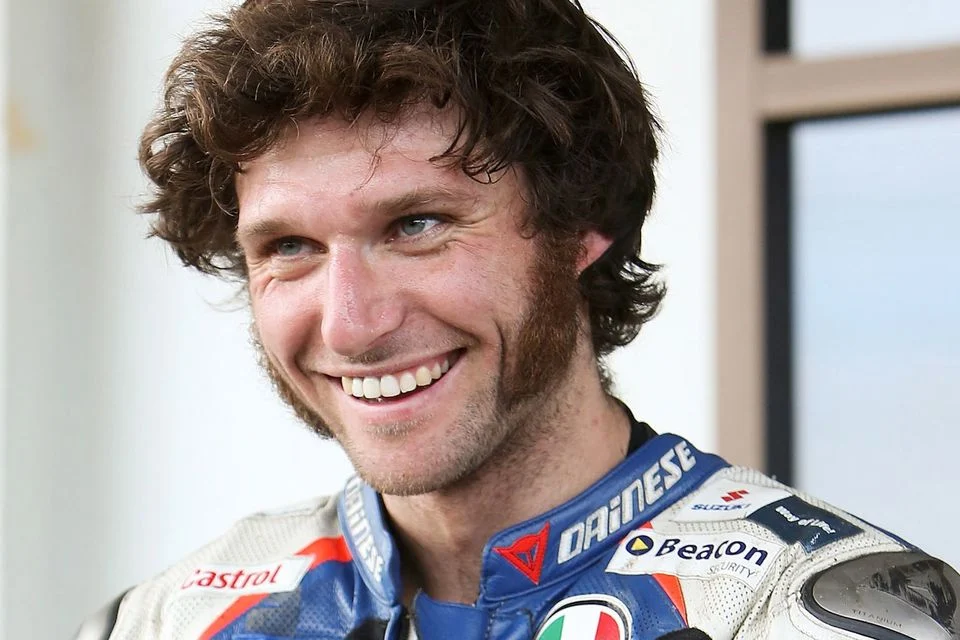
Guy Martin is one of the most distinctive public figures in modern Britain. Part motorcycle racer, part engineer, part television presenter, and entirely unapologetic about who he is, Martin has carved out a unique place in popular culture. Known best for his success at the Isle of Man TT and for a series of engineering and endurance television programmes, Guy Martin represents a rare blend of old-school craftsmanship, fearless ambition, and down-to-earth honesty.
Unlike many media personalities, Martin’s appeal does not rest on polish or celebrity. Instead, it comes from competence, curiosity, and a deep respect for hard work. He is a man who races motorcycles at extreme speeds, rebuilds engines with his own hands, and speaks openly about fear, failure, and the satisfaction of doing a job properly.
Early Life and Background
Guy Martin was born on 4 November 1981 in Grimsby, Lincolnshire. He grew up in a working-class environment shaped by practical skills, mechanical knowledge, and a strong sense of independence. His father was a lorry driver and motorcycle racer, and it was through him that Martin was introduced to engines and bikes at a young age.
From childhood, Martin showed a natural aptitude for mechanics. He left school without pursuing higher academic qualifications, instead training as a fitter and later becoming a skilled truck mechanic. This grounding in engineering is central to understanding Martin’s outlook on life. He has often expressed pride in being a tradesman and has consistently defended the value of practical skills in a society that often prioritises academic achievement.
Martin’s mechanical background is not a hobby or aesthetic—it is the foundation of everything he does. Whether racing, presenting, or attempting engineering challenges, he approaches problems as a hands-on engineer first.
Motorcycle Racing and the Isle of Man TT
Guy Martin is best known for his motorcycle racing career, particularly at the Isle of Man Tourist Trophy (TT), one of the most dangerous motorsport events in the world. The TT is held on public roads, with riders reaching speeds in excess of 200 mph, navigating narrow streets, stone walls, and unforgiving terrain.
Martin competed at the TT from 2004 onwards, achieving multiple podium finishes across different classes. Although he never won a TT race, his consistency, speed, and determination earned him immense respect within the racing community. His rivalry with other top riders, including Michael Dunlop and Ian Hutchinson, became a central narrative of the event during his racing years.
What set Martin apart was his attitude to risk. He never portrayed himself as fearless. On the contrary, he frequently spoke about fear as a necessary and healthy part of racing. In his view, fear sharpened focus and prevented complacency. This honesty distinguished him from the stereotypical image of the reckless racer and made his perspective resonate with a wider audience.
Transition to Television
Guy Martin’s move into television came naturally, largely because he refused to adopt a traditional presenter persona. His first major television success came with Channel 4, where he appeared in programmes that combined engineering challenges, physical endurance, and historical exploration.
Shows such as Guy Martin’s Speed, How Britain Worked, Guy Martin’s Proper Jobs, and Our Guy in India showcased his ability to engage with complex technical subjects while remaining relatable. He did not pretend to be an expert in everything; instead, he approached each challenge as a learner, guided by skilled professionals and driven by genuine curiosity.
This approach made his programmes feel authentic. Viewers were not watching a polished presenter delivering rehearsed lines, but a working engineer grappling with real problems, asking practical questions, and occasionally getting things wrong. His Midlands–Lincolnshire accent, blunt humour, and refusal to engage in celebrity culture reinforced his image as an outsider in the media world.
Engineering, Speed, and Pushing Limits
A recurring theme in Guy Martin’s television work is the pursuit of speed and mechanical efficiency. He has taken part in record-breaking attempts involving bicycles, motorcycles, and human-powered vehicles, often exploring the physics and engineering principles behind them.
One of his most notable projects was his attempt to break the world land speed record for a tandem bicycle. The project combined aerodynamics, material science, human endurance, and mechanical design. Although the attempt ended in failure due to injury, Martin treated the experience as a valuable learning process rather than a defeat.
This attitude reflects a broader philosophy: progress comes from experimentation, risk, and the willingness to fail. Martin often emphasises that failure is not something to be avoided, but something to be understood.
Relationship with Risk and Fear
Guy Martin’s relationship with danger is nuanced. While he has willingly engaged in high-risk activities, he has also been vocal about knowing when to stop. In 2017, he announced his retirement from professional motorcycle racing, citing a desire to prioritise family life and long-term health.
This decision surprised many fans, but it reinforced Martin’s reputation for independent thinking. He has consistently rejected the idea that success must involve constant escalation. For him, knowing one’s limits is a form of intelligence rather than weakness.
His openness about fear, injury, and doubt stands in contrast to the glorification of risk often seen in extreme sports media. By demystifying danger, Martin offers a more responsible and realistic perspective.
Personality, Values, and Public Image
Guy Martin’s public image is built on authenticity. He is famously uncomfortable with fame and has repeatedly expressed discomfort with the trappings of celebrity culture. He continues to work as a truck mechanic alongside his television career, a choice that reinforces his commitment to staying grounded.
He values craftsmanship, honesty, and effort over status or recognition. In interviews, Martin often criticises what he sees as a lack of respect for skilled manual labour in modern society. He argues that practical knowledge—how things work, how to fix them, how to build them—is essential to cultural resilience.
This stance has made him a cultural figurehead for vocational skills and engineering trades, particularly among young people who may feel alienated by traditional academic pathways.
Criticism and Limitations
Despite widespread admiration, Guy Martin has faced criticism. Some argue that his television programmes romanticise risk or reinforce traditional masculine stereotypes. Others suggest that his rejection of celebrity culture can sometimes come across as dismissive of broader social issues.
However, Martin’s defenders argue that his value lies precisely in his refusal to conform. He does not present himself as a role model in a conventional sense, but as an example of someone who follows his own values with consistency.
Legacy and Cultural Impact
Guy Martin’s legacy is not defined by trophies or ratings, but by influence. He has helped bring engineering, mechanics, and skilled trades into mainstream conversation, presenting them as intellectually rich and culturally valuable.
He has also challenged assumptions about intelligence, success, and ambition. By succeeding on his own terms, Martin demonstrates that expertise and fulfilment can be found outside traditional professional or academic hierarchies.
For many viewers, he represents a form of British identity rooted in practicality, resilience, and quiet pride in one’s work.
Conclusion
Guy Martin is a modern British original. Racer, engineer, and reluctant television star, he embodies a philosophy that values competence over image, curiosity over comfort, and integrity over acclaim. His life and career challenge the idea that success must follow a prescribed path.
In a world increasingly dominated by digital abstraction and superficial metrics of achievement, Guy Martin reminds us of the enduring importance of making things, fixing things, and understanding how the world works at a fundamental level. His story is not about being the best—it is about being genuine, capable, and unafraid to do things properly.
