
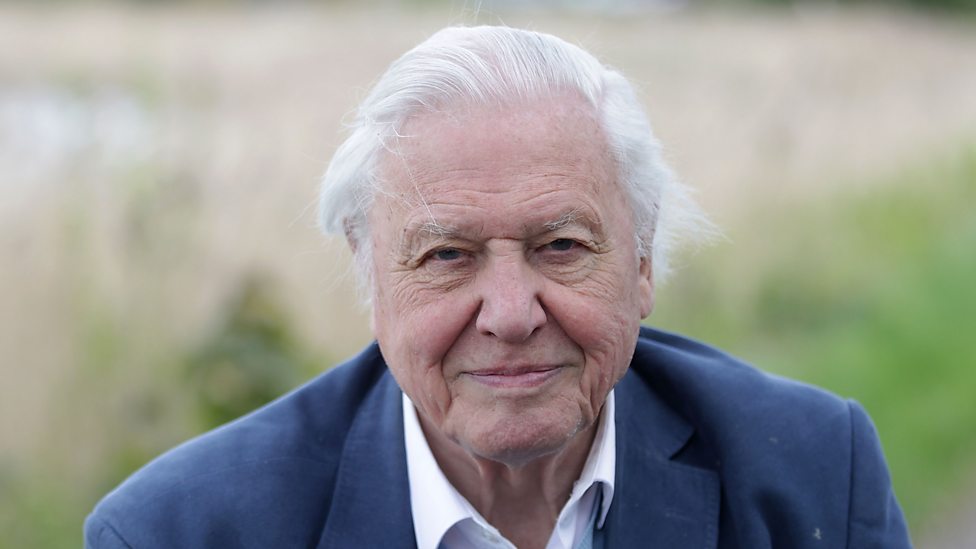
Sir David Attenborough is one of the most respected and influential broadcasters, natural historians, and environmental communicators in modern history. For more than seven decades, he has brought the wonders of the natural world into homes across the globe, shaping how generations understand wildlife, evolution, and the fragile balance of Earth’s ecosystems. More than just a narrator of nature documentaries, Attenborough has become a moral voice for environmental responsibility and a symbol of humanity’s relationship with the planet.
Early Life and Education
David Frederick Attenborough was born on 8 May 1926 in Isleworth, Middlesex, and grew up in Leicester, where his father was principal of University College Leicester. From an early age, Attenborough showed an intense curiosity about the natural world. As a child, he collected fossils, stones, and natural specimens, often bringing them home to examine and catalogue. This early fascination with nature was encouraged by his family and by his access to academic environments through his father’s work.
Attenborough was educated at Wyggeston Grammar School for Boys before serving two years of National Service in the Royal Navy. Following this, he studied Natural Sciences at Clare College, Cambridge, specialising in geology and zoology. His academic training gave him a strong scientific foundation, which would later distinguish his broadcasting from purely entertainment-focused wildlife programming.
Entry into Broadcasting and the BBC
David Attenborough joined the BBC in 1952, initially training as a producer. At the time, television was still a relatively new medium, and natural history programming was limited. His early career coincided with a period of experimentation and expansion in broadcasting, allowing him to help shape an entirely new genre.
His first major breakthrough came with the series Zoo Quest, which aired in the mid-1950s. Unlike previous wildlife programmes, Zoo Quest involved filming animals in their natural habitats rather than in captivity. This was revolutionary for its time and marked the beginning of Attenborough’s commitment to showing wildlife as part of complex ecosystems rather than isolated curiosities.
Zoo Quest also introduced Attenborough as an on-screen presenter, although he initially resisted appearing in front of the camera. His calm, inquisitive style quickly resonated with audiences, setting the tone for decades of nature broadcasting.
Innovating Natural History Television
Throughout the 1960s and 1970s, Attenborough played a major role not only as a presenter but also as a senior BBC executive. He served as Controller of BBC Two from 1965 to 1969 and later as Director of Programmes. During this time, he was instrumental in introducing colour television to the UK and commissioning landmark cultural programmes, including Civilisation and Monty Python’s Flying Circus.
Despite his success as an executive, Attenborough ultimately chose to return to programme-making, where his true passion lay. This decision led to the creation of the Life series, which would define his legacy.
The Life Series and Global Recognition
Beginning with Life on Earth in 1979, David Attenborough embarked on one of the most ambitious documentary projects ever attempted. The Life series aimed to tell the complete story of life on Earth, from its earliest origins to the present day. Subsequent series included The Living Planet, The Trials of Life, Life in the Freezer, The Blue Planet, Planet Earth, and Life, among others.
These programmes combined cutting-edge filmmaking techniques, scientific research, and Attenborough’s distinctive narration. His voice—measured, precise, and quietly enthusiastic—became synonymous with natural history itself. Importantly, Attenborough never spoke down to his audience. He assumed intelligence and curiosity, explaining complex biological processes in clear, elegant language.
The success of the Life series made Attenborough a global figure. His programmes were broadcast internationally, translated into multiple languages, and used extensively in education. They helped establish wildlife documentaries as a serious and respected genre rather than niche entertainment.
Relationship with Science and Conservation
While David Attenborough is often described as a naturalist, he is careful to distinguish himself from scientists who conduct original research. His role has been that of a communicator—someone who translates scientific knowledge into compelling stories. Nevertheless, his work has always been closely aligned with the scientific community, and he has consistently relied on expert collaboration.
Over time, Attenborough’s documentaries increasingly reflected the growing environmental crises facing the planet. Early programmes focused primarily on exploration and discovery. Later works, such as The Blue Planet II and Our Planet, placed much greater emphasis on climate change, habitat destruction, pollution, and biodiversity loss.
Attenborough has spoken openly about how his perspective changed over the decades. Witnessing the rapid degradation of ecosystems around the world transformed him from a detached observer into an advocate for conservation. He has described himself as having moved from “wonder” to “warning.”
Climate Change and Moral Authority
In the later stages of his career, David Attenborough emerged as one of the most trusted voices on climate change and environmental responsibility. His warnings are particularly powerful because they are grounded in a lifetime of observation rather than ideology. He has seen coral reefs bleach, forests disappear, and wildlife populations collapse within a single human lifetime.
Attenborough has addressed world leaders, spoken at the United Nations, and supported international efforts to protect biodiversity. His 2020 documentary David Attenborough: A Life on Our Planet was framed as a personal witness statement, combining autobiography with a stark assessment of humanity’s impact on Earth.
What distinguishes Attenborough’s advocacy is his tone. He avoids sensationalism and despair, instead emphasising both the severity of the problem and the possibility of recovery if action is taken. This balance of urgency and hope has helped his message reach audiences across political and cultural divides.
Style, Voice, and Cultural Impact
David Attenborough’s cultural influence is difficult to overstate. His narration style—gentle, precise, and infused with quiet awe—has become iconic. Unlike many presenters, he places himself at the service of the subject rather than the centre of attention. His presence enhances rather than distracts from the natural world.
Attenborough’s voice has become so familiar that it is often imitated and parodied, a testament to its recognisability. Yet even parody reflects affection and respect. Few broadcasters achieve such universal trust and admiration.
His programmes have inspired countless people to pursue careers in biology, ecology, conservation, and environmental science. They have also influenced public attitudes towards animals, shifting perceptions from exploitation to stewardship.
Criticism and Limitations
Despite widespread admiration, Attenborough’s work has not been without criticism. Some argue that nature documentaries can create an illusion of untouched wilderness, obscuring the extent of environmental damage. Others suggest that focusing on spectacular wildlife risks neglecting less visually appealing but equally important ecological issues.
Attenborough has acknowledged these concerns, particularly in his later work, and has actively sought to address them by highlighting human responsibility and ecological interconnectedness. Rather than denying criticism, he has evolved in response to it.
Legacy and Enduring Relevance
Sir David Attenborough’s legacy extends far beyond television. He has shaped how humanity sees itself in relation to the natural world. At a time when environmental collapse is one of the defining challenges of the 21st century, his voice carries exceptional moral authority.
What makes Attenborough unique is not just his longevity, but his adaptability. He has embraced new technologies, from high-definition filming to streaming platforms, ensuring his message remains relevant to younger generations.
Conclusion
David Attenborough is more than a broadcaster; he is a witness to the living history of the planet. His life’s work charts humanity’s growing understanding of nature—and its growing responsibility toward it. Through clarity, humility, and unwavering respect for the natural world, Attenborough has educated, inspired, and warned generations.
In an age of noise and division, his calm voice reminds us of something fundamental: that humanity is not separate from nature, but part of it—and that our future depends on how well we remember that truth.
