
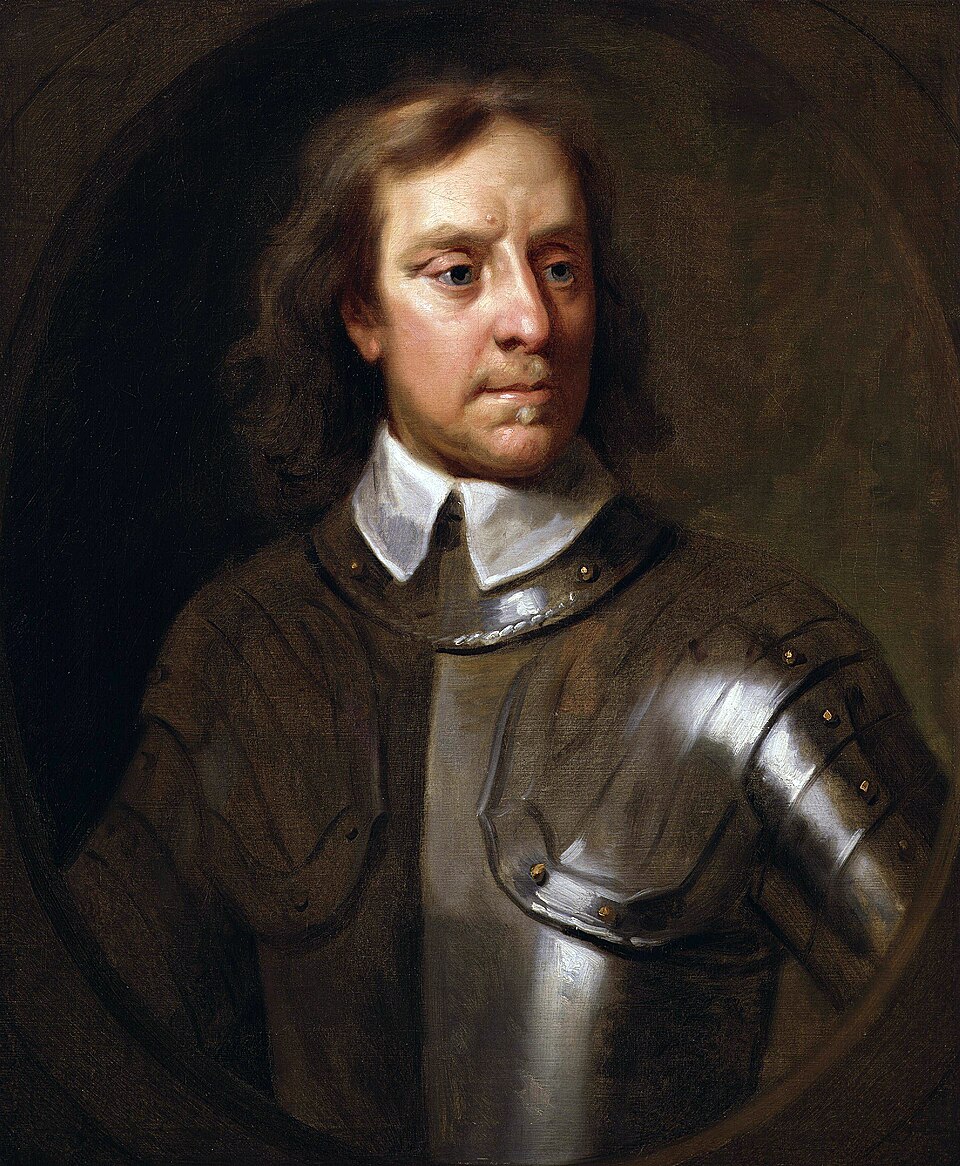
Oliver Cromwell: Life, Power, and Legacy
Oliver Cromwell (1599–1658) remains one of the most complex and controversial figures in British history. To some, he was a hero of liberty who challenged absolute monarchy and defended Parliament’s rights; to others, he was a regicide, military dictator, and religious zealot whose actions brought suffering, particularly in Ireland. Cromwell’s life and career were inseparable from the English Civil Wars and the revolutionary upheavals of the mid‑seventeenth century, a period that permanently altered the relationship between crown, Parliament, army, and people. Understanding Cromwell requires examining his background, beliefs, military achievements, political rule, and long‑term legacy.
Early Life and Background
Oliver Cromwell was born on 25 April 1599 in Huntingdon, into a family of minor gentry. His social status was modest by the standards of England’s ruling elite, but it placed him firmly within the educated, property‑owning class that increasingly resented royal interference in local governance. Cromwell was distantly related to Thomas Cromwell, chief minister to Henry VIII, though the family’s wealth and influence had declined significantly by Oliver’s time.
Cromwell was educated at Huntingdon Grammar School and briefly attended Sidney Sussex College, Cambridge, an institution known for its strong Puritan influence. Although he did not complete his degree, the religious atmosphere of Cambridge left a lasting mark on him. In 1620, he married Elizabeth Bourchier, the daughter of a London merchant family, which strengthened his connections to the Puritan middle classes.
During his early adult life, Cromwell experienced what he later described as a profound religious conversion. He came to see himself as a sinner redeemed by God’s grace, chosen for a divine purpose. This intense Puritan faith shaped his worldview and later justified, in his own mind, the extraordinary actions he would take during England’s revolutionary crisis.
Political Context and the Road to War
Cromwell entered Parliament in 1628 as MP for Huntingdon, during a period of growing tension between King Charles I and Parliament. Charles’s belief in the divine right of kings, combined with his attempts to rule without Parliament and impose unpopular taxes, alienated many MPs. Religious conflict further deepened divisions, as many Protestants feared that Charles and his advisers were steering England toward Catholicism.
After 1629, Charles ruled without Parliament for eleven years, a period known as the Personal Rule. When financial and military pressures forced the king to recall Parliament in 1640, long‑standing grievances resurfaced. Cromwell returned to Parliament as MP for Cambridge and quickly emerged as a vocal critic of royal authority and episcopal church structures.
By 1642, political compromise had collapsed, and England descended into civil war. Cromwell sided firmly with Parliament, believing that resistance to the king was not only lawful but divinely sanctioned.
Military Leadership and the New Model Army
Cromwell’s greatest historical impact arguably lies in his military leadership. At the outbreak of the First English Civil War, he had little formal military experience. Nevertheless, he proved to be a gifted organizer and disciplinarian. He raised a cavalry unit known as the “Ironsides,” whose soldiers were selected for their religious commitment and moral discipline rather than aristocratic background.
Cromwell believed that godly soldiers fighting for a righteous cause would outperform traditional royalist forces. His cavalry gained a reputation for cohesion, restraint, and effectiveness. This approach challenged the social hierarchy of the time, as promotion was increasingly based on merit rather than birth.
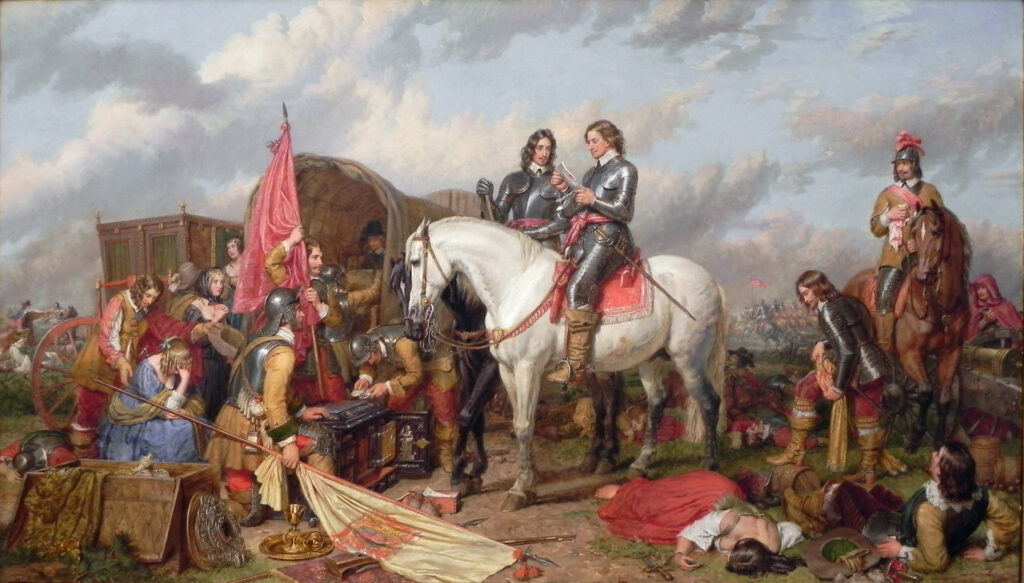
In 1645, Parliament reorganized its forces into the New Model Army, a centralized, professional fighting force. Cromwell played a key role in its formation and served as Lieutenant‑General of the cavalry. The New Model Army decisively defeated the royalists at the Battle of Naseby in 1645, effectively ending Charles I’s ability to win the war.
Regicide and the Commonwealth
Although the king was defeated militarily, the question of England’s future government remained unresolved. Cromwell initially supported negotiations with Charles I, hoping for a constitutional settlement. However, Charles’s continued plotting and refusal to compromise convinced Cromwell and other army leaders that peace was impossible while the king lived.
In 1649, Charles I was tried for treason against his own people and executed. Cromwell signed the death warrant, an act that shocked Europe and permanently stained his reputation among monarchists. England was declared a republic, or Commonwealth, governed initially by the Rump Parliament and later dominated by the army.
Cromwell’s support for regicide was driven by a belief that Charles was a “man of blood” whose actions had caused widespread suffering. To Cromwell, the execution was a grim but necessary act to secure God’s will and prevent further conflict.
Campaigns in Ireland and Scotland
Cromwell’s military campaigns in Ireland and Scotland remain among the most controversial aspects of his career. In 1649, he led a brutal campaign in Ireland against Catholic and royalist forces. The massacres at Drogheda and Wexford, where large numbers of soldiers and civilians were killed, earned Cromwell enduring hatred in Irish historical memory.
Cromwell justified these actions as divine punishment and a warning to future opponents. While some historians argue that such brutality was not unusual by seventeenth‑century standards, others emphasize the lasting trauma and dispossession inflicted on the Irish population through land confiscations and religious repression.
In Scotland, Cromwell faced a more conventional military campaign. His forces defeated the Scots at Dunbar (1650) and Worcester (1651), securing the Commonwealth’s control over England, Scotland, and Ireland.
Lord Protector and Domestic Rule
In 1653, frustrated with parliamentary infighting and inefficiency, Cromwell dissolved the Rump Parliament by force. He later accepted the title of Lord Protector under the Instrument of Government, effectively becoming head of state. Although he rejected the crown, his rule bore many similarities to monarchy.
As Lord Protector, Cromwell attempted to balance authority with reform. He supported religious toleration for most Protestant groups and allowed Jews to return to England after centuries of exclusion. At the same time, he imposed strict moral regulations influenced by Puritan values, discouraging activities such as theatre, gambling, and excessive drinking.
Cromwell ruled with the backing of the army and struggled to govern through civilian institutions. His reliance on Major‑Generals to administer regions of England highlighted the authoritarian nature of his regime. Despite genuine efforts at reform, his government failed to establish a stable political system that could survive without him.
Death and Restoration
Oliver Cromwell died on 3 September 1658, possibly from malaria or kidney disease. His son, Richard Cromwell, succeeded him as Lord Protector but lacked his father’s authority and military support. Within two years, the Protectorate collapsed, and the monarchy was restored under Charles II in 1660.
Cromwell’s body was posthumously exhumed, symbolically executed, and displayed, an act of revenge that reflected the bitterness surrounding his rule. Yet the Restoration did not erase the changes brought about during the revolutionary period.
Legacy and Historical Debate
Cromwell’s legacy remains deeply divided. He played a central role in limiting monarchical power and advancing the principle that rulers are accountable to the people, or at least to Parliament. The professional army he helped create transformed military organization in Britain, and the political ideas debated during his lifetime influenced later constitutional developments.
Conversely, his use of military force in politics, suppression of dissent, and harsh campaigns in Ireland raise serious moral questions. Cromwell was neither a simple champion of democracy nor merely a tyrant; he was a product of a turbulent age, driven by sincere religious conviction and a belief that he was acting in accordance with God’s will.
Conclusion
Oliver Cromwell stands as one of the most significant figures in English and British history. His rise from minor gentry to ruler of three kingdoms illustrates the extraordinary possibilities opened by revolution, while his failures highlight the difficulties of translating radical change into lasting political stability. Whether viewed as a hero, villain, or tragic figure, Cromwell’s impact on the development of the British state and its constitutional traditions is undeniable. His life continues to provoke debate, reminding us that the struggle between authority, conscience, and power is rarely simple or settled.
