
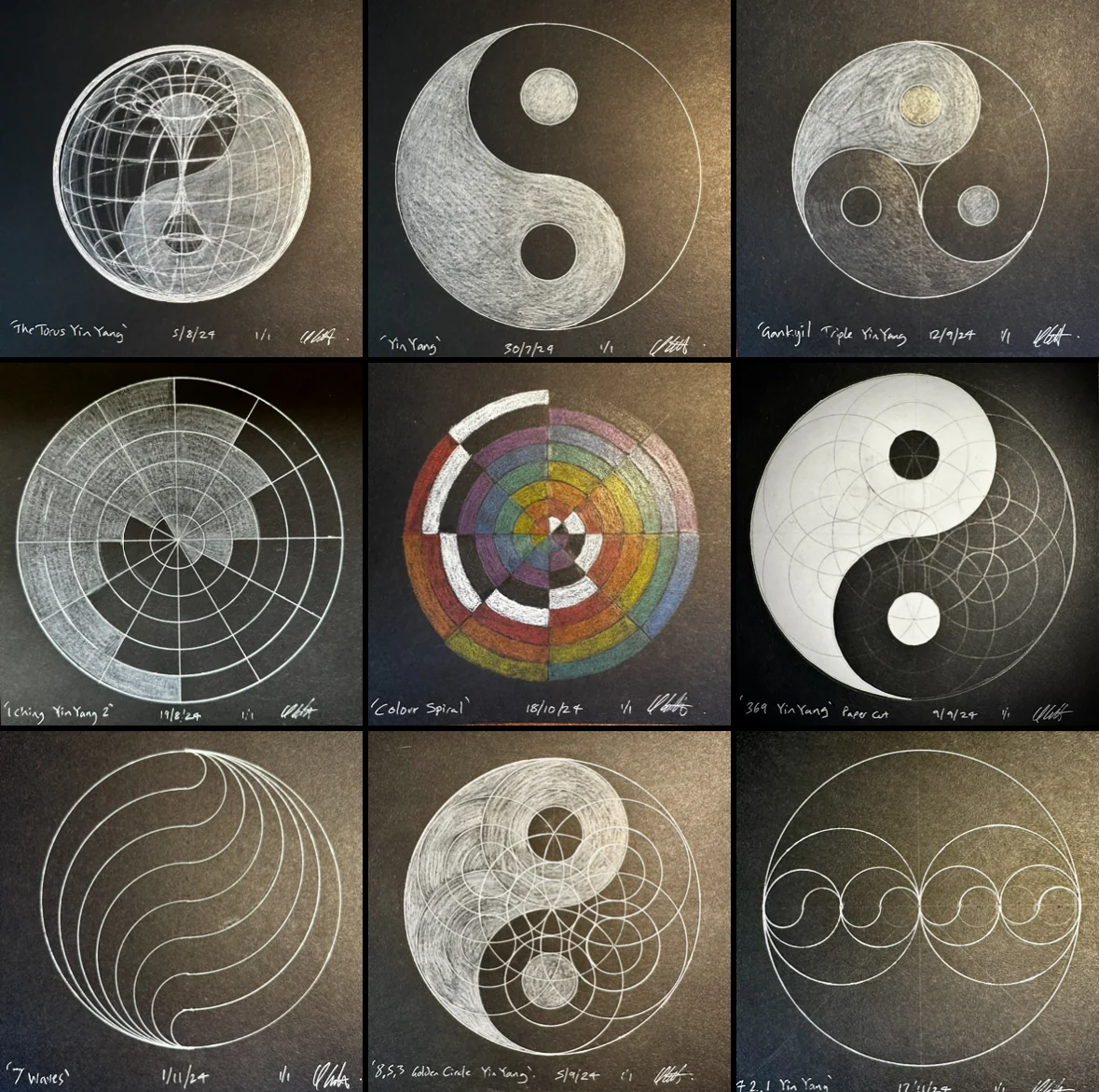
The Yin Yang symbol, often recognized as a simple black-and-white circle divided by a flowing curve, carries a depth of meaning that stretches across philosophy, science, culture, and human psychology. At first glance, it appears minimal—two halves, one dark and one light, each containing a small dot of the other. Yet this elegant design expresses a profound worldview rooted in ancient Chinese thought, particularly in Daoist philosophy. It represents balance, duality, interdependence, and constant change—principles that extend far beyond symbolism and into the fabric of existence itself.
At its core, Yin and Yang describe opposing but complementary forces. Yin is typically associated with qualities such as darkness, passivity, receptivity, femininity, coldness, and introspection. Yang, on the other hand, represents light, activity, assertiveness, masculinity, warmth, and outward expression. These associations are not rigid definitions but tendencies—patterns observed in nature and human experience. Night transitions into day, winter yields to summer, rest follows activity. Yin and Yang are not enemies locked in conflict but partners engaged in an eternal dance.
One of the most important ideas embedded in the Yin Yang symbol is that opposites are interconnected and cannot exist independently. There is no pure Yin without some element of Yang, and no pure Yang without Yin. This is visually represented by the small dots within each half of the symbol: a white dot in the black region and a black dot in the white region. These dots remind us that within every extreme lies the seed of its opposite. Absolute darkness contains the potential for light, and complete brightness inevitably gives way to shadow. This concept challenges the human tendency to think in binaries—good versus evil, right versus wrong, success versus failure—and instead encourages a more nuanced understanding of reality.
Another key principle expressed by the Yin Yang symbol is balance. Harmony in life arises not from eliminating one force in favor of another but from maintaining an appropriate equilibrium between them. In health, for instance, balance between rest (Yin) and activity (Yang) is essential. Too much activity leads to burnout, while too much rest results in stagnation. Similarly, emotional balance requires both reflection and expression, solitude and connection. The Yin Yang symbol teaches that well-being is dynamic, not static; it requires constant adjustment as circumstances change.
This idea of constant change is also central to the symbol’s meaning. The curved line dividing Yin and Yang suggests motion rather than a fixed boundary. It reflects the understanding that all things are in a state of flux. Day gradually becomes night, youth turns into age, and beginnings transform into endings. Change is not something to resist but something to accept as a fundamental aspect of existence. The Yin Yang symbol encourages adaptability and resilience, reminding us that no condition—whether positive or negative—is permanent.
In nature, the interplay of Yin and Yang can be observed everywhere. The alternation of day and night, the cycle of the seasons, the ebb and flow of tides—all reflect this duality. Even within ecosystems, balance between opposing forces ensures stability. Predator and prey, growth and decay, competition and cooperation all contribute to the health of the whole. When one force becomes too dominant, imbalance occurs, often leading to disruption or collapse. This mirrors human life, where imbalance—whether physical, emotional, or social—can lead to stress and dysfunction.
The Yin Yang concept also extends into human relationships. Individuals often embody different blends of Yin and Yang qualities, and relationships thrive when these qualities complement rather than clash. For example, one person’s calm and reflective nature (Yin) may balance another’s energetic and driven personality (Yang). However, problems arise when one force overwhelms the other—when assertiveness turns into aggression, or when passivity becomes avoidance. The symbol encourages mutual respect and understanding, recognizing that differences can create harmony rather than conflict.
In psychology, Yin and Yang can be seen as representing different aspects of the self. Yin corresponds to the inner world—intuition, emotion, and subconscious thought—while Yang relates to external action, logic, and conscious decision-making. A balanced individual integrates both aspects, allowing intuition to guide reason and action to be informed by reflection. Ignoring one side can lead to imbalance: excessive reliance on logic may suppress emotional awareness, while overemphasis on feelings may hinder effective decision-making.
The Yin Yang symbol also has relevance in modern discussions about gender and identity. While traditionally associated with masculine and feminine energies, these concepts are not confined to biological sex. Every individual possesses both Yin and Yang qualities, and personal growth often involves embracing and integrating these aspects. Strength can coexist with gentleness, and vulnerability can exist alongside resilience. The symbol challenges rigid stereotypes and promotes a more fluid understanding of identity.
In philosophy, Yin and Yang offer a framework for understanding paradox. Life is full of contradictions: strength emerges from struggle, freedom requires discipline, and endings create space for new beginnings. Rather than seeking to resolve these contradictions, the Yin Yang perspective स्वीकारs them as natural and necessary. This approach fosters a sense of acceptance and reduces the need for absolute certainty. It allows individuals to navigate complexity with greater ease, recognizing that opposing truths can coexist.
The influence of the Yin Yang symbol extends into various disciplines, including medicine, martial arts, and art. In traditional Chinese medicine, health is viewed as a balance between Yin and Yang within the body. Illness is seen as a disruption of this balance, and treatment aims to restore harmony. In martial arts, practitioners learn to balance softness and hardness, yielding and القوة, adapting to an opponent’s energy rather than resisting it directly. In art and design, the symbol itself has inspired countless interpretations, emphasizing contrast, symmetry, and flow.
Beyond its cultural origins, the Yin Yang symbol resonates with universal human experience. It speaks to the cycles of life, the interplay of opposites, and the search for balance in an ever-changing world. Its simplicity makes it accessible, while its depth invites ongoing reflection. Each time one considers the symbol, new layers of meaning can emerge, shaped by personal experience and perspective.
In contemporary society, where extremes often dominate discourse and polarization is common, the Yin Yang symbol offers a valuable reminder of the importance of balance and integration. It encourages moving beyond rigid thinking and embracing complexity. Instead of viewing differences as threats, it suggests seeing them as complementary forces that contribute to a greater whole. This perspective can foster empathy, reduce conflict, and promote a more harmonious way of living.
Ultimately, the Yin Yang symbol is more than just an image; it is a philosophy of life. It teaches that balance is not about perfection but about continuous adjustment. It shows that opposites are not enemies but partners in a dynamic relationship. It reminds us that change is inevitable and that within every moment lies the potential for transformation. By embracing these principles, individuals can cultivate a deeper understanding of themselves, their relationships, and the world around them.
In a world that often seeks certainty and clear divisions, the Yin Yang symbol stands as a quiet but powerful reminder that reality is far more interconnected and fluid. It invites us to look beyond surface differences, to find harmony within contrast, and to recognize that the forces shaping our lives are not separate but deeply intertwined. Through this lens, life becomes not a struggle between opposites but a continuous process of balance, growth, and transformation.
