
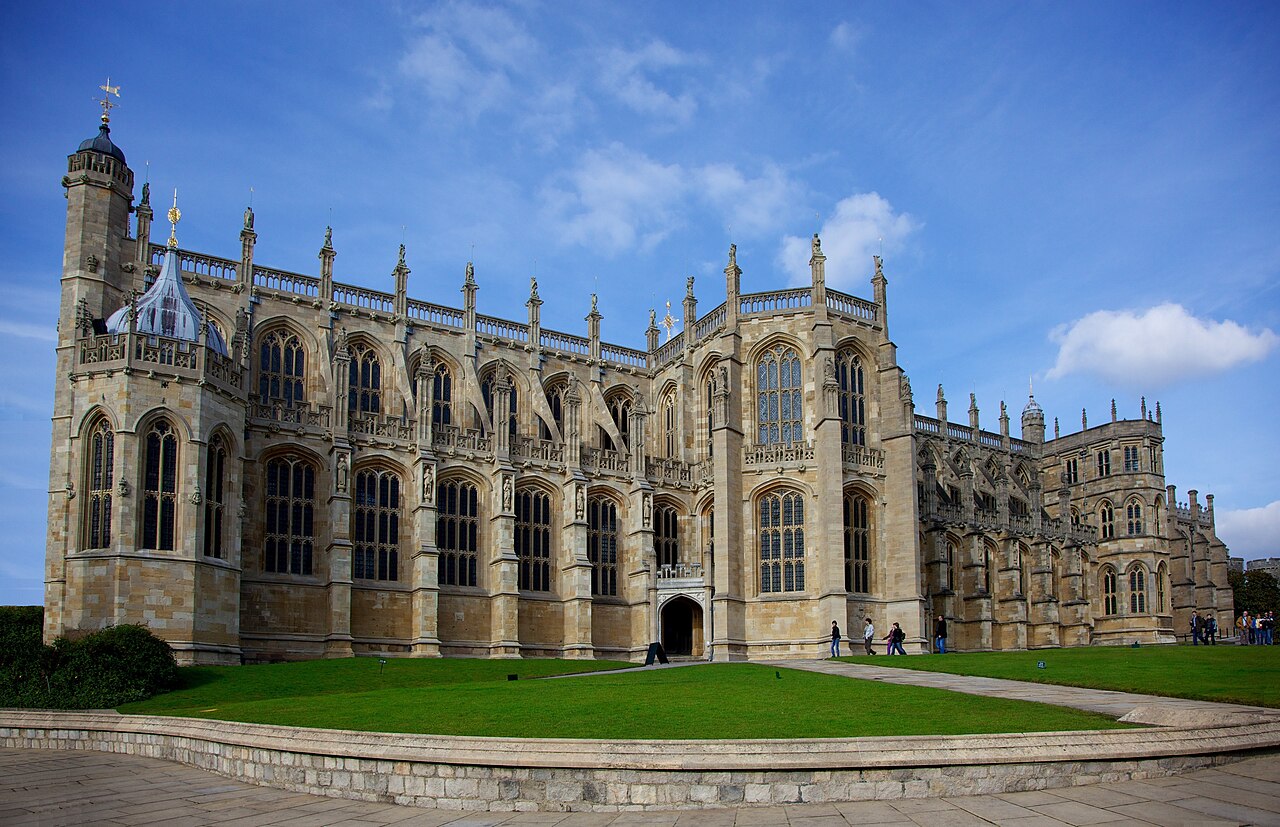
St George’s Chapel, set within the walls of Windsor Castle, is one of the finest examples of Gothic architecture in England and a place of immense historical, religious, and royal significance. Far more than a castle chapel, it has served for centuries as the spiritual heart of the Order of the Garter and as the setting for some of the most important ceremonies in British royal life. With its soaring stonework, rich symbolism, and deep connections to the monarchy, St George’s Chapel stands as a powerful testament to continuity, tradition, and faith at the centre of the British state.
Origins and Early History
The origins of St George’s Chapel can be traced back to the 14th century, during the reign of King Edward III. Edward had a deep devotion to St George, England’s patron saint, and in 1348 he founded the Order of the Garter, the oldest and most prestigious order of chivalry in the country. Alongside this foundation, he established a college of priests at Windsor to serve the spiritual needs of the order and to pray for the souls of its members. An earlier chapel dedicated to St Edward the Confessor stood on the site, but Edward III expanded and redefined it as a focal point of royal worship.
The present chapel, however, is largely the product of later medieval ambition. In 1475, King Edward IV began the construction of a new and much grander chapel, intended to rival the great cathedrals of England. His vision was continued by Henry VII and completed during the reign of Henry VIII in the early 16th century. The result was a masterpiece of Perpendicular Gothic architecture, designed not only as a place of worship but also as a symbol of royal authority and divine legitimacy.
Architectural Grandeur and Design
St George’s Chapel is widely regarded as one of the finest expressions of the Perpendicular Gothic style, characterised by strong vertical lines, expansive windows, and intricate stonework. From the outside, the chapel’s long, low profile and battlemented roof blend harmoniously with the surrounding castle, yet its scale and refinement immediately set it apart.
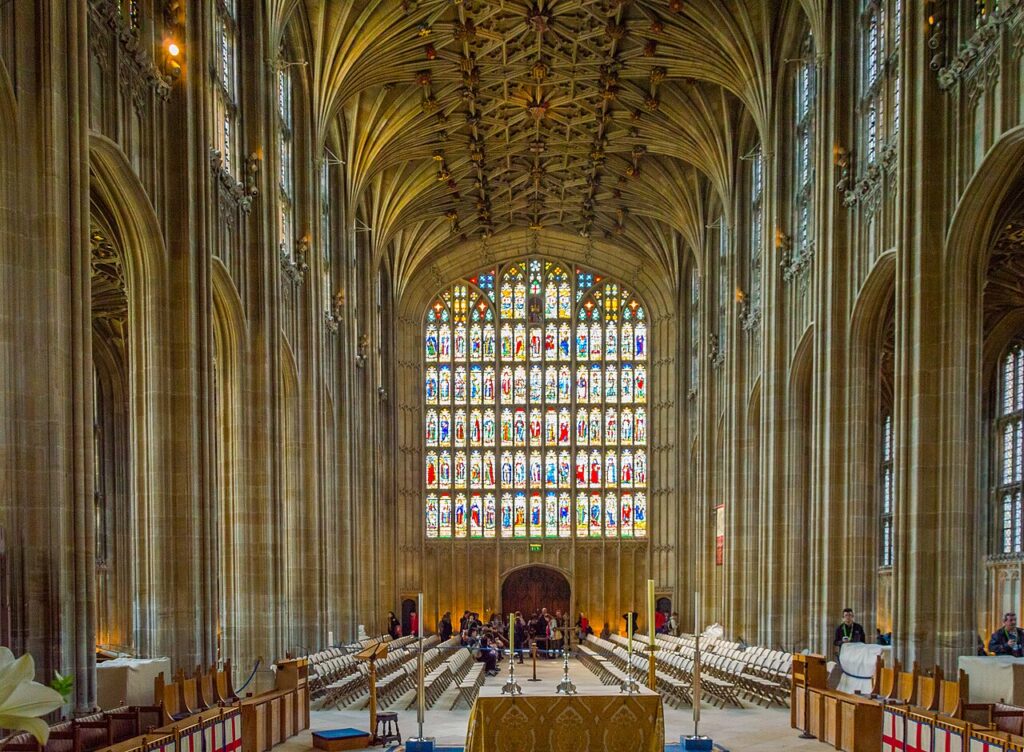
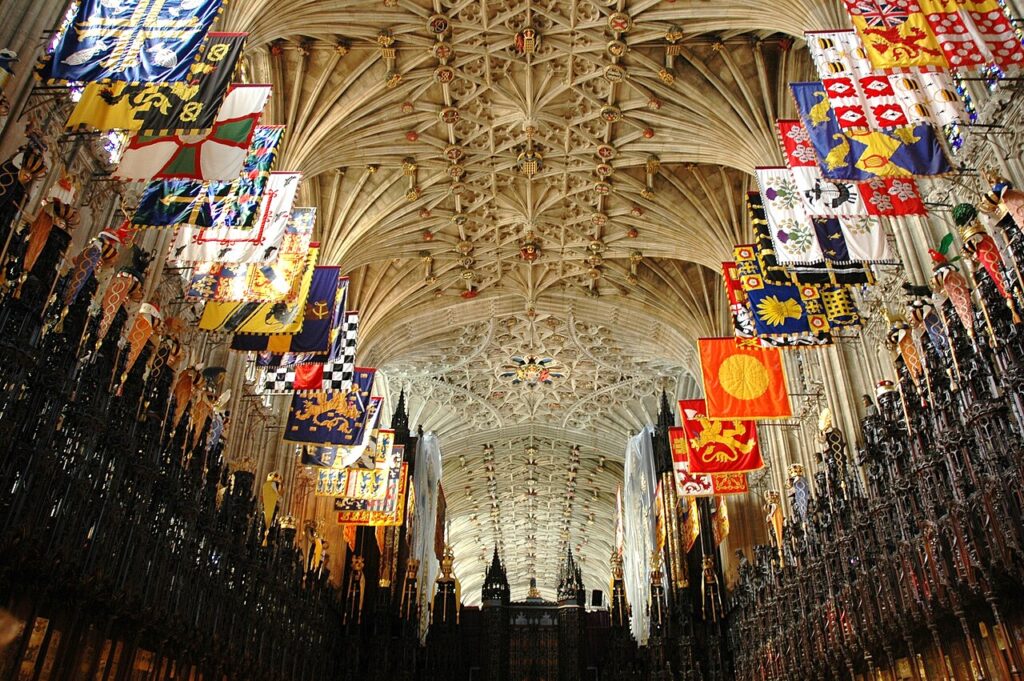
Inside, the sense of space and height is striking. The nave is lined with slender clustered columns that draw the eye upwards to the magnificent fan-vaulted ceiling, one of the most impressive of its kind in England. The stone vaults spread out like carved palm leaves, creating an effect that is both technically daring and visually sublime. Light pours in through large stained-glass windows, illuminating the stone interior and enhancing the chapel’s sense of calm and reverence.
Every surface of the chapel is richly decorated with carved details, from angels and foliage to heraldic emblems. These carvings are not merely ornamental; they serve as visual expressions of faith, monarchy, and chivalric values, reinforcing the chapel’s role as both a religious and royal space.
The Order of the Garter
At the heart of St George’s Chapel’s identity is its association with the Order of the Garter. Founded in 1348, the order remains the highest order of chivalry in Britain and is limited to the monarch, the Prince of Wales, and a small number of knights and ladies chosen personally by the sovereign.
The chapel is the spiritual home of the order, and its stalls in the choir are assigned to individual members. Above each stall hang the banners, helmets, crests, and swords of the Knights and Ladies of the Garter. These heraldic displays create a powerful visual record of centuries of service to crown and country, linking medieval chivalry with modern honour.
Each year, the Order of the Garter holds a service at the chapel, followed by a procession through the grounds of Windsor Castle. This ceremony, steeped in tradition and pageantry, is one of the most distinctive events in the royal calendar and underscores the chapel’s enduring ceremonial role.
Royal Burials and Memorials
St George’s Chapel is also one of the most important royal burial sites in England. Beneath its stone floor lies the Royal Vault, and within the chapel itself are the tombs of numerous monarchs and members of the royal family. Among the most notable is King Henry VIII, who is buried alongside his third wife, Jane Seymour. King Charles I, executed in 1649 following the English Civil War, was also laid to rest here in relative secrecy, a poignant reminder of the turbulent history that has unfolded around the chapel.
In the modern era, the chapel gained renewed global attention as the final resting place of Queen Elizabeth II in 2022. Her burial in St George’s Chapel marked the end of a historic reign and reinforced the chapel’s role as a place of national reflection and remembrance. The presence of these tombs transforms the chapel into a living memorial, where centuries of royal history converge in a single sacred space.
A Setting for Royal Weddings
While St George’s Chapel is often associated with solemn ceremonies, it has also been the backdrop for moments of celebration and joy. Over the centuries, it has hosted numerous royal weddings, each adding a new layer to its story. In 2018, the wedding of Prince Harry and Meghan Markle brought the chapel to a global audience, showcasing its beauty and grandeur to millions of viewers worldwide. Later that year, Princess Eugenie married Jack Brooksbank in the same setting.
These weddings highlighted the chapel’s versatility as both a place of deep tradition and a living, evolving space that continues to serve the modern royal family. They also reinforced the emotional connection many people feel to the chapel, seeing it as a place where history is not only remembered but actively made.
Music, Worship, and Daily Life
Despite its royal associations, St George’s Chapel remains an active place of worship. Daily services are held throughout the year, continuing a tradition that has lasted for over six centuries. The chapel’s choir is internationally renowned, maintaining a high standard of choral music that forms an integral part of its spiritual life.
Music plays a central role in the chapel’s identity. The acoustics of the stone interior enhance the richness of choral singing, creating a powerful and moving experience for worshippers and visitors alike. This ongoing rhythm of prayer and music ensures that the chapel remains a living institution rather than a purely historical monument.
Survival Through Conflict and Change
St George’s Chapel has endured wars, political upheaval, and religious change. During the English Civil War, while Windsor Castle was occupied by Parliamentary forces, the chapel suffered damage and neglect. Yet it survived, and subsequent restorations ensured its preservation for future generations. Later conservation efforts, particularly in the 19th and 20th centuries, sought to balance historical authenticity with structural stability, allowing the chapel to withstand the pressures of time and modern use.
Conclusion
St George’s Chapel is far more than an architectural treasure within Windsor Castle. It is a place where faith, monarchy, and history intersect in profound and enduring ways. From its origins in medieval devotion to St George, through centuries of royal ceremonies, burials, and worship, the chapel has remained a constant presence at the heart of the British monarchy. Its exquisite architecture, rich symbolism, and living traditions make it one of the most significant sacred spaces in the United Kingdom. For visitors and worshippers alike, St George’s Chapel offers not only a glimpse into the past, but a powerful reminder of the continuity and resilience of tradition in an ever-changing world.
