
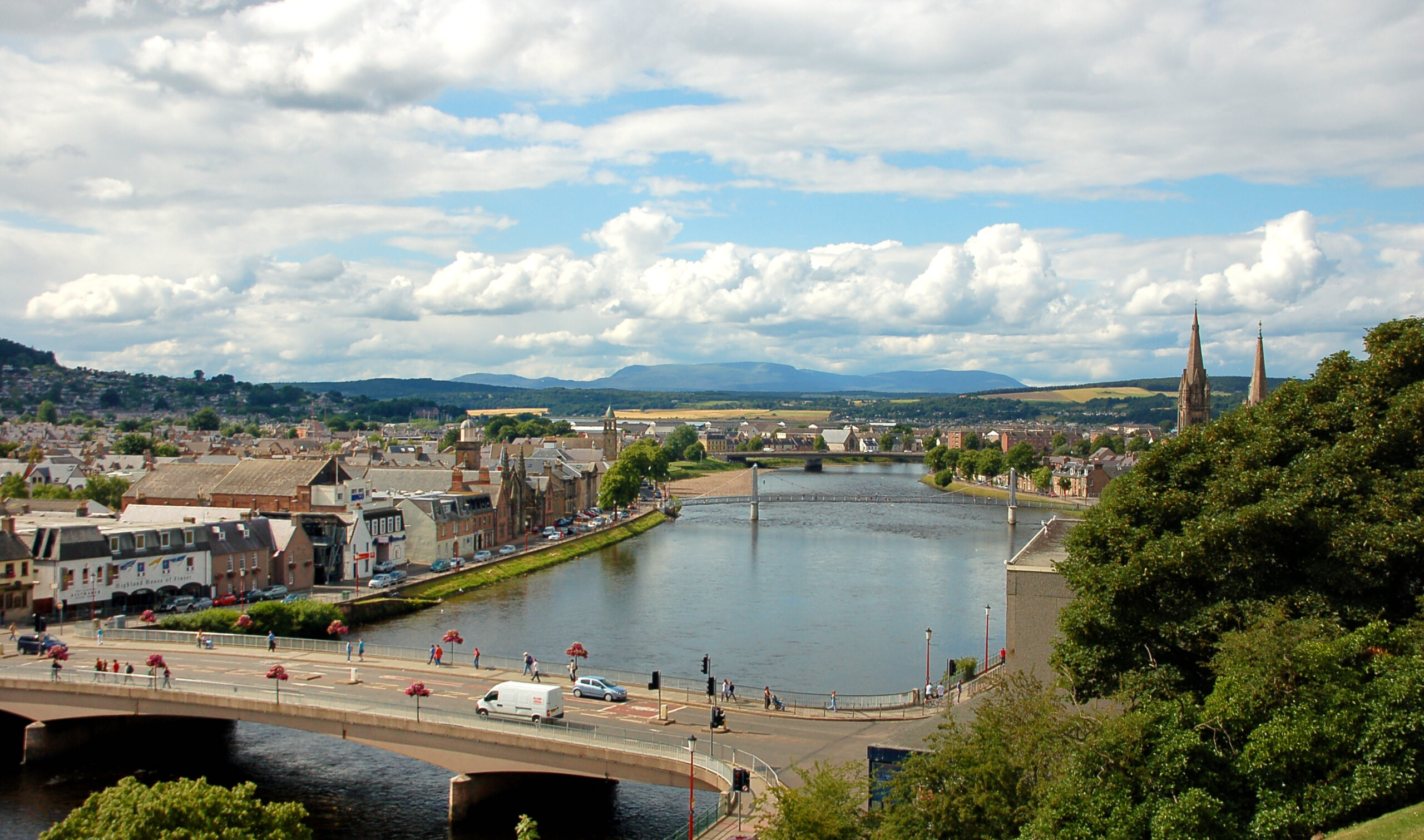
Nestled at the mouth of the River Ness, where it flows into the serene waters of Moray Firth, Inverness is often called the “Capital of the Highlands.” As one of the fastest-growing cities in Scotland, Inverness is a vibrant blend of history, culture, and natural beauty. From its ancient origins and strategic location to its role as a hub of tourism, commerce, and culture, Inverness exemplifies the spirit and resilience of the Scottish Highlands. With its stunning riverside views, proximity to legendary landscapes, and thriving modern economy, Inverness is not only a gateway to the Highlands but also a compelling destination in its own right.
Geographical Setting
Inverness lies in northern Scotland, at approximately 57°28′N latitude, in the region historically known as Inverness-shire. The city is strategically situated at the northeast end of the Great Glen, a geological fault line that stretches from Fort William to Inverness, linking Loch Ness, Loch Oich, and Loch Lochy. The River Ness runs through the city, connecting Loch Ness to the Moray Firth. This prime location has made Inverness a natural crossroads for travel, trade, and defence for centuries.
The surrounding landscape is quintessentially Highland: rolling hills, rugged glens, and dense forests meet open plains, rivers, and lochs. To the south lies the legendary Loch Ness, home of the mythical monster known as Nessie, while to the north the Moray Firth offers glimpses of dolphins and seabirds. Inverness’ location makes it a natural base for exploring the Highlands, including castles, whisky distilleries, historic battlefields, and outdoor adventure destinations.
Early History
Inverness has a long and complex history, with evidence of settlement dating back thousands of years. The name “Inverness” derives from the Scottish Gaelic Inbhir Nis, meaning “mouth of the River Ness.” Its position at a river mouth naturally made it a site for early habitation, trade, and defence.
During the medieval period, Inverness developed as a small but strategically important settlement. Its location at the junction of land and sea routes made it a focal point for Scottish clans and Norse raiders alike. Inverness Castle, a prominent feature of the city’s skyline, has been a symbol of power and control for centuries. Although the current structure is largely 19th-century, it sits on the site of earlier fortifications dating back to the 11th or 12th century. The castle played a key role in Scottish history, witnessing sieges, royal visits, and battles.
Inverness’ history is deeply intertwined with some of Scotland’s most famous events. During the 17th and 18th centuries, it was involved in the Jacobite uprisings, including the 1715 and 1745 rebellions. Bonnie Prince Charlie passed through Inverness in 1745, marking the city as a strategic military centre. The Jacobite risings left a lasting legacy in Inverness, shaping its cultural memory and adding to the city’s historical significance.
Urban Development and Economy
Over the centuries, Inverness evolved from a fortified settlement into a thriving market town and, eventually, a modern city. The city’s economy historically relied on agriculture, fishing, and trade, benefiting from its position as a transport and commercial hub. Market days and fairs attracted traders from across the Highlands and northern Scotland, fostering economic growth and social exchange.
In the 19th and 20th centuries, Inverness experienced industrialisation and urban expansion. The arrival of the railways in the 19th century connected Inverness to Edinburgh, Glasgow, and beyond, boosting trade, tourism, and population growth. Today, Inverness has a diverse economy encompassing public administration, healthcare, education, tourism, technology, and retail. The city is home to major employers, including the Highland Council, NHS Highland, and Inverness College (part of the University of the Highlands and Islands).
The modern economy is also strongly influenced by tourism, driven by attractions such as Loch Ness, Culloden Battlefield, and numerous Highland castles. Inverness has become a base for outdoor activities including hiking, mountain biking, kayaking, and wildlife watching. This blend of economic diversity, natural beauty, and cultural heritage has enabled Inverness to flourish as a regional hub.
Cultural and Civic Life
Inverness is not just a centre of commerce; it is a vibrant cultural hub for the Highlands. The city celebrates Scottish Gaelic culture, music, and arts, with institutions like the Eden Court Theatre hosting performances, film screenings, and live music. Gaelic language classes and cultural events support the preservation of traditional language and heritage, connecting residents with centuries of Highland culture.
The city is also home to several museums and galleries, including the Inverness Museum and Art Gallery, which showcases archaeology, history, and art from the Highlands. Exhibits include artifacts from prehistoric settlements, clan histories, and the Jacobite era, giving visitors insight into the rich cultural tapestry of northern Scotland.
Local festivals, such as the Inverness Highland Games, bring the community together and attract visitors from around the world. These events celebrate traditional sports, music, and dancing, fostering pride in Highland identity while offering entertainment and education for all ages.
Tourism and Attractions
Inverness is a gateway to some of Scotland’s most famous landmarks. Loch Ness is arguably the most iconic, drawing visitors eager to spot the elusive Nessie or enjoy boat trips along its scenic waters. Urquhart Castle, perched on the loch’s edge, offers dramatic views and a glimpse into medieval Highland life. Culloden Battlefield, the site of the tragic 1746 Jacobite defeat, is nearby, with an informative visitor centre detailing the history of the clans and the battle’s lasting impact.
Within the city itself, visitors can explore the historic city centre, with Victorian and Georgian architecture, charming streets, and riverside walks along the River Ness. The Inverness Castle viewpoint provides panoramic views of the city and surrounding Highlands. Gardens, parks, and the Ness Islands—connected by iron footbridges—offer tranquil green spaces for recreation and reflection.
Shopping and dining in Inverness combine Highland tradition with modern amenities. The city has a range of cafes, restaurants, and bars serving local produce, seafood, and whisky. Markets and shops offer crafts, tartans, and locally made goods, allowing visitors to take a piece of Highland heritage home.
Education and Research
Inverness is also a centre of education for the Highlands. Inverness College UHI, part of the University of the Highlands and Islands, provides higher education in fields including Gaelic studies, business, tourism, environmental science, and technology. The city also has numerous primary and secondary schools, including Gaelic-medium education, helping preserve the language and culture.
Research institutions and initiatives focus on marine science, renewable energy, and environmental conservation. Inverness’ role as an educational hub strengthens its regional importance, attracting students and researchers while fostering innovation in a historically remote region.
Transportation and Connectivity
Inverness benefits from excellent transport links for a city of its size. Inverness Airport connects the Highlands to Edinburgh, Glasgow, London, and other destinations, while the railway station links the city to major Scottish cities and serves as a key node on the scenic Highland Main Line. The city is also connected by roads, including the A9, which runs south to Perth and central Scotland, facilitating commerce and tourism.
Public transport within the city includes buses and taxis, while walking and cycling are popular options along the River Ness and through the city’s parks and streets. The combination of air, rail, and road access makes Inverness a highly accessible base for exploring the wider Highlands.
Natural Surroundings
One of Inverness’ greatest assets is its proximity to outstanding natural landscapes. Beyond Loch Ness, the surrounding Highlands offer mountains, glens, rivers, and forests ideal for outdoor enthusiasts. Wildlife spotting, including red deer, golden eagles, otters, and dolphins in the Moray Firth, is a highlight for visitors and residents alike. Seasonal changes dramatically transform the landscape, from snow-capped peaks in winter to blooming heather in late summer, making the Highlands around Inverness a year-round attraction.
Modern Inverness
Today, Inverness is a modern, thriving city that balances heritage and contemporary life. The population continues to grow, and new developments in housing, business, and leisure reflect its expanding role as the heart of the Highlands. Modern amenities, cultural institutions, and educational facilities coexist with historic landmarks, ensuring that the city retains its charm while meeting contemporary needs.
Inverness embodies the resilience and spirit of the Highlands. It reflects centuries of history, from early settlements and Norse influence to medieval fortresses and Jacobite conflicts, while also embracing tourism, innovation, and community life in the 21st century.
Conclusion
Inverness is far more than a gateway to the Highlands; it is a city with its own rich history, culture, and identity. From the banks of the River Ness to the shores of the Moray Firth, it combines natural beauty, historic significance, and modern vibrancy. Whether exploring its castles, museums, and parks or using it as a base to visit Loch Ness, Culloden, and the surrounding glens, Inverness offers a unique window into the past and present of the Scottish Highlands. It is a city where tradition and progress coexist, making it a symbol of the enduring spirit and cultural richness of northern Scotland.
