
A Rain-Soaked Day of History, Industry, and Walking: From Sunderland to Tynemouth
Some days out are planned down to the finest detail, with weather checked, routes optimised, and timings carefully considered. Others unfold more organically, shaped by chance decisions, poor weather, and the simple desire to keep moving. This particular day in the North East firmly belonged to the latter category: a cold, wet, rain-soaked adventure that took in aviation history, industrial landscapes, riverside walking, and a long trek from Jarrow to Tynemouth via the Tyne Pedestrian & Cycle Tunnel.
The day began in Sunderland with a visit to the North East Land, Sea and Air Museums (NELSAM). Getting there involved a familiar combination of public transport: Metro to Jarrow, then a bus out past the Nissan factory, an area that always feels slightly otherworldly in scale. Vast industrial buildings dominate the landscape, a reminder of how manufacturing still underpins much of the region’s economy, even if it often sits quietly in the background of everyday life.
The weather, however, was impossible to ignore. It was cold, wet, and thoroughly miserable. Rain fell steadily, soaking the ground and turning the approach to the museum into a battle against puddles and wind. As we arrived at the entrance, the guy on the desk greeted us with a grin and remarked, “It’s a good day if you’re a duck.” It was exactly the sort of dry humour you expect in the North East, and it immediately set the tone for the visit.
Once inside, the museum felt like a refuge from the weather—part hangar, part time capsule. The North East Land, Sea and Air Museums is a volunteer-run museum, and that becomes apparent in the best possible way. It doesn’t have the polished, corporate feel of larger national museums. Instead, it feels personal, passionate, and deeply rooted in the region’s aviation and military history.
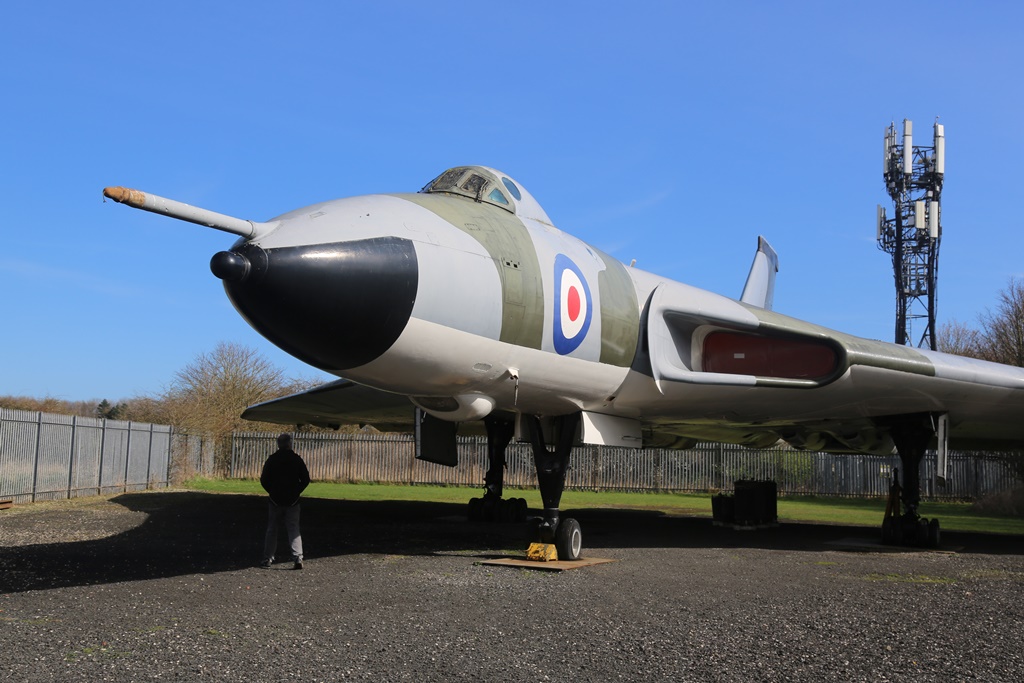
The collection is impressive, particularly if you have even a passing interest in aircraft or Cold War history. Walking through the hangars, you’re surrounded by planes that once dominated the skies: jet fighters, training aircraft, and helicopters, many of which played roles in Britain’s post-war defence. There’s something inherently powerful about standing beneath these machines, seeing their size up close, and imagining the noise, speed, and risk involved in flying them.
What really stands out is the sense of preservation against the odds. Many of the aircraft look like they’ve been rescued from scrapyards and lovingly restored by people who genuinely care. Informational boards provide technical details and historical context, but it’s the atmosphere that does the heavy lifting. You can almost feel the decades of service, training, and technological change represented in the metal frames around you.
Despite the weather outside, we spent a good amount of time exploring the museum, moving slowly and taking it all in. Eventually, though, the cold crept back in, and we decided it was time to head on. We caught the bus back to Jarrow, glad to be out of the rain again, even if only briefly.
Back in Jarrow, our first priority was warmth. That led us straight to Rosie’s Café, a welcome stop that felt like a small reward after the damp start to the day. A hot coffee made all the difference, restoring some feeling to cold hands and giving us time to regroup. Cafés like Rosie’s play an important role on days like this—not just as places to refuel, but as pauses in the journey, moments to sit, talk, and decide what comes next.
Leaving the café, we considered exploring more of Jarrow itself. Ideally, this would have included a visit to St Paul’s Monastery and Jarrow Hall Anglo-Saxon Farm, Village and Bede Museum. Both are places steeped in history, deeply connected to the story of the Venerable Bede and the Anglo-Saxon roots of the region. However, with the weather still against us and the light far from ideal, we decided it would be better to return on a better day—one when we could properly explore and capture decent footage without battling rain and gloom.
Instead, our attention was drawn to the Tyne Pedestrian & Cycle Tunnel. Coming across it almost by accident, we decided there and then to walk it. There’s something quietly exciting about that tunnel—a piece of engineering history that still serves its original purpose decades after it was built. Opened in 1951, the tunnel connects Jarrow and North Shields beneath the River Tyne, and walking through it feels like stepping into another era.
Descending into the tunnel, the temperature changed, and the echo of footsteps bounced off the curved tiled walls. The long, gently sloping passage stretches on ahead of you, and for a while, it feels endless. There’s a meditative quality to walking it: no views, no distractions, just steady movement and the knowledge that you’re passing beneath one of the region’s most important rivers.
Emerging on the North Shields side, we were greeted once again by grey skies and industrial surroundings. Our original plan was to head towards Tynemouth, but an early wrong turn led us to a dead end near chemical plants and industrial fencing. It was one of those moments where urban exploration turns briefly frustrating—high fences, warning signs, and the clear message that you’re not meant to be there. After doubling back, we managed to find an alternative route and got ourselves back on track.
Soon enough, we were heading towards Royal Quays, a shopping outlet that always feels strangely quiet. On the few occasions I’ve visited, it’s never seemed particularly busy, and this day was no exception. Walking through, I couldn’t help but wonder how some of the businesses manage to survive. Perhaps it’s different at weekends, but midweek, especially in poor weather, it feels almost abandoned.
Still, it served its purpose. We called into Costa for another coffee, using it as a brief shelter and a chance to rest before continuing the walk. Once outside again, we headed towards Meadow Well and then into North Shields town centre. This part of the walk carried a more personal significance, as we passed Crew Gall, where we had both trained on a Make a Music Video production course. It was on that course that I first met John, making the location more than just another building along the route.
From North Shields, we continued the long walk towards Tynemouth, passing familiar streets and landmarks. One of the standout points along the way was Collingwood Monument, perched high and visible from afar. It’s a reminder of the area’s maritime heritage and its connection to Admiral Lord Collingwood, Nelson’s second-in-command at Trafalgar. Even on a grey day, the monument has a quiet dignity, standing watch over the coastline.
By the time we reached Tynemouth, the miles were beginning to show. The rain, the cold, and the long stretches of walking had taken their toll, but there was also a strong sense of satisfaction. We made our way back to Tynemouth Metro, bringing the journey to a close and heading home.
Looking back, it wasn’t a perfect day out in the conventional sense. The weather was poor, plans changed, and some places were left for another time. Yet, in many ways, that’s exactly what made it memorable. It was a day shaped by movement, conversation, history, and the simple act of walking through familiar and unfamiliar parts of the North East. From aircraft hangars to underground tunnels, industrial estates to coastal paths, it was a reminder that even on the wettest days, there’s always something worth exploring.
