
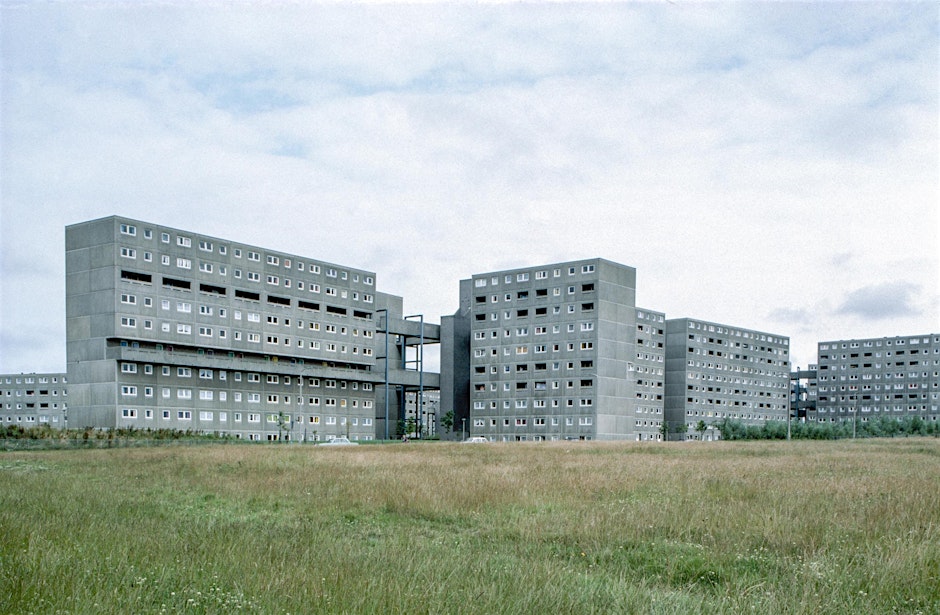
Killingworth New Town is one of the most fascinating examples of post-war urban planning in the North East of England. Developed during the 1960s and 1970s, Killingworth represents an ambitious vision of how modern architecture, innovative planning, and community-focused design could create a new way of living. Today, the town offers a unique opportunity to explore modernist architecture, experimental housing design, and the social ideals that shaped Britain’s New Town movement.
A guided tour led by artist and photographer Euan Lynn provides visitors with an opportunity to discover Killingworth’s architectural heritage while learning how to photograph its distinctive structures. Through his lens, the town reveals not only bold geometric forms and striking materials but also a story about optimism, experimentation, and the search for better living environments in post-war Britain.
The Origins of Killingworth New Town
Following the devastation of the Second World War, Britain faced a significant housing shortage and increasing urban overcrowding. The government responded by creating a series of New Towns designed to provide modern housing, improved infrastructure, and better living conditions. Killingworth was designated as a New Town in 1963 and developed under the guidance of planners seeking to create a self-contained community with residential, commercial, and recreational facilities.
Located north of Newcastle upon Tyne, Killingworth was strategically positioned to provide housing for people working in the expanding industries of the region. The town was designed to offer a balance between urban convenience and green open space, reflecting the belief that architecture and planning could improve quality of life.
The layout of Killingworth followed modernist principles, emphasizing functional design, efficient transport routes, and separation of pedestrians from vehicle traffic. These ideas were influenced by international architectural movements, including the work of Le Corbusier and Scandinavian urban planners.
Modernist Architecture in Killingworth
Killingworth New Town is home to some of the finest modernist buildings in the North East. Modernism, an architectural movement that emerged in the early 20th century, emphasized simplicity, functionality, and the use of new materials such as reinforced concrete and steel.
Among the architectural firms associated with Killingworth are FaulknerBrowns Architects and Ryder & Yates, both of which played important roles in shaping the town’s distinctive visual identity.
Their work reflects the ideals of modernism, including:
- clean lines and geometric shapes
- open-plan interiors
- use of concrete and glass
- integration of buildings with surrounding landscapes
- emphasis on light and space
These buildings were designed not only to be visually striking but also to support modern lifestyles, with efficient layouts and shared community spaces.
Ralph Erskine’s Influence
One of the most significant architectural influences on Killingworth was Ralph Erskine, whose work represented a more human-centred approach to modernism. Erskine believed that architecture should respond to the needs of the people who live in it, as well as the local climate and environment.
His designs often included sheltered walkways, communal areas, and features that encouraged social interaction. Erskine’s work in Killingworth marked his first project in the North East and helped shape the town’s reputation as a centre of architectural experimentation.
Erskine’s approach differed from some earlier modernist projects, which were sometimes criticised for appearing too harsh or impersonal. Instead, his buildings attempted to create warmth and community while maintaining a modern aesthetic.
The Famous Concrete Hippos
One of Killingworth’s most unusual features is its collection of concrete hippos, playful sculptures that have become local landmarks. These sculptures demonstrate how public art was incorporated into New Town developments to create a sense of identity and character.
Public art was often included in post-war developments as a way to make modern architecture feel more welcoming and less austere. The hippos provide a sense of humour and accessibility, reminding visitors that modernism was not only about efficiency but also about creativity.
Today, these sculptures remain popular photographic subjects, representing a blend of art, architecture, and community life.
Urban Planning and Community Design
Killingworth was designed as a self-contained town with schools, shops, leisure facilities, and green spaces. Planners sought to create a balanced environment where residents could live, work, and relax without needing to travel long distances.
Key planning features included:
- separation of pedestrian and vehicle traffic
- pathways connecting residential areas to shopping centres
- green spaces integrated into housing areas
- neighbourhood units designed to encourage community interaction
The town centre, known as Killingworth Centre, served as a focal point for shopping and social activity. Early designs even included elevated walkways intended to create safe pedestrian routes away from busy roads.
While some aspects of these designs have changed over time, they demonstrate the ambition of planners who believed architecture could shape society in positive ways.
Killingworth Through the Lens of Photography
Photographing modernist architecture presents unique creative opportunities. The geometric forms, strong lines, and contrasting textures of concrete and glass create visually compelling compositions.
During guided walks, Euan Lynn encourages participants to observe:
- patterns created by repetition of shapes
- shadows cast by angular structures
- contrast between architecture and natural surroundings
- details often overlooked in everyday life
Modern smartphones and traditional film cameras can both capture the distinctive character of Killingworth’s buildings. Photographers are encouraged to experiment with perspective, framing, and lighting to highlight the town’s architectural features.
Documenting these structures helps preserve the visual history of modernist architecture, which is increasingly appreciated for its historical and artistic significance.
Changing Attitudes Towards Modernism
When Killingworth was first developed, modernist architecture represented progress and innovation. Over time, however, public opinion became more divided. Some critics argued that concrete buildings appeared cold or unattractive, while others appreciated their bold design and historical importance.
In recent years, interest in modernist architecture has grown, with many people recognising its cultural value. Buildings once considered ordinary are now viewed as important examples of post-war design.
Tours and photographic projects help raise awareness of this architectural heritage, encouraging preservation and appreciation.
Killingworth’s Legacy
Killingworth New Town represents an important chapter in British architectural and social history. It reflects a period when planners, architects, and governments believed that thoughtful design could improve people’s lives.
Today, Killingworth continues to evolve, adapting to changing needs while retaining elements of its original vision. Its modernist buildings provide insight into the optimism and creativity of the post-war era.
Exploring Killingworth offers more than just an architectural experience; it provides an opportunity to reflect on how design influences the way people live and interact. The town stands as a reminder of a time when architecture was seen as a tool for social progress.
Conclusion
Killingworth New Town is a remarkable destination for anyone interested in architecture, history, or photography. Its collection of modernist buildings, public artworks, and innovative planning ideas make it one of the most distinctive towns in the North East of England.
Through guided tours led by Euan Lynn, visitors can gain a deeper understanding of the architectural ideas that shaped the town, as well as practical skills for documenting its unique features.
Whether viewed as a historical experiment, an artistic landscape, or a living community, Killingworth offers valuable insight into the ambitions of modernist architecture and the enduring impact of thoughtful urban design.
