

Bhutan was never meant to be on my itinerary. My plans had been centred firmly on India—its vastness, its intensity, its colour and noise. Yet travel has a way of presenting moments that feel too significant to ignore, and when the opportunity arose to visit Bhutan, I knew instinctively that it was one of those moments. Some destinations call quietly rather than loudly, and Bhutan’s call was impossible to refuse.
Tucked away in the eastern Himalayas between India and China, Bhutan has long maintained an air of mystery. Often described as the world’s most secluded kingdom, it is a country that has deliberately chosen a different path to modernisation. While much of the world measures progress through economic output, Bhutan famously measures success through Gross National Happiness, prioritising well-being, culture, and environmental sustainability over raw financial growth. That alone was reason enough to be curious.
Crossing from India into Bhutan
Entering Bhutan is not as straightforward as many other countries. For most visitors, a daily visa fee—often quoted between $200 and $300—acts as both a gateway and a filter, ensuring tourism remains controlled and sustainable. This policy is part of Bhutan’s commitment to preserving its culture and environment, and while it may deter casual travellers, it reinforces the sense that Bhutan is not a destination for hurried consumption.
However, there exists an exception. From India, it is possible to cross into Phuentsholing, a bustling border town, for a day without paying the full visa fee. This opportunity made the visit feasible, and I seized it. What began as a spontaneous decision quickly became one of the most memorable travel experiences I’ve ever had.
The border crossing itself felt symbolic. On the Indian side, the familiar chaos prevailed—honking horns, crowded streets, the relentless motion that characterises much of the subcontinent. Crossing into Bhutan, the atmosphere shifted almost instantly. The noise softened. The pace slowed. There was a sense of order, not enforced but embraced.
First Impressions of Phuentsholing
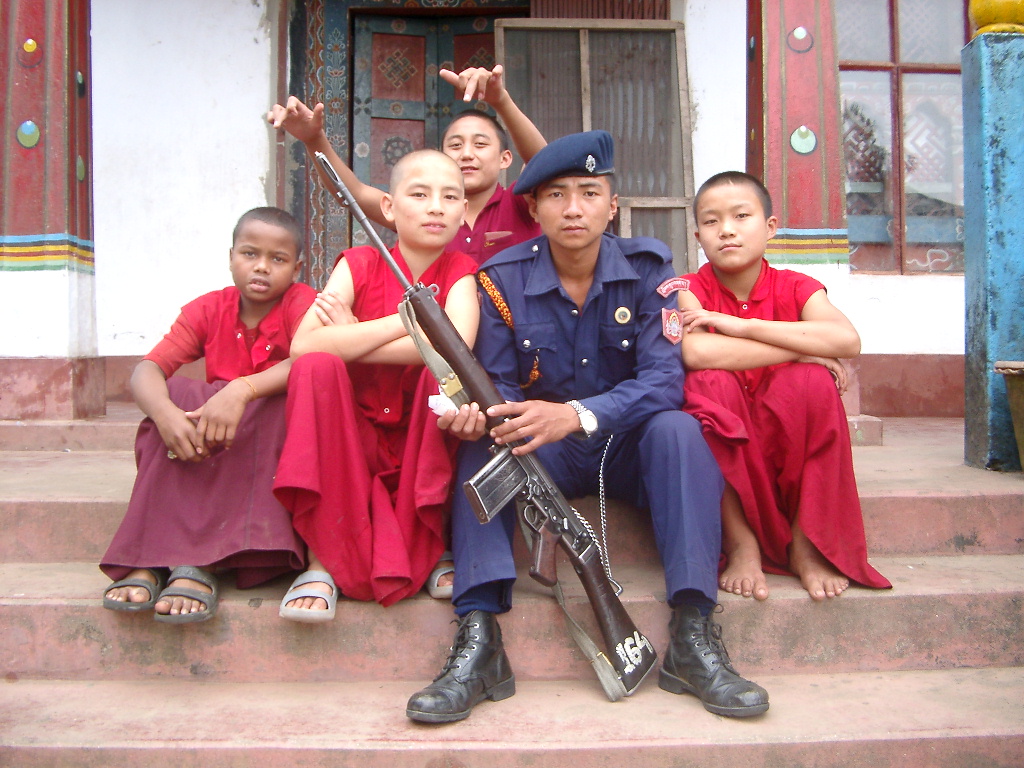
Phuentsholing is often described as Bhutan’s gateway, and it certainly feels that way. Unlike the more traditional towns deeper in the country, Phuentsholing has a multicultural, frontier-town character. Yet even here, Bhutan’s distinct identity is unmistakable.
Buildings were adorned with traditional Bhutanese architectural motifs—painted window frames, intricate woodwork, and vibrant colours. Even modern structures adhered to a visual harmony that felt intentional rather than imposed. The streets were clean, traffic moved calmly, and there was a noticeable absence of aggression or urgency.
One of the first things that struck me was the demeanour of the people. There was an unhurried politeness in everyday interactions. Shopkeepers greeted customers warmly without pressure. Conversations unfolded at a gentle pace. There was no sense of being rushed or hustled, something that felt almost surreal after weeks in India.
Gross National Happiness in Practice
Bhutan’s reputation as the world’s “happiest” country can easily sound like a marketing slogan, but being there, even briefly, made me reconsider what happiness means at a societal level. Gross National Happiness isn’t about constant joy or the absence of hardship—it’s about balance.
In Phuentsholing, I saw this balance reflected in small details. Public spaces were respected. Nature wasn’t something to be conquered or commodified but coexisted with daily life. Even the way people dressed—traditional attire worn with pride alongside modern clothing—spoke to a culture that values continuity over replacement.
There was a sense that progress in Bhutan is carefully curated. Technology exists, but it hasn’t overwhelmed tradition. Development happens, but not at the expense of identity. This deliberate pacing felt refreshing, especially when contrasted with the rapid, often chaotic growth seen elsewhere.
Cultural Observations
Wandering through Phuentsholing, I encountered Buddhist temples nestled quietly among shops and homes. Prayer flags fluttered gently in the breeze, carrying mantras across the landscape. These were not staged displays for tourists but living expressions of faith woven into daily life.
The influence of Buddhism was subtle yet pervasive. It manifested in the calmness of public behaviour, the emphasis on compassion, and the respect shown toward others. Even as an outsider, I felt welcomed without being singled out.
Food stalls offered a taste of Bhutanese cuisine—simple, hearty, and unapologetically spicy. Dishes featured rice, chillies, and cheese, reflecting the country’s agricultural roots and mountainous terrain. Eating here felt communal rather than transactional, another small reflection of Bhutan’s collective mindset.
A Different Relationship with Time
Perhaps the most profound shift I experienced in Bhutan was my relationship with time. Hours passed without the usual markers of productivity or urgency. There were no schedules demanding attention, no notifications pulling focus. Time felt expansive rather than scarce.
This shift encouraged reflection. I found myself observing more closely—how light fell across the streets, how conversations unfolded, how the rhythm of daily life flowed naturally rather than being dictated by external pressures. It made me question how much of modern stress is self-imposed, a by-product of constant acceleration.
The Contrast with India
Returning to India later that day, the contrast was striking. The sensory overload returned immediately—the noise, the movement, the relentless energy. India has its own beauty and vitality, but Bhutan’s calm lingered like an afterimage.
The experience reinforced the idea that happiness is deeply contextual. Bhutan is not without its challenges, nor is it a utopia. But its conscious decision to prioritise well-being over unchecked growth offers an alternative vision of what a society can value.
A Brief Visit, a Lasting Impression
Although my time in Bhutan was short, its impact was enduring. There was a sense of having glimpsed a different way of living—one that values enough rather than more, presence rather than accumulation.
Bhutan reminded me that travel doesn’t always have to be about ticking destinations off a list. Sometimes, the most meaningful experiences come from unexpected detours, from saying yes to opportunities that weren’t planned.
Reflection
Bhutan may not have been on my itinerary, but it found its way into my memory in a way few places have. Even a brief visit to Phuentsholing offered insight into a culture that has chosen mindfulness over momentum, balance over excess.
In a world increasingly defined by speed and scale, Bhutan stands quietly apart—a reminder that happiness, like travel itself, is not about how much you consume, but how deeply you engage.
Leaving Bhutan, I carried with me a sense of calm and a question that continues to resonate: what would the world look like if more places measured success not by growth, but by contentment?
