
(National Cycle Network Route 1 – Newcastle to Edinburgh)
The Coast and Castles Cycle Route, officially part of National Cycle Network Route 1, is one of the most iconic long-distance cycle routes in the UK. Stretching from Newcastle-upon-Tyne in England to Edinburgh in Scotland, the route follows the dramatic North Sea coastline, passing through historic towns, quiet fishing villages, wide sandy beaches, and landscapes steeped in centuries of history. It combines physical challenge with constant visual reward, making it a favourite for touring cyclists of all abilities.
The Coast and Castles route is often spoken of with a sense of reverence among cyclists, and for good reason. It offers a rare blend of accessibility and adventure: well signposted, largely traffic-free, and flexible enough to be tackled over several days or broken into shorter sections. Whether ridden northbound or southbound, the journey feels purposeful, carrying the rider through two countries linked by coastline, culture, and history.
The Appeal of Coast and Castles
What makes the Coast and Castles route special is not just the distance—roughly 200 miles (320 km) depending on route variations—but the way it unfolds. Unlike some long-distance routes that can feel repetitive or isolated, this journey constantly evolves. Urban cycle paths give way to open coastline, farmland, cliff-top views, and quiet country roads, ensuring there is always something new ahead.
The route also offers a strong sense of continuity. Medieval castles, many of which still dominate the landscape, act as visual anchors along the way. They provide not only a historical backdrop but also a sense of progression, marking distance travelled as each one comes into view and is left behind.
Starting in Newcastle-upon-Tyne
Beginning the journey in Newcastle-upon-Tyne provides a fitting transition from city life to open landscape. Leaving the city, the route follows riverside paths before gradually turning north and reaching the coast. This early section is relatively flat and well surfaced, allowing riders to ease into the journey and settle into a rhythm.
As the route passes through places like Tynemouth and Whitley Bay, the coastal character becomes more pronounced. The sea is a constant companion, and the sound of waves and seabirds replaces the noise of traffic. These early miles offer a gentle introduction, both physically and mentally, before the quieter and more remote sections begin.
The Northumberland Coast: Where the Route Comes Alive
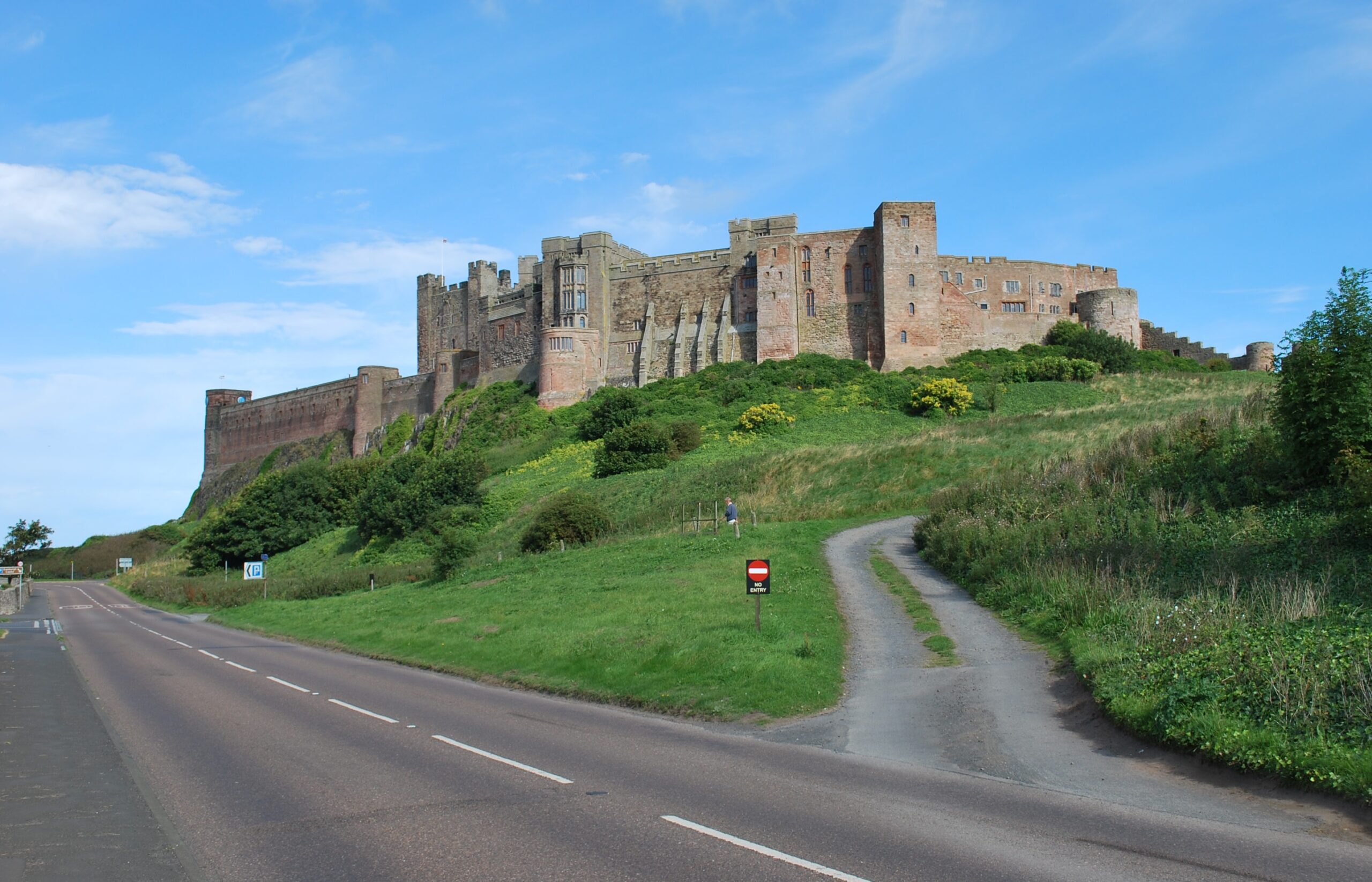
The Northumberland coast is widely regarded as the highlight of the Coast and Castles route, and it’s easy to see why. This stretch combines expansive beaches, rolling countryside, and some of the most striking castles in Britain. Names like Warkworth, Alnwick, Dunstanburgh, and Bamburgh are synonymous with the route, each castle adding depth and character to the ride.
Cycling here feels timeless. Long, open stretches are broken by small villages and historic landmarks, and the sense of space is profound. Bamburgh Castle, in particular, commands attention from miles away, rising above the dunes and coastline like something from another era. It’s one of those moments where the effort of cycling fades into the background, replaced by quiet appreciation.
Terrain across Northumberland is generally manageable, with rolling hills rather than sustained climbs. However, the wind can be a defining factor. Coastal riding exposes you fully to the elements, and progress can feel effortless or relentless depending on conditions. This unpredictability adds to the challenge and reinforces the sense that this is a genuine outdoor adventure.
Holy Island and the Quiet Heart of the Route
One of the most memorable optional sections of the route is the detour to Lindisfarne (Holy Island). Accessible only at certain tides, the causeway crossing introduces an element of planning and anticipation. Timing the crossing correctly adds a subtle sense of achievement, and cycling toward the island with the priory and castle ahead is a unique experience.
Beyond Holy Island, the route becomes noticeably quieter. Roads narrow, traffic fades, and the landscape opens up. This is where the true rhythm of cycle touring takes hold. Days are defined by steady pedalling, food stops, and the quiet satisfaction of watching miles tick by.
This section of the route encourages reflection. With fewer distractions, it’s easy to become absorbed in the movement of cycling itself—the sound of tyres on tarmac, the changing light, and the gradual shift in scenery as England begins to give way to Scotland.
Crossing the Border into Scotland
Crossing into Scotland is a subtle but meaningful milestone. There’s no dramatic change at the border, but it carries a strong psychological impact. By this stage, a substantial distance has already been covered, and the sense of momentum is unmistakable.
The Scottish Borders introduce more undulating terrain, adding variety and renewed challenge. Coastal towns such as Eyemouth provide natural stopping points, offering opportunities to rest and regroup before continuing north. The landscape here feels slightly wilder, and the route begins to hint at the approach of a major city destination.
Mentally, this section is particularly rewarding. Confidence builds with each passing mile, and the finish feels achievable without being rushed. It’s a reminder that long-distance cycling is as much about pacing and mindset as it is about physical fitness.
The Final Miles into Edinburgh
The approach to Edinburgh brings mixed emotions. There’s a growing sense of achievement, but also a quiet reluctance for the journey to end. The route gradually becomes busier, reintroducing urban cycling after days of coastal and rural riding.
As towns and suburbs appear more frequently, the contrast with earlier sections is striking. The final miles require a shift in focus, but they also heighten anticipation. Reaching Edinburgh feels earned—a city not simply arrived at, but reached through sustained effort and commitment.
Rolling into the city marks the culmination of the journey. Whether finishing near the coast or heading deeper into the urban centre, the sense of completion is deeply satisfying.
Final Thoughts
The Coast and Castles Cycle Route is far more than a long-distance cycle path. It is a journey through history, geography, and personal challenge, linking two great cities via one of the most beautiful coastlines in the UK. It offers variety without chaos, challenge without intimidation, and rewards that extend far beyond the physical act of cycling.
Having completed the Coast and Castles Cycle Route twice, in 2012 and 2014, it stands out as one of the most memorable cycling experiences I’ve undertaken. It is a route that invites return, reflection, and recommendation—and one that continues to resonate long after the final mile is ridden.
