
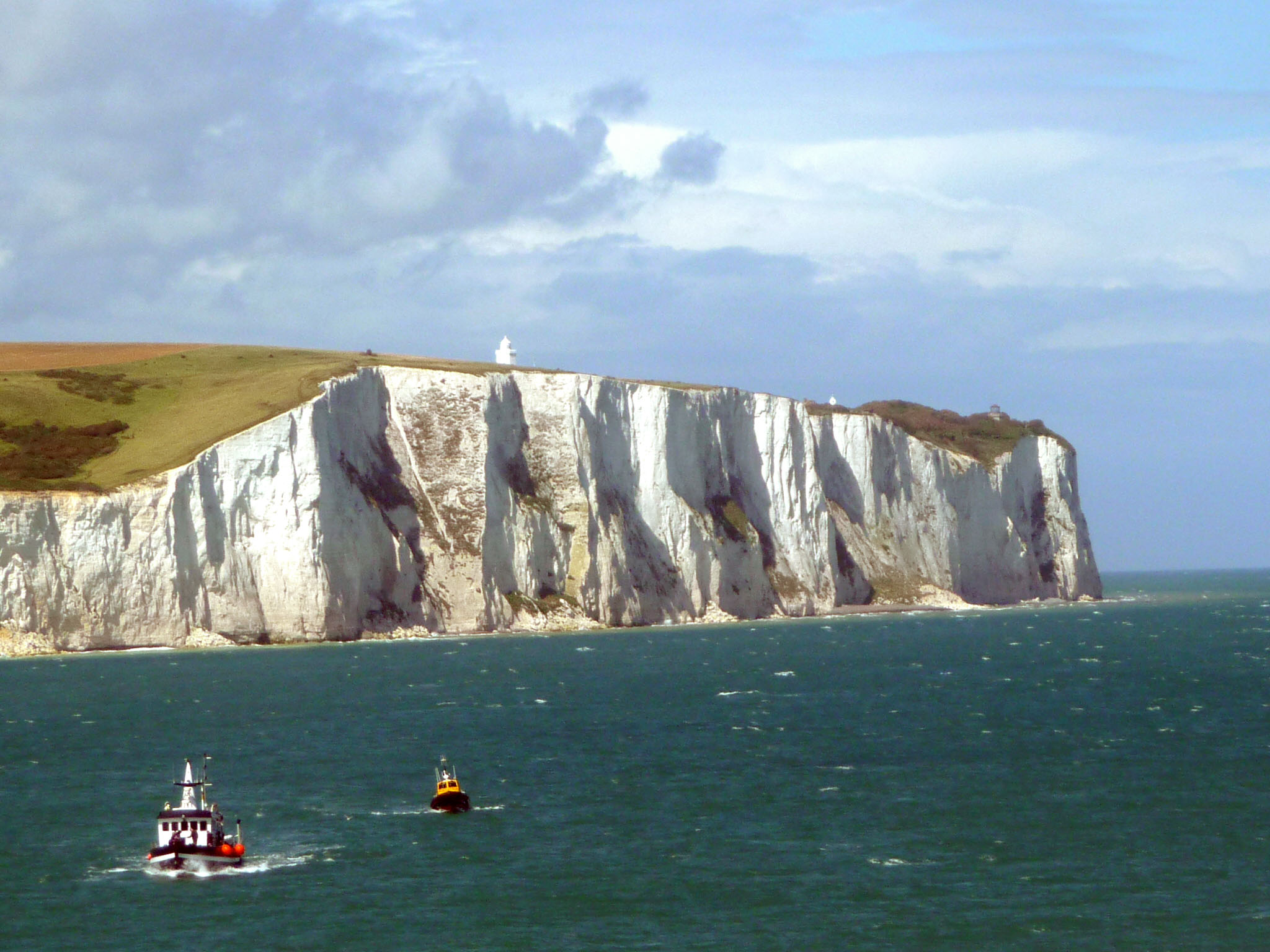
Dover, a coastal town in the county of Kent, is one of the most historically and geographically significant locations in England. Known as the “Gateway of England,” Dover has, for centuries, served as a principal point of contact between Britain and mainland Europe. Its striking white chalk cliffs, overlooking the narrow Strait of Dover, have become an enduring symbol of Britain’s natural beauty and resilience. Beyond its picturesque landscapes, Dover has a fascinating story that spans thousands of years—encompassing ancient settlements, Roman fortifications, medieval castles, wartime defences, and its role as a thriving port that continues to shape the town’s identity today.
Geography and Setting
Dover lies on the southeastern coast of England, facing France across the English Channel, the narrowest part of which—the Strait of Dover—is only about 21 miles (34 kilometres) wide. This close proximity to continental Europe has made Dover a natural point of transit, trade, and defence throughout history. The town itself is nestled within a valley surrounded by the iconic chalk cliffs that give the area its distinctive appearance. These cliffs, formed from ancient marine sediments, gleam brilliantly white under sunlight and serve as a powerful symbol of British identity, especially during times of conflict.
The River Dour, a small stream that gives the town its name, flows through Dover and into the harbour. While modest in size, the river played an important role in early settlement and industry. The surrounding countryside forms part of the Kent Downs Area of Outstanding Natural Beauty, offering a landscape of rolling hills, green pastures, and chalk grasslands teeming with wildlife. From the clifftops, visitors can enjoy sweeping views across the Channel, sometimes even glimpsing the coast of France on a clear day.
Early History and Roman Influence
Dover’s strategic position made it a natural site for settlement long before recorded history. Archaeological evidence suggests that people lived in the area as far back as the Bronze Age. Its sheltered bay and river valley made it an ideal landing point for travellers and traders. The town’s significance grew dramatically during the Roman occupation of Britain. Known to the Romans as Dubris, Dover became one of the main ports linking Britain with Gaul (modern-day France).
The Romans constructed two lighthouses, or pharoi, to guide ships safely into the harbour—one of which, located within the grounds of Dover Castle, still partially stands today and is among the oldest surviving structures of its kind in the world. Dover also became home to a Roman fort, built to protect the harbour and ensure safe passage across the Channel. The remains of a Roman painted house, discovered in the 1970s, offer a glimpse into the everyday life of a Roman official and contain some of the best-preserved Roman wall paintings in Britain.
Medieval Dover and the Castle
After the departure of the Romans, Dover continued to serve as a key defensive and trading post. During the Anglo-Saxon period, it developed into an important port town and later became part of the Cinque Ports—a historic confederation of coastal towns granted special privileges in exchange for providing ships and sailors to the Crown.
The most iconic symbol of Dover’s medieval power is Dover Castle, often referred to as the “Key to England.” Built under the reign of Henry II in the 12th century, the castle was strategically positioned atop the cliffs, commanding views over the Channel. It served not only as a fortress but also as a royal palace and administrative centre. Its massive keep, surrounded by thick defensive walls and towers, remains one of the most impressive examples of medieval military architecture in Europe.
Throughout the centuries, the castle played a vital role in defending England from invasion. It was a focal point during the reign of King John, who faced siege there in 1216, and later served as a stronghold during the Napoleonic Wars and both World Wars. Beneath the castle lies an extensive network of secret tunnels, originally constructed during the Napoleonic era and later expanded to serve as command centres during World War II, including the operations that supported the Dunkirk evacuation in 1940.
The White Cliffs of Dover
Perhaps no natural feature in Britain is as instantly recognisable or as deeply symbolic as the White Cliffs of Dover. Formed from chalk—a soft, white limestone composed primarily of the skeletal remains of marine organisms—the cliffs rise dramatically from the sea to heights of up to 350 feet. They stretch for about 10 miles along the coastline and have long been viewed as a symbol of hope, protection, and national pride.
During times of war, the cliffs represented the last sight of England for departing soldiers and the first sign of home for those returning. Their image was immortalised in the popular World War II song “(There’ll Be Bluebirds Over) The White Cliffs of Dover,” sung by Vera Lynn, which came to embody the spirit of hope and resilience during the darkest days of the conflict. Today, the cliffs are protected by the National Trust, offering visitors scenic walking trails and opportunities to observe rare wildlife, including peregrine falcons and unique chalk grassland plants.
Dover’s Maritime and Wartime Importance
For centuries, Dover’s harbour has been one of the busiest in the world. Its importance as a maritime hub grew steadily from medieval times onward, and today it remains a key gateway for passengers and freight between the United Kingdom and continental Europe. The Port of Dover handles millions of passengers annually, as well as vast quantities of goods, making it a vital artery in Britain’s trade network.
Dover’s maritime history is deeply intertwined with its military significance. During the Napoleonic Wars, the town became heavily fortified, with a series of gun batteries, tunnels, and lookout points constructed along the cliffs. In the 20th century, its role as a front-line town was even more pronounced. During World War I, Dover was an important naval base, while in World War II, it became a key command centre for the defence of Britain. The “Dover Patrol” was responsible for safeguarding the Channel from German naval activity, and the town itself endured heavy bombardment from across the Channel—making it one of the most shelled places in Britain during the war.
The secret tunnels beneath Dover Castle were converted into wartime command headquarters, where operations such as the evacuation of Dunkirk were planned and coordinated. These tunnels, now open to visitors, stand as a powerful reminder of Dover’s central role in Britain’s wartime history.
Modern Dover
In the modern era, Dover has continued to evolve while maintaining its historical and strategic importance. The town is home to a diverse community, shaped by centuries of cross-Channel interaction. Its economy is closely tied to maritime trade, transport, and tourism. The Port of Dover, operated by the Dover Harbour Board, is one of Europe’s busiest passenger ports, serving ferries that connect Britain to Calais and Dunkirk in France.
Tourism also plays a major role in the local economy. Visitors come to explore Dover Castle, walk the cliff paths, tour the wartime tunnels, and learn about the town’s Roman and medieval heritage. The Dover Museum, located in the town centre, houses artefacts that span the town’s entire history, including the world’s oldest known seagoing boat—the Bronze Age Dover Boat, dated to around 1550 BCE.
Recent years have seen efforts to revitalise the town centre and waterfront areas, with developments aimed at improving amenities, attracting investment, and enhancing Dover’s appeal as both a residential and tourist destination. The combination of heritage, natural beauty, and modern industry makes Dover a unique and dynamic town that continues to play a vital role in Britain’s connection to the wider world.
Cultural and Symbolic Significance
Beyond its physical attributes and historical events, Dover holds a special place in the British imagination. The White Cliffs have long served as a metaphor for national identity—symbols of endurance, purity, and the island nation’s steadfastness against adversity. Poets, artists, and musicians have drawn inspiration from Dover’s landscape and history, from Shakespeare’s King Lear, which references “the dreadful summit of this chalky bourn,” to the wartime songs that celebrated the cliffs as emblems of home and hope.
Dover also represents the meeting point between Britain and Europe—a place where cultural exchange, migration, and diplomacy have intertwined for millennia. It is both a border and a bridge, a reminder of the country’s openness to the wider world and its determination to safeguard its shores.
Conclusion
Dover’s story is the story of England itself: a tale of defence, discovery, and enduring spirit. From its prehistoric roots and Roman heritage to its medieval fortifications and modern port, Dover has continually adapted to the changing tides of history. Its cliffs have stood as silent sentinels, witnessing invasions, battles, and the comings and goings of countless generations. Today, as ferries cross the Channel and visitors explore its historic sites, Dover remains a living testament to Britain’s resilience and its enduring connection to both land and sea. Whether viewed from the waves below or the ramparts above, Dover continues to inspire awe as the true gateway—and guardian—of England.
