
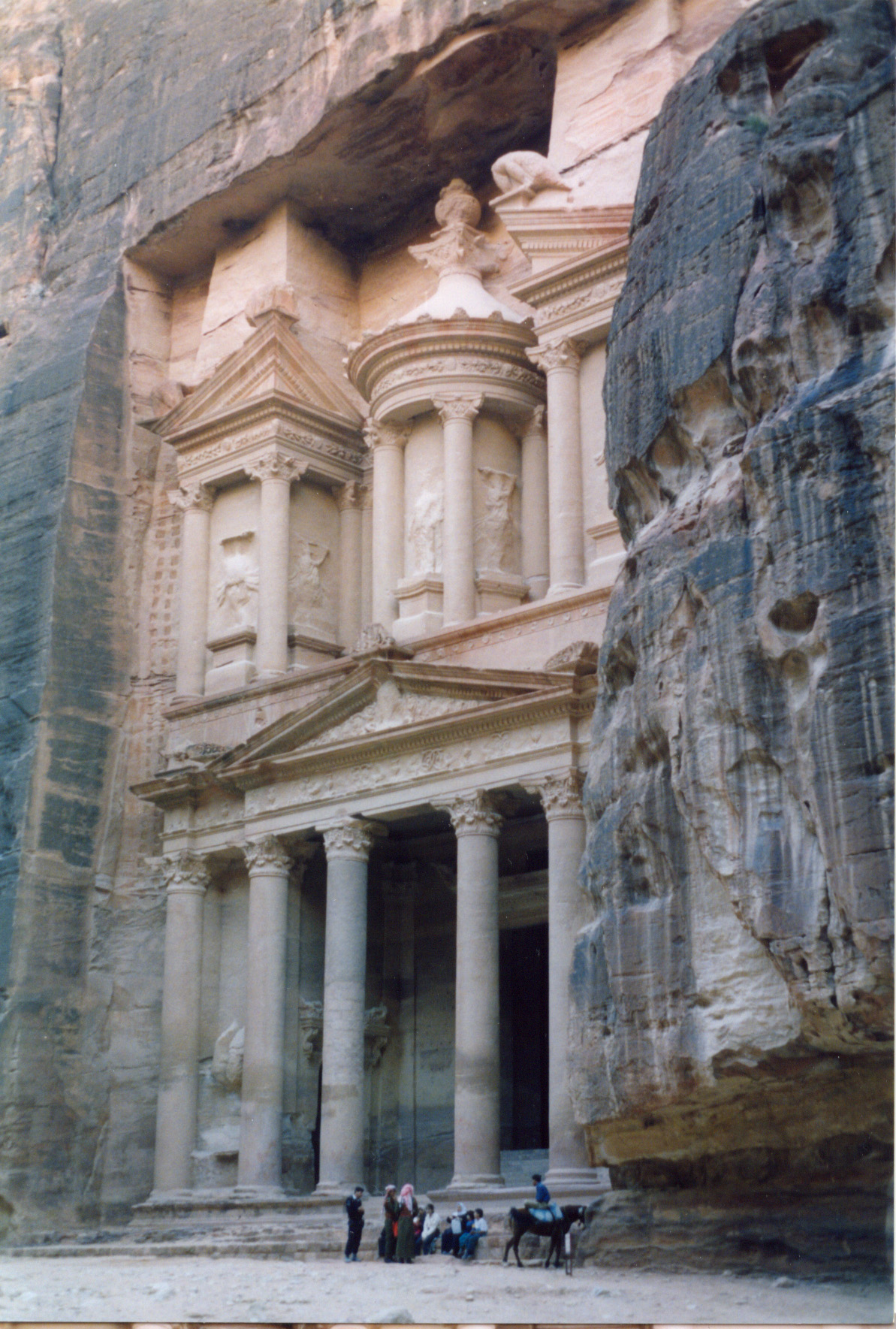
Visiting Petra was one of those rare travel experiences that felt both deeply personal and profoundly historical at the same time. Long before I arrived in Jordan, I had seen photographs of the Treasury carved into rose-coloured rock, its façade impossibly precise and monumental. Yet no image could have prepared me for the reality of stepping into a place where human ingenuity, time, and landscape are fused so completely that the boundary between nature and civilisation almost disappears.
Arrival and First Impressions
The approach to Petra is deliberately unassuming. From the nearby town of Wadi Musa, there is little indication of the grandeur that lies ahead. The surrounding landscape is rugged and dry, shaped by centuries of wind and sun. It feels ancient even before you enter the site, as though the land itself is quietly preparing you for what is to come.
Passing through the entrance, the journey begins on foot. Almost immediately, the atmosphere changes. The noise of the modern world fades, replaced by the sound of footsteps on stone and the occasional call of birds echoing between cliffs. The sense of anticipation builds with every step forward.
Walking Through the Siq
The Siq, the narrow gorge that leads into Petra, is an experience in itself. Towering sandstone walls rise on either side, sometimes so close together that only a strip of sky remains visible above. The rock surfaces twist and fold in organic patterns, streaked with shades of red, pink, orange, and gold.
As I walked through the Siq, I noticed remnants of ancient water channels carved into the rock, a reminder of the Nabataeans’ extraordinary understanding of engineering and resource management. This was not merely a city carved into stone; it was a carefully planned environment designed to thrive in an unforgiving desert.
The path curved gently, revealing nothing of what lay ahead. The deliberate concealment heightened the sense of mystery, making the final reveal all the more powerful.
The First Glimpse of the Treasury
Then, suddenly, the Siq opened just enough to reveal a glimpse of something extraordinary. At first, it was only a column, then a carved edge, and finally the full façade of Al-Khazneh, the Treasury. The moment felt almost theatrical, as if the city itself had choreographed the reveal.
Standing before the Treasury, I was struck by its scale and precision. Carved directly into the cliff face, its classical columns, statues, and intricate details seemed impossibly refined for such a remote location. The rose-coloured stone glowed softly in the light, changing hue as clouds passed overhead.
Despite the presence of other visitors, there was a moment of stillness — a collective pause as people absorbed the significance of standing before something so ancient and so meticulously crafted.
Exploring the Ancient City
Beyond the Treasury, Petra unfolds gradually. The city is vast, stretching across valleys and hillsides, with structures carved into rock faces and built from stone blocks. Tombs, temples, theatres, and dwellings appear in every direction, each telling a fragment of the city’s story.
Walking deeper into Petra, I began to appreciate its complexity. This was not a single monument, but a thriving urban centre that once served as a hub of trade, culture, and innovation. The Nabataeans had created a city that was both beautiful and functional, blending architectural influences from across the ancient world with local traditions.
The Theatre and Royal Tombs
The Roman-style theatre, carved into the rock, was particularly striking. Its scale suggested large gatherings, performances, and public life — a reminder that Petra was once alive with movement and sound.
Nearby, the Royal Tombs rose dramatically from the cliff faces. Their imposing façades hinted at status and ceremony, while their weathered surfaces told stories of time and erosion. Climbing toward them offered sweeping views across the valley, reinforcing the city’s dramatic relationship with its surroundings.
The Monastery and the Climb Upward
One of the most demanding yet rewarding parts of the visit was the ascent to Ad-Deir, the Monastery. The climb involved hundreds of stone steps, winding upward through rugged terrain. Each turn offered new perspectives, glimpses of distant valleys, and moments of rest beneath the shade of carved alcoves.
Reaching the Monastery felt like a pilgrimage. Its façade, simpler but larger than the Treasury, stood in quiet isolation, commanding the landscape. The sense of scale was overwhelming, but so was the sense of peace. Fewer crowds reached this far, allowing space to sit, reflect, and simply absorb the environment.
Light, Stone, and Time
What stayed with me most was how Petra changed throughout the day. As the sun shifted, the colours of the stone transformed — soft pinks in the morning, deep reds at midday, and warm golds in the late afternoon. The city felt alive, responsive to light and shadow.
Touching the rock surfaces, smoothed by centuries of wind and human presence, created a tangible connection to the past. It was impossible not to imagine the hands that had carved these structures, the lives lived within them, and the countless generations that had passed through these spaces.
Reflection on Loss and Preservation
Petra’s beauty is inseparable from its fragility. Weather, tourism, and time continue to erode the city, reminding visitors that preservation is an ongoing challenge. This awareness added a layer of responsibility to the experience — a reminder that witnessing such places comes with an obligation to protect them.
The silence in certain areas, broken only by the wind, underscored how much of Petra’s story has been lost. Yet what remains is powerful enough to speak across centuries.
Leaving Petra
As I began the long walk back through the Siq, the crowds thinned and the light softened. The return journey felt quieter, more contemplative. The narrow gorge that had once built anticipation now seemed to gently guide me back to the present.
Looking back one last time, I felt gratitude — for the opportunity to witness such a place, and for the reminder of what humans are capable of when creativity, resilience, and environment align.
Conclusion
Visiting Petra is not just a sightseeing experience; it is an immersion into history, art, and landscape. It challenges the imagination, humbles the observer, and leaves a lasting imprint long after the journey ends.
Petra stands as a testament to human ingenuity and the enduring dialogue between civilisation and nature. To walk its paths is to step into that dialogue — to listen, to reflect, and to carry its lessons forward.
