
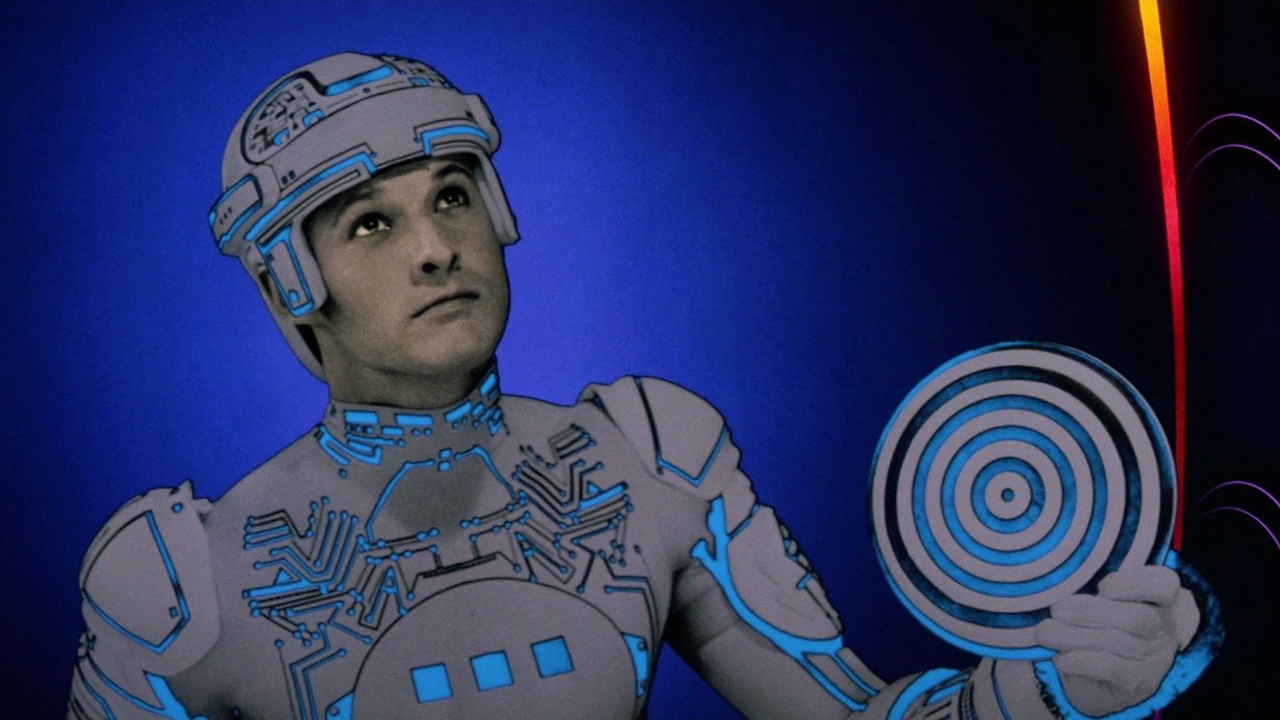
In the vast landscape of science-fiction cinema, few films have left as unusual, experimental, and enduring a mark as Tron (1982). More than forty years later, Tron remains one of the most iconic depictions of a digital world ever put on film — a vision decades ahead of its time. While many modern viewers know Tron primarily for its legacy revival in Tron: Legacy (2010) or the recent Tron: Ares (2025), the original movie stands as a landmark in visual effects, computing culture, and the philosophical imagination of the early computer age.
Tron was not just a movie; it was the first cinematic representation of the digital frontier as a place — a realm of light, logic, data, conflict, and freedom. For coders, engineers, designers, and tech enthusiasts, Tron is more than nostalgia: it is the genesis of the “cyber world” as popular culture understands it.
A Digital Premise Ahead of Its Time
Tron follows Kevin Flynn (Jeff Bridges), a gifted software developer and hacker who gets physically transported into a computer system — the Grid — where programs appear as humanoid entities, each representing functions, users, and data within ENCOM’s corporate mainframe.
In the real world, Flynn is trying to expose his former colleague, Ed Dillinger, who stole his video game creations and used them to climb the corporate ladder. Inside the computer, the struggle becomes literal:
- The Master Control Program (MCP) represents authoritarian control, corruption, and misused computational power.
- Tron, the eponymous security program created by programmer Alan Bradley, fights for users, freedom, and integrity.
- Programs are given personalities, strengths, and destinies shaped by the humans who wrote them.
This was a revolutionary concept. While today we talk casually about virtual worlds, AI agents, avatars, digital twins, and simulation universes, Tron imagined these ideas long before they entered mainstream discourse.
The Visual Revolution: When Computers Met Cinema
Tron is often remembered for its striking, unforgettable visual style: neon-lined suits, glowing circuits, angular digital architecture, and stark black backdrops. The film looks like no other movie of its era — because no one had ever attempted such a thing before.
In 1982, computer animation barely existed. Visual effects were limited to optical compositing, matte paintings, and practical models. Digital imagery was experimental, slow, and prohibitively expensive. Yet Tron dared to use computer graphics (CGI) not merely as decoration, but as the foundation of an entire aesthetic.
Key innovations included:
1. Early CGI Pioneering
While only about 15–20 minutes of the final film used true computer-generated imagery, those minutes were groundbreaking. The lightcycles, tanks, recognizers, and many environmental elements were produced using early CGI systems by companies like MAGI and Digital Effects.
2. Backlit Animation Technique
The live-action sequences inside the computer weren’t filmed on green screen. Instead, they used an unusual process involving black-and-white film, high-contrast plates, and backlit animation to give actors their glowing suit outlines. Today it looks stylized and retro, but in 1982 it was astonishing.
3. A Radical Aesthetic Choice
Rather than try to imitate physical reality, the filmmakers embraced abstraction: glowing lines, geometric shapes, digital landscapes. Tron created a visual language for the “inside of a computer” that continues to influence artists, game designers, and filmmakers.
Even now, when nearly any imagery can be rendered with computers, Tron’s aesthetic is unique — both primitive and visionary.
The Cultural and Historical Context
To understand Tron’s significance, it helps to remember what the early 1980s were like technologically.
- Personal computers were barely entering households.
- Graphical user interfaces were rare; command lines dominated.
- The concept of “cyberspace” had not yet been popularized.
- Video games were simple: Pac-Man, Space Invaders, Asteroids.
- AI was still an academic curiosity.
In this environment, Tron imagined — and visualized — a world where software was alive, data was sentient, and computer systems formed an ecosystem with societies, hierarchies, and ethical conflicts.
It was not simply sci-fi; it was prophetic.
Tron helped shape cultural understanding of digital reality long before the internet, virtual reality, and modern graphics made such concepts tangible. Many programmers and engineers later credited Tron with inspiring their careers. The film offered a way to visualize the invisible and imagine computing as an adventure.
Themes at the Intersection of Philosophy and Software
Tron is more than a visual experiment; it explores a number of deep ideas still relevant today:
1. Users and Programs as Creator and Creation
Programs in the Grid worship Users as distant, nearly divine figures. This reflects early computing’s idea that software is bound to the intentions of its creator. Yet Tron also explores what happens when creations exceed or question their creator — a theme central to AI ethics today.
2. Freedom vs. Control in Digital Systems
The MCP’s authoritarian rule over programs is an allegory for:
- corporate monopolies,
- surveillance,
- restricted access,
- and the dangers of centralized power.
In a world now defined by Big Tech giants and data dominance, this tension feels prophetic.
3. Identity and Purpose in a Digital World
Programs in Tron struggle with purpose, faith, loyalty, and self-determination — suggesting that digital entities might one day possess the qualities we associate with consciousness.
4. Gamification and Reality
The deadly games in the Grid mirror the rising video game culture of the time — but also raise questions about how systems can manipulate behaviour, something deeply relevant in today’s algorithm-driven platforms.
The Lightcycle Legacy
Few sequences in film history are as iconic as the lightcycle battle. The sharp right-angle maneuvers, the glowing trails, the strategic trapping of enemies in geometric patterns — all rendered using pioneering CGI — created a visual language that still influences game design today.
Lightcycle battles appear in:
- Tron (1982)
- Tron 2.0 (game)
- Tron: Legacy (2010)
- Disney theme park rides
- countless fan-made games and demoscene tributes
This sequence alone cemented Tron as a cultural icon.
Reception: Underrated in Its Time, Revered Later
Upon release, Tron received mixed reviews. Many critics were dazzled by the visuals but confused by the story. Some found it cold or too technical; some simply didn’t understand its ambition.
Ironically, Tron was even disqualified from the Oscars’ visual effects category — because judges felt “using computers was cheating.”
Today, that decision feels hilariously wrong.
Over time, Tron achieved cult status. Its influence expanded into:
- video game aesthetics
- cyberpunk culture
- digital ethics debates
- VR design
- retro-futuristic art movements
- the evolution of Disney sci-fi
By the time Tron: Legacy arrived in 2010, the original film had become a beloved classic.
Why Tron Still Matters Today
In an age where:
- AI agents mimic people,
- virtual worlds host millions of players,
- computing is embedded in everything,
- and algorithms shape society,
Tron’s questions feel more relevant than ever.
It asks:
- What happens when our creations take on lives of their own?
- Where does the line between user and program blur?
- Who controls digital worlds — and at what cost?
- Is software just logic, or can it embody morality, identity, and purpose?
These questions drive ongoing debates in AI ethics, software design, and digital philosophy — areas your blog already touches on.
Tron remains one of the earliest cultural works to explore these ideas not metaphorically, but literally — by turning code into characters.
A Legacy of Innovation
Tron deserves recognition as:
- a landmark in digital cinema,
- a forerunner of cyberpunk,
- a foundational text for anyone interested in computing and virtual worlds,
- and a film whose influence ripples through decades of design, programming culture, and sci-fi imagination.
Above all, Tron captures a moment in time when computing sat on the edge of massive transformation — and dared to imagine what could be.
For tech enthusiasts, software developers, digital artists, and anyone fascinated by the intersection of technology and storytelling, Tron is not just a film to watch — it is a film to study.
A glowing neon reminder of how imagination shapes innovation.
