
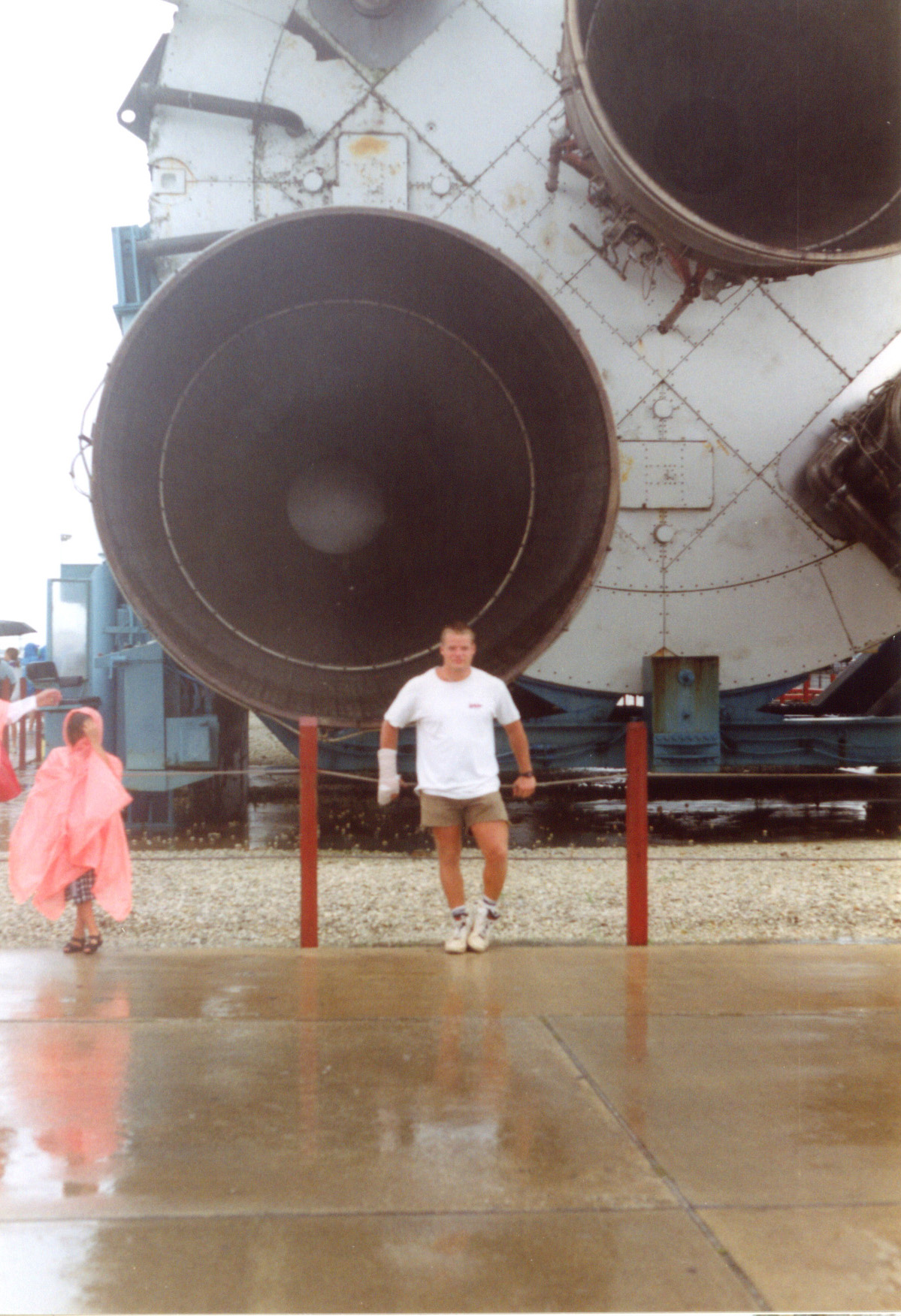
There are certain experiences in life that defy ordinary description, moments where the scale, significance, and sheer ambition of human achievement leave you awestruck. Visiting the Kennedy Space Center Visitor Complex in Florida, and standing next to the legendary Saturn V launch vehicle, was one of those moments for me. It was a rare opportunity to connect, in a tangible way, with the story of human exploration — to feel the enormity of history, technology, and human ingenuity all in one place.
The Journey to the Space Center
Driving toward the Kennedy Space Center, the landscape of the Florida Space Coast seemed almost ordinary — flat roads lined with palm trees, small towns, and glimpses of the Atlantic in the distance. Yet, as the towering structures and spacecraft exhibits began to appear on the horizon, it became clear that this was no ordinary destination. This was a place where human imagination had literally left the Earth, a hub where decades of space exploration history were preserved, celebrated, and made accessible to the public.
The Visitor Complex itself is expansive, combining museums, exhibits, theaters, and displays with outdoor launch areas and interactive experiences. There is a sense of movement and energy as visitors from all over the world converge here, drawn by the legacy of the Apollo missions, the Space Shuttle program, and ongoing endeavors to explore beyond our planet.
First Glimpse of the Saturn V
The moment I walked into the Apollo/Saturn V Center, I was confronted by something utterly overwhelming. Suspended above the ground, stretching over 363 feet in length, the Saturn V rocket loomed like a colossus. To stand next to it is to confront the reality of its scale — larger than any building I had ever been near, each stage towering above me, meticulously preserved, and glowing under the display lights.
It is difficult to grasp the immensity of the rocket until you see it in person. The width of its first stage alone is enough to make you step back instinctively. Yet there it stood, as elegant as it was powerful, a monument not just to technology, but to human daring and ambition. This was the rocket that carried astronauts to the Moon, the culmination of thousands of engineers’ and scientists’ work, a symbol of an era when humanity first stepped beyond its home planet.
The Emotional Impact
Standing next to the Saturn V, I was struck by a mix of awe, respect, and humility. It is one thing to read about the Apollo program or see images in textbooks and documentaries; it is another entirely to be confronted with the physical reality of what made it possible. You can feel the weight of the thousands of decisions, calculations, and innovations that went into every inch of this rocket.
There is also a deep sense of history in the air. This vehicle represents an era when exploration was literal — when humans dared to reach for the Moon, risking everything in pursuit of knowledge and discovery. To be there, mere feet away from something that once carried men beyond the confines of Earth, is to touch history in a way that words cannot fully convey.
Exploring the Apollo/Saturn V Center
The Center itself is designed to contextualize the rocket and its missions. Alongside the Saturn V, exhibits detail the lives of astronauts, engineers, and mission control staff who made lunar exploration possible. Models, artifacts, and interactive displays bring the story to life, from the first Mercury missions to the final Apollo moonwalks.
Walking beneath the rocket, I could see every stage in detail. The first stage, with its massive F-1 engines, seems almost industrial in its power and design — functional, precise, and awe-inspiring. The second stage shows the elegance of engineering required for orbital insertion, while the third stage hints at the quiet, final push that allowed astronauts to reach lunar orbit. Every bolt, panel, and engine nozzle tells a story of collaboration, innovation, and determination.
Learning About the Human Element
Beyond the machines themselves, the exhibits humanize the story of space exploration. Stories of astronauts’ training, engineers’ late nights solving complex problems, and the families waiting nervously for launches all add layers of depth to the experience.
One display recounted the Apollo 11 mission in particular — the first Moon landing. Reading the transcripts of mission control communications, watching footage of the astronauts walking on the lunar surface, and then looking up at the Saturn V that made it possible created an emotional resonance that was impossible to ignore. It is one thing to learn about history in a classroom; it is another to feel it physically and emotionally, standing beneath the very rocket that carried humans to another world.
Interactivity and Immersion
The Kennedy Space Center Visitor Complex also allows visitors to engage in interactive experiences that enhance the sense of scale and technical achievement. Flight simulators, lunar module replicas, and mission control re-creations provide context for what it meant to design, build, and operate spacecraft in an era when the stakes could not have been higher.
I spent time in a simulated launch experience, feeling the vibration and intensity of a rocket liftoff. While it pales in comparison to the real thing, it offered a sense of the forces and precision involved in launching humans into space. Coupled with the physical presence of the Saturn V, these experiences left me with a profound appreciation for both the technology and the people behind it.
Personal Reflection
Standing there, I couldn’t help but reflect on the sheer ambition and audacity of the Apollo program. The world was still in the midst of the Cold War when the United States committed to landing humans on the Moon. To think that within a decade, engineers and scientists designed, built, and launched a rocket of this magnitude is staggering.
There is also a personal element to the experience. The Saturn V represents a period of human achievement that feels both distant and immediate. It is a reminder of what can be accomplished when vision, talent, and determination converge. In that sense, it is inspiring, not just for those interested in space, but for anyone who seeks to push the boundaries of what is possible.
The Atmosphere and the Surroundings
The Center is more than just the Saturn V. Surrounding exhibits include rockets from other missions, the Space Shuttle Atlantis, and historical artifacts from decades of spaceflight. Walking through these displays, you are reminded that space exploration is a continuum — a story that spans generations.
Outside, the grounds offer glimpses of launch pads and the Atlantic horizon, connecting the exhibits inside to the real-world challenges of launching spacecraft. The combination of indoor exhibits and outdoor views makes the experience immersive, grounding the awe of technology in the reality of Florida’s Space Coast.
Why Visiting the Saturn V Matters
For anyone with even a passing interest in science, engineering, or history, seeing the Saturn V in person is transformative. It is a tangible reminder of human ingenuity and the ability to dream beyond Earth. More than that, it connects visitors to a narrative of exploration, courage, and achievement that is both historical and timeless.
Even if you are not a space enthusiast, the scale, detail, and craftsmanship are impossible to ignore. It is impossible to stand beneath the Saturn V without feeling something profound — a combination of admiration, inspiration, and humility.
Conclusion
Visiting the Kennedy Space Center Visitor Complex and standing next to the Saturn V launch vehicle is more than a tourist activity; it is a journey into the heart of human ambition. The experience combines history, engineering, storytelling, and emotion in a way that few other places can.
As I walked away from the rocket, I carried with me not only memories of its immense size and beauty but also a renewed appreciation for what humanity can achieve when imagination and determination converge. The Saturn V is not just a machine; it is a monument to possibility — a reminder that with vision, courage, and collaboration, humans can reach for the stars and, for a brief moment, touch them.
