
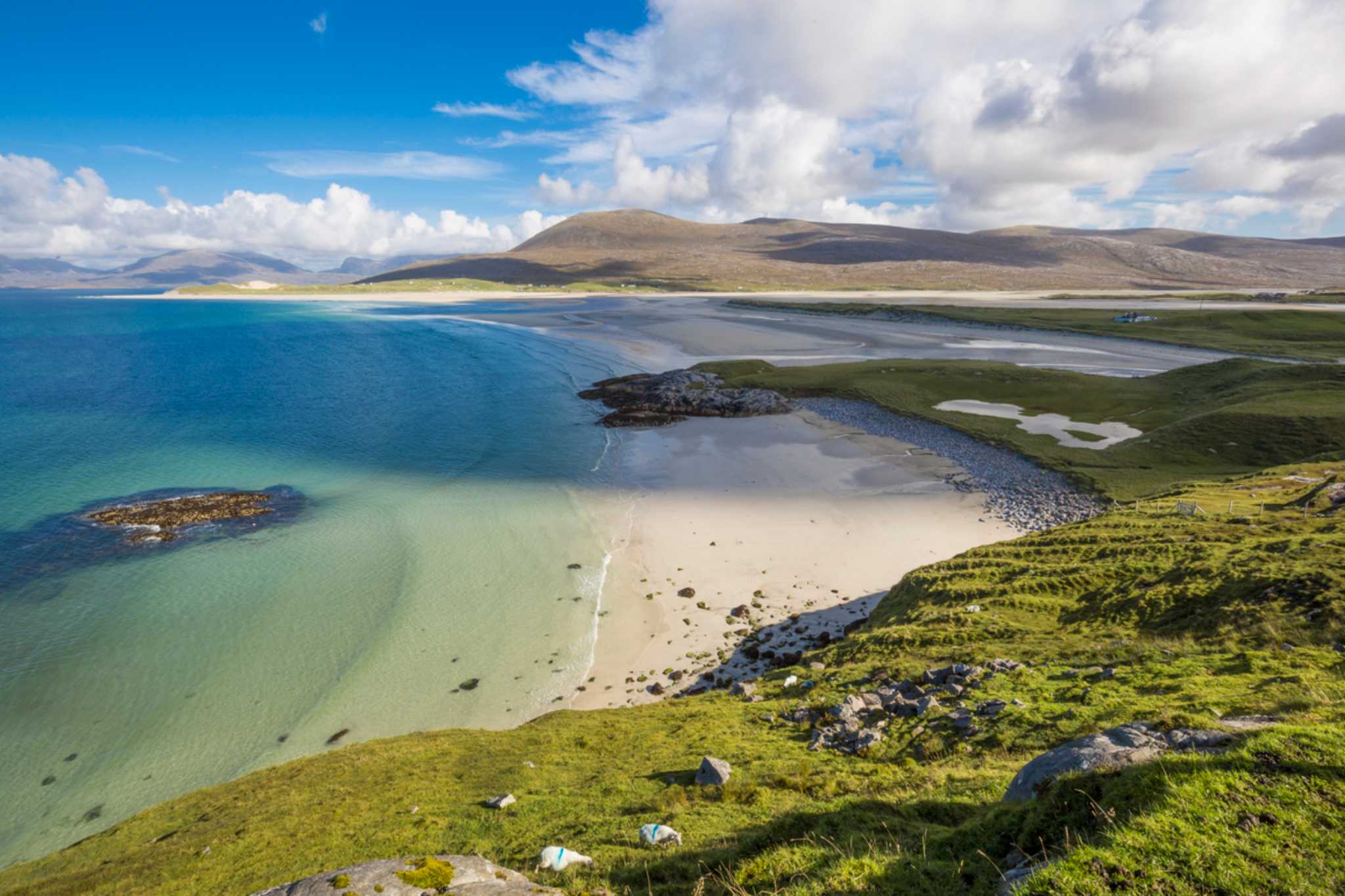
The Isle of Harris, forming the southern portion of the island of Lewis and Harris in the Outer Hebrides, is a place of remarkable contrasts and breathtaking natural beauty. Although Lewis and Harris are technically one island, a dramatic change in landscape marks the transition from the moorlands of the north to the rugged mountains and pristine beaches of Harris. This transformation contributes to the strong sense of identity many islanders feel, distinguishing Harris as a region shaped by ancient geology, traditional livelihoods, and a deep relationship with the sea. For visitors and locals alike, Harris delivers one of the most memorable experiences in Scotland—where landscapes shift from windswept hills to turquoise bays within minutes, and where Gaelic culture intertwines with centuries-old craftsmanship.
The geography of Harris is striking from the moment one arrives. The northern half, often called North Harris, is dominated by some of the highest mountains in the Outer Hebrides, including Clisham, which rises to 799 metres and offers one of Scotland’s most rewarding ridge walks. The rocky peaks, carved by ancient glaciers, stand in contrast to the smooth machair plains and beaches that define the western coastline. Beneath these mountains, the land softens into deep glens, freshwater lochs, and areas of heather moorland that shift in colour with the seasons. Red deer roam the hills, and golden eagles circle overhead, making Harris a haven for wildlife enthusiasts.
In contrast, South Harris is known for its world-famous beaches, frequently listed among the most beautiful in Europe. Sweeping sands at Luskentyre, Seilebost, Scarista, and Horgabost offer astonishing vistas: white sands, clear turquoise waters, and distant mountain silhouettes that give the area an almost Caribbean appearance—albeit with much colder seas. The beaches of Harris are shaped by ancient shell sand, contributing to their bright colour and the fertile machair that blooms with wildflowers in summer. These sands are also remnants of geological processes spanning millions of years; the bedrock here, Lewisian gneiss, is among the oldest in the world, dating back nearly 3 billion years.
Harris is deeply connected to the sea, with its coastline indented by sea lochs such as Loch Seaforth, West Loch Tarbert, and East Loch Tarbert. The sea has shaped the island’s economy and culture for centuries. Fishing, harvesting seaweed, and maritime trade were once central to island life, and today the waters around Harris remain vital for local livelihoods. Modern industries include aquaculture, small-scale fishing, tourism, and the world-renowned craft of Harris Tweed, which has become symbolic of the island’s global identity.
Although Harris Tweed is produced across both Lewis and Harris, the legacy of weaving is especially strong in the crofting communities of Harris. The fabric, protected by its own Act of Parliament, must be handwoven by islanders in their homes to carry the famous Orb trademark. Weaving remains a respected and skilled profession, often passed down through generations. Historically, weaving was carried out during winter months when the weather made crofting work more difficult. In recent decades, the industry has seen a revival, supported by designers and brands worldwide. The presence of working looms in many village homes gives visitors a rare glimpse into a living craft tradition that continues to evolve yet remains rooted in heritage.
The main settlement of Harris is the village of Tarbert, nestled between the east and west coasts on a narrow isthmus. Tarbert serves as the island’s transport hub, home to the ferry terminal connecting Harris to the Isle of Skye. The village has grown in recent years with new developments, cafés, independent shops, and accommodation. One of Tarbert’s most well-known attractions is the Isle of Harris Distillery, which produces the increasingly famous Harris Gin, infused with sugar kelp harvested from the island’s shores. The distillery has quickly become a key contributor to the local economy and a gathering point for visitors, reflecting the community-focused ethos that defines modern Harris enterprise.
Further south, scattered villages such as Leverburgh, Northton, Borve, and Rodel reveal the quieter, more traditional side of the island. In Rodel, visitors find St Clement’s Church, one of the finest examples of medieval architecture in the Hebrides. Built in the 16th century by Alasdair Crotach, chief of Clan MacLeod, the church contains carved tombs and intricate stonework that illustrate the importance of Harris within Gaelic clan culture. The church stands as a reminder of how deeply rooted history is within the landscape; centuries of community life, hardship, worship, and tradition are embedded in its walls.
Harris also has a long association with crofting, the small-scale, community-based form of agriculture that is central to the social fabric of the Highlands and Islands. Many families on Harris maintain crofts, raising sheep and cultivating small plots of land. Crofting practices help preserve biodiversity and maintain open landscapes, particularly the machair. While crofting has adapted to modern economic realities, it continues to play an important role in sustaining both population and culture. The rhythm of life in crofting communities is often tied to the changing seasons, weather patterns, and the enduring relationship between land and family.
Gaelic culture thrives on Harris much as it does on Lewis. Many residents speak Scottish Gaelic as a first or second language, and the island remains a stronghold for Gaelic education, community events, storytelling, and music. Visitors often hear Gaelic spoken in shops, schools, and at community gatherings. It is not simply a language but a living expression of identity, history, and connection. Place names throughout Harris—such as Lios Mór, Ceapabhal, and Na Hearadh—reflect this rich cultural heritage and evoke stories reaching back centuries.
Harris’s challenging environment has also shaped its sense of community. The island’s climate—windy, wet, and often unpredictable—demands resilience and adaptability. Yet on sunny days, the island reveals an extraordinary beauty that has inspired artists, photographers, writers, and musicians. The changing weather brings ever-shifting light across the hills and beaches, making Harris a dream for landscape artists and a popular retreat for those seeking solitude and natural inspiration.
Outdoor enthusiasts find countless opportunities for adventure. Hiking routes range from gentle coastal paths to demanding mountain climbs. Sea kayaking, cycling, wild swimming, and birdwatching are also popular. The North Harris Eagle Observatory offers a chance to see golden eagles in their natural habitat. For many visitors, simply driving the narrow, winding roads of the Golden Road on the east coast—named for its expense rather than its colour—provides an unforgettable journey through rocky inlets and small settlements perched above the sea.
Despite its small population, Harris offers a remarkable sense of vitality. Local businesses, artists, community organisations, and tourism enterprises have created a dynamic economy that blends tradition with innovation. Yet the island remains tranquil, remote, and deeply connected to its past. Time moves a little slower here, and for many, that is part of the island’s enduring charm.
Ultimately, the Isle of Harris is a place where contrasts define its character: ancient rocks and vibrant modern craftsmanship, mountains and beaches, tradition and creativity, solitude and community. Few landscapes in Scotland offer such dramatic variety within such a small area. Whether you come for the scenery, the culture, the history, or simply to breathe the fresh Atlantic air, Harris leaves a lasting impression—one that lingers long after the ferry or plane carries you back to the mainland.
