
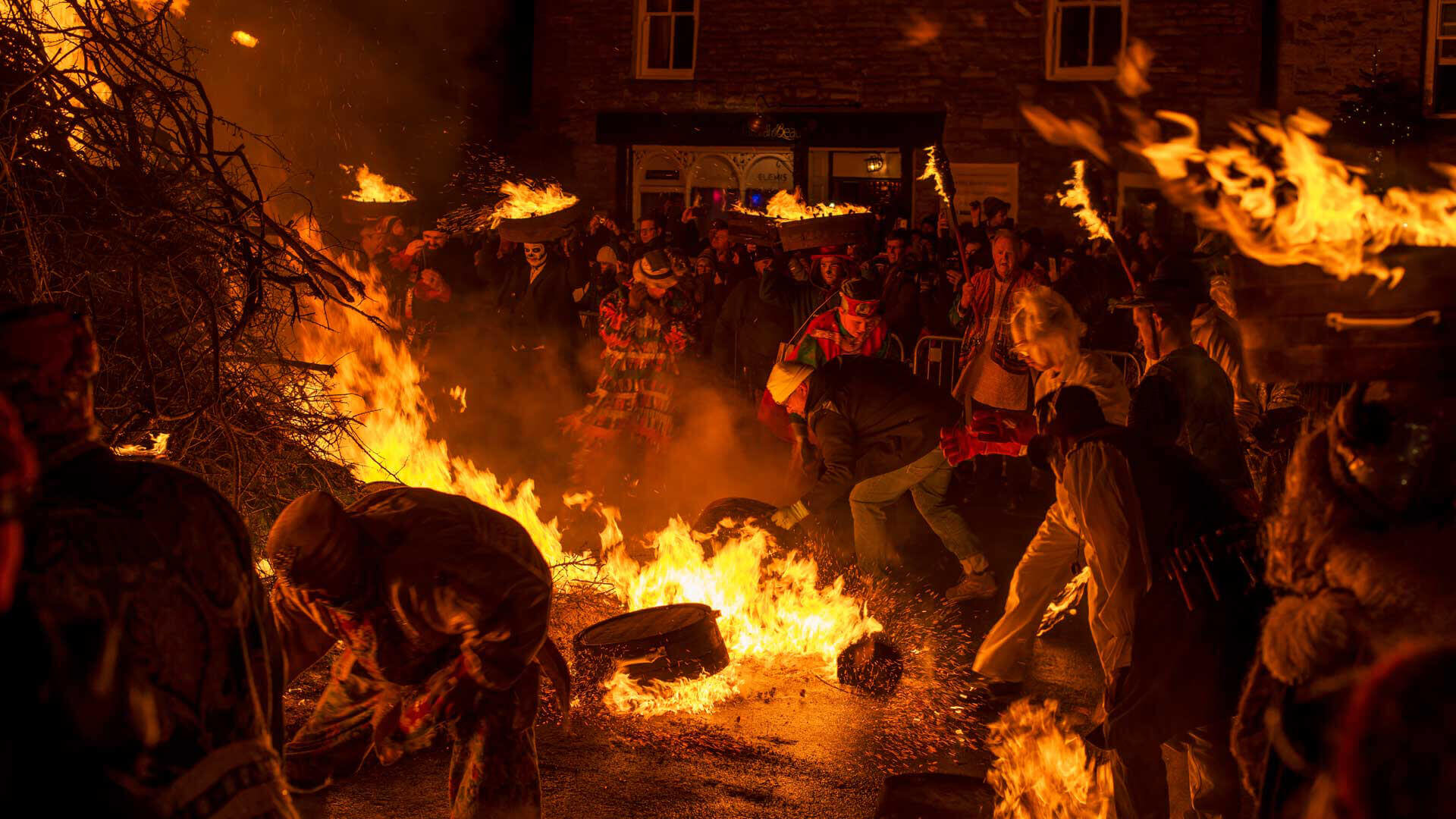
Nestled in the scenic hills of Northumberland, the small town of Allendale comes alive each New Year’s Eve with one of Britain’s most spectacular and mysterious traditions—the Allendale Tar Bar’l. At the stroke of midnight, as much of the world celebrates the turning of the year with fireworks or parties, Allendale marks the moment with flaming barrels of tar, carried aloft by costumed men known as “guisers.” This unique and ancient festival blends fire, folklore, and community spirit into a dramatic public event that draws visitors from across the globe.
Origins and History
The precise origins of the Tar Bar’l tradition are unclear, but it is widely believed to date back several centuries, possibly to pagan times. The ritual is likely rooted in ancient fire festivals that were common in pre-Christian Europe. Fire was seen as a purifying and protective force, used to drive away evil spirits and symbolize renewal, warmth, and hope. These themes align closely with the meaning of New Year celebrations—casting out the old and ushering in the new.
Historical records indicate that the Allendale festival may have begun as part of “Old New Year” celebrations, which were originally held on January 12 before calendar reforms. Over time, the celebration shifted to December 31st to align with the modern Gregorian calendar. By the 19th century, the Tar Bar’l tradition had become a firmly established local custom, though it has likely undergone various transformations throughout the years.
The Guisers and Their Role
At the heart of the Tar Bar’l tradition are the guisers—local men who don elaborate costumes and carry flaming barrels of tar through the town on their heads. The word “guiser” comes from “disguiser,” reflecting the tradition’s ties to mumming and other costumed folk rituals that often involve masquerade and performance.
The guisers are usually drawn from families who have participated in the event for generations. Carrying a barrel of burning tar on one’s head is not for the faint of heart—it requires strength, balance, and a certain level of bravery. The barrels are made from metal or wood, lined with flammable materials, and set ablaze just before the procession begins.
As the guisers parade through Allendale’s streets, they chant and shout, accompanied by the rhythmic beat of drums and the cheers of the crowd. The sight of 40 or more men bearing flaming barrels creates a powerful visual spectacle—one that is equal parts eerie and exhilarating. Some guisers paint their faces or wear period costumes, adding a further air of mystery to the proceedings.
The Procession and Bonfire
The procession begins around 11:30 p.m. on New Year’s Eve, as the guisers gather in the town square, surrounded by hundreds of spectators. Each participant lights their tar barrel and hoists it onto their head with the help of assistants. The barrels are held in place using thick gloves and protective headgear.
Led by a brass band and a marshal who ensures safety and coordination, the guisers march through the streets in a circular route that leads them back to the square. The parade itself lasts for about 30 to 45 minutes, during which the barrels continue to burn, emitting smoke, sparks, and the intense smell of tar.
At the climax of the event, the guisers toss their flaming barrels into a massive bonfire built in the center of the square. The crowd erupts in cheers as the fire blazes high, marking the arrival of the New Year in truly dramatic fashion. The bonfire, symbolizing the cleansing of the past year and the hope for renewal, becomes a focal point for celebration and reflection.
Cultural and Social Significance
The Allendale Tar Bar’l is more than just a spectacle—it is a living tradition that embodies the identity and resilience of the Allendale community. In an era when many local customs have faded away, the Tar Bar’l stands as a vibrant example of how folklore and heritage can continue to thrive in a modern context.
Participation in the event is seen as a rite of passage for many local men, and the tradition is passed down through generations. Children grow up watching their fathers and grandfathers take part, and many aspire to one day carry a barrel themselves. This continuity helps maintain a strong sense of community and shared identity.
The event also plays a significant role in local tourism and the economy. Every year, hundreds of visitors descend on Allendale to witness the Tar Bar’l, filling local hotels, pubs, and restaurants. The influx of tourists provides a valuable boost to businesses during the otherwise quiet winter season.
Moreover, the Tar Bar’l has gained national and international recognition through media coverage, documentaries, and travel features. While its roots are local and humble, the event has come to symbolize a broader appreciation for Britain’s regional traditions and folk customs.
Safety and Modern Adaptations
Given the obvious hazards of carrying flaming barrels through a crowd, safety is a major concern for organizers. The event is carefully planned in collaboration with local fire services, police, and medical teams. Guisers receive safety training, and protective gear is used to minimize risks.
In recent years, organizers have implemented measures to ensure the safety of both participants and spectators. These include crowd barriers, designated viewing areas, and strict guidelines on who may participate as a guiser. Only those who are approved and have undergone safety checks are allowed to carry the barrels.
Despite these precautions, the event retains its raw and elemental energy, a testament to the balance between tradition and modernity.
The Spirit of Allendale
One of the most compelling aspects of the Allendale Tar Bar’l is its authenticity. Unlike some revived or reconstructed folk traditions, the Tar Bar’l has never truly disappeared. It has been continuously observed by the people of Allendale for generations, evolving organically over time while staying true to its original spirit.
The event is organized by volunteers and maintained by local enthusiasm rather than commercial sponsorship or government funding. This grassroots nature helps preserve the integrity of the tradition and keeps it closely tied to the community.
Visitors often remark on the welcoming atmosphere and the pride that Allendale’s residents take in their festival. For one night a year, the small town becomes the center of something ancient and awe-inspiring—a beacon of fire, fellowship, and continuity amid the darkness of winter.
Conclusion
The Allendale Tar Bar’l is a striking example of how tradition can endure and flourish in a changing world. With its fiery pageantry, rich symbolism, and deep community roots, the event captures the imagination and stirs something primal in all who witness it. In a landscape often marked by the loss of heritage and identity, Allendale’s New Year celebration stands as a proud and powerful reminder of the past—burning bright into the future.
Whether you are drawn by the spectacle, the history, or the sense of shared humanity that such customs invoke, the Allendale Tar Bar’l is an unforgettable experience. It is more than just a festival; it is a living flame of culture, carried on the shoulders of a dedicated community through the long passage of time.
https://www.visitnorthumberland.com/explore/seasons/winter/tar-barl
