
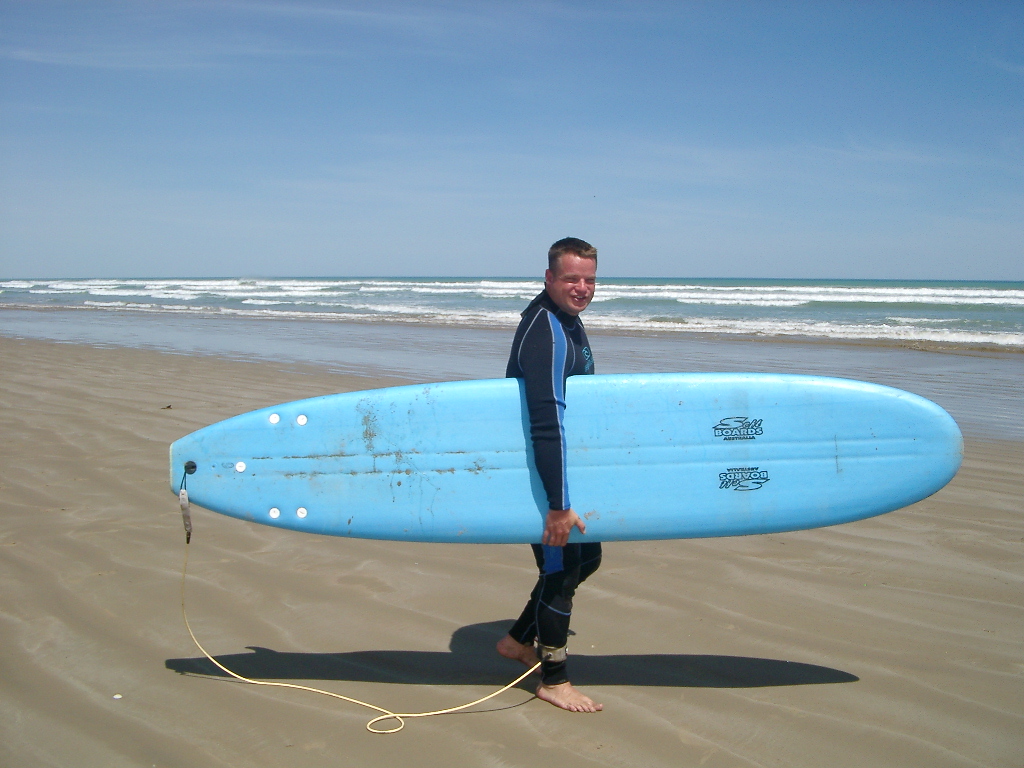
Surfing on Kangaroo Island, Australia was an experience that stayed with me long after I left the beach. It was not something I approached lightly, nor was it something I felt naturally confident about. In fact, it was only the second time I had ever attempted to surf. My first encounter with surfing had taken place years earlier at Huntington Beach, California, during a long trip across the United States of America following a summer camp in North Carolina.
Those two experiences could not have been more different — not just in location and conditions, but in what they taught me about the ocean, myself, and the meaning of trying something outside my comfort zone.
My First Attempt: Huntington Beach, California
Huntington Beach carries an almost mythical reputation. Known as “Surf City USA,” it represents everything people imagine when they think of surfing: endless coastline, rolling waves, palm trees, and a deeply rooted surf culture. When I arrived there during my travels across the United States, surfing felt almost unavoidable. It was part of the place’s identity, woven into everyday life.
At that point, my understanding of surfing was purely observational. I had seen it in films, photographs, and travel documentaries. Watching surfers glide across waves made it look graceful and effortless — a natural extension of the ocean itself. Standing on the beach, surrounded by experienced surfers carrying their boards with casual confidence, I felt a mixture of excitement and intimidation.
My first attempt was exactly what you would expect from a complete beginner. Balancing on the board felt alien, timing the waves was confusing, and paddling required far more effort than anticipated. I spent more time falling into the water than standing on the board. Yet despite the repeated failures, there was something undeniably appealing about it. Even in brief moments — lying prone on the board, feeling a wave lift me slightly — there was a spark of understanding.
Huntington Beach gave me my first taste of surfing, but it didn’t make me a surfer. It was an introduction, not a transformation.
Time, Distance, and Perspective
Years passed between that experience in California and my time on Kangaroo Island. In that time, travel had given me a deeper appreciation for landscapes and environments on their own terms. I had learned that not every activity needs to be mastered to be meaningful. Sometimes, simply engaging with a place — even imperfectly — is enough.
When I arrived on Kangaroo Island, I wasn’t thinking about surfing as a challenge to conquer. The island itself demanded a different mindset. It felt remote, rugged, and largely untouched. This was not a place shaped to accommodate visitors; it was a place that existed independently of them.
The ocean surrounding Kangaroo Island reflected that same character. It felt colder, heavier, and more serious than the beaches I remembered in California. Standing on the sand, looking out toward the Southern Ocean, I felt a quiet respect rather than excitement. This was not a backdrop — it was a presence.
Deciding to Surf Again
Choosing to surf on Kangaroo Island felt less like a spontaneous decision and more like a considered one. I knew my limitations. I knew I wasn’t experienced. But something about the setting made me want to try again — not to prove anything, but to engage with the place in a more direct way.
Surfing here felt stripped back. There were no crowds, no surf schools lining the beach, no sense of performance. It was just the shoreline, the wind, the waves, and a small number of people who clearly understood the environment far better than I did.
Carrying the board across the sand, I felt a familiar nervousness, but it was different from Huntington Beach. This time, it wasn’t about embarrassment or failure. It was about awareness.
Entering the Water
The first step into the water was a shock. The temperature alone demanded attention, instantly sharpening focus. Pulling the wetsuit tighter, adjusting my grip on the board, I moved forward deliberately, watching the waves carefully before committing.
Paddling out required patience. Each wave had to be read and responded to. Unlike my earlier experience in California, I wasn’t rushing. I allowed space between myself and the sets, learning the rhythm of the water rather than fighting it.
That change in approach made all the difference.
Learning to Listen to the Ocean
Surfing on Kangaroo Island taught me something fundamental: the ocean communicates constantly, but only if you slow down enough to notice. The timing of the waves, the movement of the water beneath the board, even the sound of the surf carried information.
I didn’t catch many waves. There were no long rides, no dramatic moments where everything suddenly clicked. But there were small victories — feeling the board lift, adjusting balance instinctively, riding a wave for a few seconds longer than before.
Each attempt felt earned.
Falling With Understanding
Falling is inevitable when learning to surf. On Kangaroo Island, falling felt instructive rather than frustrating. Each fall told me something: about balance, timing, or positioning. The water was powerful but honest. When I made a mistake, the result was immediate and clear.
This was very different from my earlier experience at Huntington Beach, where everything had felt chaotic and confusing. Here, I could trace cause and effect. That understanding transformed failure into learning.
Floating on the board between attempts, I took time to look around. The coastline stretched out, raw and expansive. There were no buildings interrupting the view, no noise beyond wind and surf. It felt like surfing reduced the world to essentials.
Physical and Mental Effort
Surfing is physically demanding in ways that aren’t immediately obvious. Paddling tests endurance, balancing engages muscles you rarely use, and the constant movement requires focus. On Kangaroo Island, the effort felt amplified by the cold and the power of the water.
But that effort also made the experience grounding. There was no space for distraction. Every moment required presence. In a world that often pulls attention in too many directions, that focus felt refreshing.
Comparison and Growth
Looking back, the contrast between my two surfing experiences tells a story of growth rather than skill.
- Huntington Beach was about novelty and curiosity.
- Kangaroo Island was about awareness and respect.
In California, I had tried surfing because it felt iconic — something you were meant to do there. On Kangaroo Island, I surfed because it felt appropriate to the place, even if only briefly.
I didn’t leave Kangaroo Island as a surfer. But I left with a deeper understanding of what surfing actually is: not a performance, not a checklist item, but a relationship with the ocean.
Leaving the Water
When I finally walked back onto the beach, tired and cold, there was a quiet sense of satisfaction. Not because I had achieved anything remarkable, but because I had engaged honestly. I had tried again, with more patience and less expectation.
Sitting on the sand, watching the waves continue their rhythm uninterrupted, I felt grateful. Surfing on Kangaroo Island had given me something subtle but lasting — a reminder that progress doesn’t always look dramatic, and that some experiences are valuable precisely because they are unfinished.
Final Reflections
Surfing on Kangaroo Island was not about mastering waves or chasing adrenaline. It was about returning to something I once tried, with a different mindset shaped by time and experience.
Compared to my first tentative attempt at Huntington Beach, this second experience felt more grounded and meaningful. It reinforced a lesson I’ve learned repeatedly through travel: sometimes the most powerful experiences come not from success, but from engagement, humility, and respect.
The ocean will always be stronger. But standing on that beach, board under my arm, I felt content knowing I had met it on its terms — and that, for me, was enough.
