
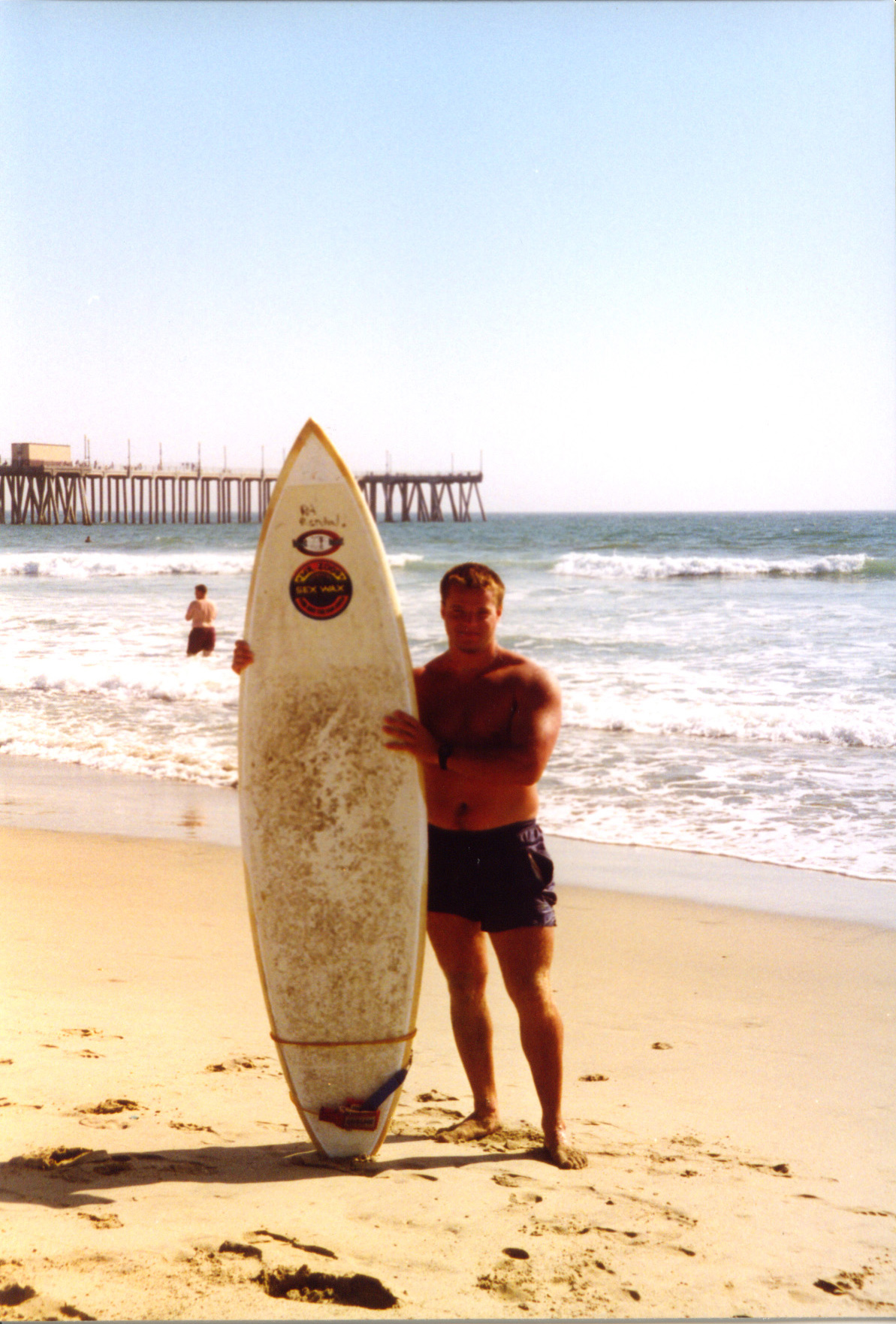
Surfing has always fascinated me — the idea of balancing on a board, reading the rhythm of the ocean, and gliding across waves with ease. My first real opportunity to try it came during a trip across the United States of America, right after attending a summer camp in North Carolina. I was traveling with a group of friends I had met at camp, many of whom were experienced surfers, having grown up near Cornwall in the UK, where the ocean was a playground rather than a novelty. Their enthusiasm was infectious, and they encouraged me to give surfing a try. Little did I know that this brief encounter at Huntington Beach, California — famously nicknamed “Surf City USA” — would become one of the most memorable experiences of my formative years.
Arrival at Huntington Beach
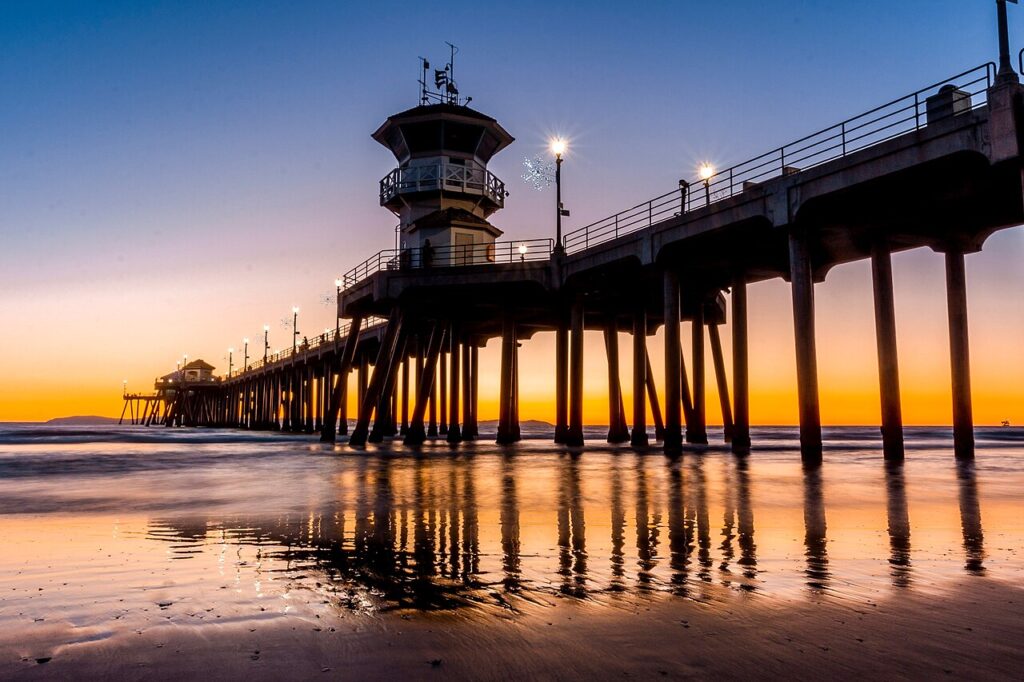
Huntington Beach is the kind of place that seems designed for surfing. Even before stepping onto the sand, you could feel the energy: the smell of salt and sunscreen in the air, the rhythmic crashing of waves, and the constant motion of surfers moving in and out of the surf. Board shops, surf schools, and the iconic pier lined with onlookers created a vibrant backdrop. It was clear that surfing here wasn’t just a hobby; it was a culture, a lifestyle woven into the fabric of daily life.
For me, a complete novice, it was both exhilarating and intimidating. The beach was alive with motion. Surfboards bobbed on the water, people paddled out with confident strokes, and those standing on the waves looked as if gravity and the ocean were in perfect harmony. Watching them, I realized the truth: surfing was as much an art as a sport, and I had no idea if I could master either.
Encouragement from Friends
My friends from summer camp, who had grown up surfing in Cornwall, were eager to share the experience with me. Their confidence was contagious. “You’ll get it,” they said, “just give it a try.” They gave tips on paddling, balancing, and reading the waves, but more importantly, they reassured me that falling was part of the process — part of learning.
Preparing to Surf
The first step was getting comfortable with the board itself. I was given a soft-top beginner board, designed to provide stability and buoyancy for someone new to surfing. It was larger and heavier than I expected, but it felt manageable once I lifted it under my arm.
Standing on the sand, I practiced positioning, learning where to place my hands and feet. My friends demonstrated how to pop up from lying prone to standing. They emphasized balance and posture, but I quickly realized that no amount of instruction could prepare me fully for the sensation of being on the water.
Entering the Surf
Walking into the water, board under arm, was like stepping into a different world. The temperature of the Pacific was surprisingly cold, and the waves were taller and more forceful than I anticipated. Each step forward required attention: I had to avoid being knocked over before even attempting to ride a wave.
Paddling out was a challenge in itself. Each wave approaching the shore had to be assessed — should I duck under it, push through it, or wait? My friends guided me, showing me how to angle the board, how to use my arms efficiently, and how to time my movements with the swells. Despite their guidance, it quickly became clear that the ocean was unpredictable. No two waves were alike, and learning to adapt to each one was essential.
The First Wave
Catching my first wave was both thrilling and terrifying. I lay prone on the board, feeling the wave lift me, then pushed myself up as my friends had shown me. For a fleeting moment, I was standing. The balance was precarious, my legs wobbling, my arms outstretched like tightropes. And then — inevitably — I fell.
The fall itself was startling but not painful. The wave carried me forward, tumbling me into the surf with a mix of force and rhythm. Surfing, I realized, is as much about falling as standing. Each time I went down, I learned something new about timing, balance, or body positioning.
What mattered wasn’t success on the wave itself, but the experience of trying, of being fully present in the ocean’s movement.
Learning Through Repetition
I spent the next hour repeating the cycle: paddle out, catch a wave, stand (briefly), fall, float, repeat. With each attempt, I felt slightly more confident. My timing improved. I could feel the board responding beneath me, anticipate the moment when a wave would lift, and adjust my balance instinctively.
The repetition was exhausting, both physically and mentally. Paddling out required upper body strength, maintaining posture demanded core engagement, and staying aware of the changing waves required focus. But it was also incredibly rewarding. Every small improvement felt tangible, every longer glide a quiet triumph.
Observing the Surf Culture
While learning, I couldn’t help but observe the surfers around me. Many moved with a fluidity that seemed otherworldly, carving lines across the waves as if the ocean were an extension of their bodies. Watching them, I understood why Huntington Beach is revered. Surfing here is more than an activity; it’s a lifestyle, a statement of harmony with the ocean.
Being a beginner in that environment was humbling. I realized how much practice, patience, and experience goes into the effortless appearances of seasoned surfers. And yet, there was also a communal sense — encouragement, smiles, nods of recognition — that made me feel welcome despite my inexperience.
Moments of Triumph
Amidst the falls and tumbles, there were small moments of success. Riding a wave for a few seconds longer than before, balancing without wobbling immediately, or even catching the wave at the right angle — these moments were exhilarating. They weren’t cinematic or perfect, but they were mine.
I remember one particular wave: I paddled out, positioned myself, and popped up just as the wave lifted. I wobbled, arms spread for balance, and felt the thrill of motion beneath my feet. The wave carried me toward the shore, and for a few glorious seconds, I was surfing. Then I fell. But even the fall felt like a victory — proof that I had connected with the ocean, even briefly, in a way I hadn’t before.
Reflection on the Experience
By the end of the day, I was exhausted, sandy, and exhilarated. Surfing at Huntington Beach had taught me a number of lessons:
- Patience and perseverance: Progress is incremental. Each fall is part of learning.
- Respect for the ocean: The waves are powerful and unpredictable; humility is essential.
- Joy in small victories: Even brief moments of success are meaningful.
It also reminded me of the importance of encouragement. My friends from Cornwall had pushed me gently, guided me when necessary, and celebrated small successes alongside me. Their presence made the experience less intimidating and more enjoyable.
Long-Term Impact
Surfing at Huntington Beach did not transform me into a skilled surfer. I did not leave the beach able to ride waves with ease or confidence. What it did provide, however, was perspective. It gave me insight into the relationship between human effort and natural forces, the importance of patience, and the joy of being fully present in an activity that demands attention and respect.
It also planted a seed for future surfing experiences. Years later, when I faced the powerful waves of Kuta Beach in Bali, I approached the water with caution and humility, understanding that experience and skill must align with conditions. And later, on Kangaroo Island, I returned to surfing with awareness, presence, and a newfound respect for the ocean’s power.
Huntington Beach remains a benchmark — the place where curiosity became action, where encouragement turned into experience, and where I first discovered the delicate balance between thrill and humility in the ocean.
Surfing at Huntington Beach was more than a beginner’s adventure. It was a lesson in patience, presence, and respect — a reminder that the most memorable experiences often come not from mastery, but from the willingness to try, fall, and try again. It was a day that combined challenge, joy, and a little fear, all rolled together into the rhythm of the waves, and it remains one of my most vivid travel memories.
