
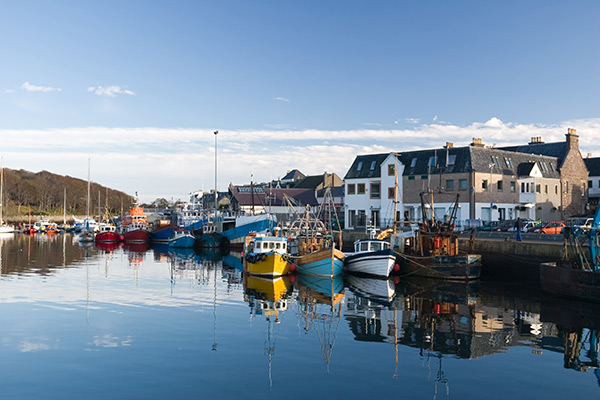
Stornoway, the largest town in the Outer Hebrides of Scotland, serves as the cultural, economic, and administrative hub of the islands. Located on the east coast of the Isle of Lewis, the town has a rich history shaped by centuries of Norse influence, Gaelic tradition, maritime trade, and island life. From its cobbled streets and historic harbour to its vibrant arts scene and modern infrastructure, Stornoway embodies the resilience, heritage, and adaptability of the people of the Hebrides. As both a gateway to the islands and a thriving community in its own right, Stornoway offers visitors and residents a unique blend of history, culture, and natural beauty.
Geographical Setting
Stornoway occupies a strategic location on the east coast of Lewis, overlooking the Minch, the strait separating the Outer Hebrides from mainland Scotland. Its sheltered harbour and natural deep-water bay made it an ideal location for settlement and trade for centuries. The surrounding landscape is characterised by rolling moorlands, freshwater lochs, and rugged coastlines, while nearby beaches, such as Traigh Mhor, provide scenic vistas and recreational opportunities. Stornoway’s location also made it a focal point for transport links, connecting the Hebrides to mainland Scotland by ferry, air, and road.
The town lies at the mouth of a small river, originally called the Stornoway River, which provided fresh water and a natural anchor for early settlement. The surrounding machair plains, particularly to the west and south, supported crofting and agriculture, forming a symbiotic relationship between town and countryside that persists to this day.
Historical Origins
The name “Stornoway” is derived from the Old Norse Stjórnavágr, meaning “steering bay” or “safe haven,” reflecting the Viking influence on the region during the early medieval period. Norse settlers arrived in the Hebrides around the 9th century, establishing trade networks, fishing settlements, and fortified sites. Stornoway’s natural harbour quickly became a key anchorage for maritime activities, linking the islands to the Norse world and later to Scottish kingdoms.
Following the decline of Norse power in the Hebrides, Stornoway became part of the Lordship of the Isles, ruled by the MacLeods and later the MacNeils. The town gradually expanded as a fishing and trading port, attracting merchants, craftsmen, and seafarers. By the 18th and 19th centuries, Stornoway had grown into the principal town of Lewis, its harbour handling goods such as herring, kelp, wool, and later, Harris Tweed.
The town’s history is also intertwined with the broader social and political developments of the Hebrides. The Highland Clearances, which displaced many Gaelic-speaking crofters from the mainland to the islands, increased the population of Lewis and placed additional pressure on land and resources in and around Stornoway. Despite these challenges, the town remained a hub of culture and commerce, preserving Gaelic language, music, and traditions even as modernisation arrived.
Stornoway Harbour and Maritime Heritage
At the heart of the town lies Stornoway Harbour, a deep-water port that has been central to the town’s identity for centuries. The harbour facilitated the fishing industry, trade with mainland Scotland, and maritime transport to other islands and ports. During the herring boom of the 19th century, Stornoway became a bustling centre of commerce, with fleets of boats venturing into the North Atlantic.
The harbour also played a military role at various points in history, particularly during World War II, when Stornoway served as a naval base for anti-submarine operations. Today, it continues to be a lifeline for the Outer Hebrides, connecting Lewis and Harris to Ullapool by ferry and supporting commercial shipping, tourism, and fishing.
Economy and Industry
Stornoway has long been the economic engine of Lewis. Historically, its economy was built on fishing, crofting, weaving, and maritime trade. The town was closely associated with Harris Tweed, the world-famous handwoven wool fabric, with many weavers living in Stornoway or supplying tweed through the town’s markets. Other traditional industries included kelp collection, sheep farming, and boatbuilding.
In the modern era, Stornoway has diversified its economy. Key sectors now include:
- Public Administration: As the administrative centre of the Western Isles Council, Stornoway hosts government offices, healthcare services, and education institutions.
- Tourism: The town serves as a gateway for visitors exploring Lewis and Harris, the Callanish Stones, Gearrannan Blackhouse Village, and the beaches of the west coast.
- Retail and Services: Stornoway’s shops, cafes, and markets provide goods and services to residents and visitors alike.
- Fishing and Aquaculture: Though no longer as dominant as in the 19th century, fishing remains important, alongside modern aquaculture ventures such as salmon farming.
Stornoway is also notable for the Stornoway Black Pudding, a local culinary speciality made from beef suet, oatmeal, and blood, which has received Protected Geographical Indication (PGI) status in Europe.
Culture and Language
Stornoway is a centre for Gaelic language and culture. Many residents speak Gaelic, and it is used in schools, signage, media, and public events. The town celebrates its heritage through music, storytelling, and festivals. Traditional Hebridean music, including fiddling and singing, is a vibrant part of daily life, and Stornoway hosts events that highlight both traditional and contemporary arts.
The town also preserves its architectural heritage, with buildings such as Lews Castle, a 19th-century Gothic revival mansion built by Sir James Matheson, standing as a symbol of historical prosperity. Today, Lews Castle houses a museum, cultural centre, and educational facilities, linking the town’s past to its present.
Education and Community Life
Education is central to life in Stornoway. The town hosts several primary and secondary schools, as well as Lews Castle College, part of the University of the Highlands and Islands, offering courses in Gaelic studies, engineering, tourism, and business. These institutions help retain young people in the islands and attract students from elsewhere.
Community life in Stornoway is active and diverse. Sports, particularly football and shinty, play an important role, and local clubs foster both participation and community spirit. Annual events, ceilidhs, and cultural festivals reinforce the town’s unique identity while celebrating the broader Hebridean heritage.
Modern Infrastructure and Transport
Stornoway serves as the transportation hub for the Outer Hebrides. The town’s ferry terminal links Lewis and Harris to Ullapool on the Scottish mainland, facilitating trade, travel, and tourism. Stornoway Airport provides connections to Inverness, Glasgow, and Edinburgh, making the town accessible despite its remote location.
Local roads connect Stornoway to smaller villages and crofting communities across Lewis, while bus services provide transport for residents and visitors. Modern utilities, healthcare facilities, and retail services ensure that Stornoway meets contemporary needs while retaining its historic charm.
Tourism and Attractions
Visitors to Stornoway often begin with the harbour and town centre, exploring shops, cafes, and the cultural landmarks of the town. Key attractions include:
- Lews Castle: A restored 19th-century mansion with museum, gallery, and grounds.
- Stornoway Museum: Exhibits detailing local history, archaeology, and clan heritage.
- Beaches: Traigh Mhor and surrounding sandy shores offer scenic walks and opportunities for birdwatching.
- Callanish Stones: A short drive away, these prehistoric standing stones are among Scotland’s most famous monuments.
- Hebridean Craft Shops: Selling Harris Tweed, wool products, and local art.
The town also offers traditional hospitality, including hotels, guesthouses, and self-catering accommodation, making it an ideal base for exploring Lewis and Harris.
A Town of Resilience and Identity
Stornoway embodies the resilience and identity of the Outer Hebrides. Despite centuries of change—from Norse influence to the Highland Clearances, from maritime trade to modern tourism—the town has maintained a distinctive character. Its blend of Gaelic culture, historic architecture, economic innovation, and natural beauty makes it a focal point for the islands’ past, present, and future.
The people of Stornoway are proud of their heritage, speaking Gaelic, preserving traditional crafts, and celebrating local food and music. At the same time, the town adapts to modern needs, offering education, employment, and connectivity in a challenging island environment. This balance of tradition and progress is what makes Stornoway unique: a town that honours its past while looking confidently toward the future.
Conclusion
Stornoway is far more than a town; it is the heart of Lewis and the Outer Hebrides. From its historic harbour and Norse roots to its Gaelic culture, vibrant economy, and natural beauty, the town reflects the rich tapestry of island life. For visitors, Stornoway offers history, culture, and scenic landscapes, while for residents, it provides a centre for community, education, and commerce. Standing on its waterfront, gazing across the Minch, it is easy to see why Stornoway has long been a gateway, a gathering place, and a symbol of Hebridean identity.
