
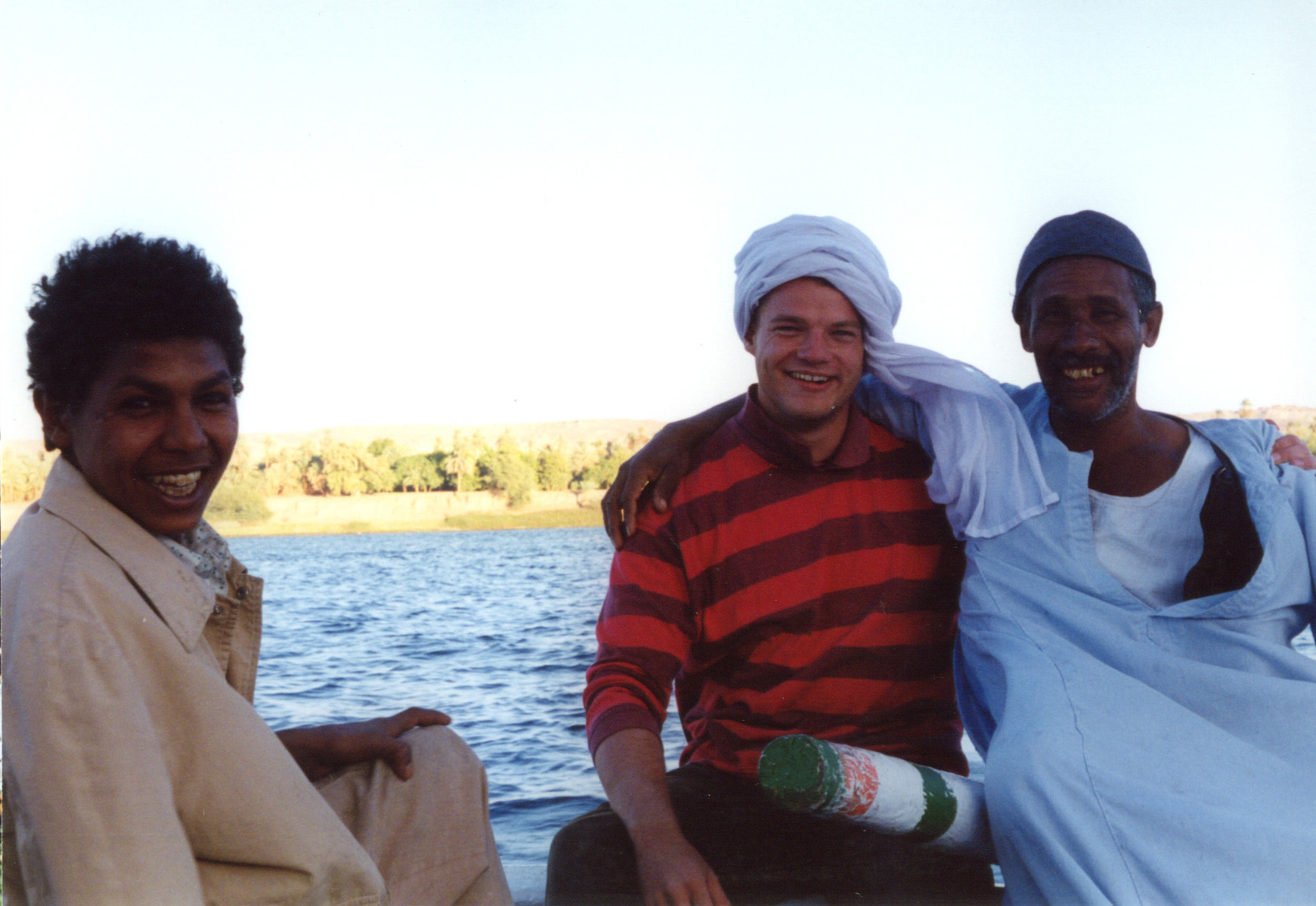
Sailing along the Nile River, drifting between Aswan and Edfu on a traditional felucca, is an experience that feels both timeless and deeply immersive. The river is more than a waterway; it is the lifeblood of Egypt, a ribbon of blue that has sustained civilizations for thousands of years. As the sun rises over the water, illuminating the golden desert on either side, it becomes clear why this journey has inspired explorers, poets, and travelers for centuries.
Setting Out from Aswan
Our journey began in Aswan, a city that feels like the gateway to the Upper Nile. Bustling markets, fragrant spices, and the warm hum of daily life created a vibrant contrast to the serenity that awaited on the river. After a brief tour of the city and the Aswan High Dam, I made my way to the docks, where the feluccas were moored.
A felucca is a traditional Egyptian sailing boat, simple yet elegant, with a single triangular sail and a flat hull that glides smoothly across the water. Boarding felt like stepping into history — the same design has been used for millennia, unchanged because it works so perfectly for the river’s currents and winds.
Our crew, a team of local sailors, welcomed us aboard with easy smiles and a casual efficiency. There was no rush, no strict itinerary — just the promise of several days on the Nile, moving at the rhythm of wind and current.
The First Stretch: Aswan to Kom Ombo
As we left the docks, the city of Aswan faded behind us, replaced by the serene, wide expanse of the Nile. Palm trees and desert hills lined the banks, villages nestled along the water, and farmers tended small plots of green that seemed almost miraculous in the arid landscape.
The motion of the felucca was gentle, rocking in time with the small waves. The sound of the water against the hull, the creak of the mast, and the occasional call of birds created a rhythm that quickly became hypnotic. There was no engine, no rush — only wind and muscle powering us forward, and the freedom to watch the world unfold.
Along the banks, life continued in quiet harmony with the river. Fishermen cast nets, children played at the water’s edge, and women carried baskets of produce from their homes to waiting boats. Every scene felt like a window into a way of life that has changed little over centuries. It was a reminder that the Nile is not just a tourist attraction but a living artery that sustains communities.
Kom Ombo: Temples on the Edge of the Nile
Our first stop was Kom Ombo, a small town famous for its unique double temple dedicated to the gods Sobek and Horus. Mooring the felucca at the edge of the river, we disembarked and explored the temple ruins, climbing its steps and wandering through its halls.
The contrast between the vibrant life on the river and the quiet solemnity of the temple was striking. Inside, hieroglyphs told stories of gods and kings, of rituals and devotion, frozen in stone but still resonant. It was easy to imagine priests and worshippers walking these same corridors thousands of years ago, their lives shaped by the river that now carried us past.
After visiting the temple, we returned to the felucca. As the sun began to set, the sky turned brilliant shades of orange and pink, reflected in the rippling water. Dinner was served on board — fresh bread, vegetables, and fish, cooked simply over a small stove, eaten while drifting downstream under a blazing desert sky.
Night on the Nile
Spending the night on the felucca is an experience unlike any other. Anchored in a quiet bend of the river, with no lights or sounds from the outside world, the night feels vast and infinite. The desert’s heat dissipates, replaced by a cool breeze that carries the scent of the Nile and the distant desert.
Lying on deck and looking up at the sky, the stars felt impossibly close. The Milky Way stretched overhead, its light mirrored faintly in the dark water below. Time slowed. The only interruptions were the gentle flap of the sail and the occasional ripple against the hull. It was impossible not to feel connected — to the river, to the landscape, and to the countless generations who had lived and traveled along these waters.
Sailing Toward Edfu
The next morning, we set out again, gliding past islands dotted with palm trees and small farms. The felucca’s sail caught the wind perfectly, and the boat moved silently over the water. The river here feels endless, but each bend brings new surprises: a heron taking flight, a small boat with local fishermen, children waving from the shore.
Conversations on board were easy and relaxed. Our crew shared stories of the river and their lives, explaining the traditions that have persisted for centuries. They demonstrated how to adjust the sail, how to read the wind, and how to steer by hand. For a few hours, I felt like a navigator from another era, moving in harmony with the Nile rather than against it.
The desert on either side provided a dramatic backdrop — cliffs and ridges carved by wind and time, with colors shifting as the sun moved across the sky. The play of light and shadow on the sandstone hills made the landscape feel almost otherworldly, like a painting in motion.
Edfu: The Temple of Horus
Arriving at Edfu in the afternoon was the culmination of our journey. The temple here is one of the best-preserved in Egypt, dedicated to Horus, the falcon god. Mooring the felucca near the riverbank, I walked toward the massive pylons and towering walls of the temple, feeling the sense of awe that must have greeted worshippers thousands of years ago.
Inside, the carvings and inscriptions are intricate and extensive. Scenes of rituals, offerings, and divine intervention fill every surface, a testament to the devotion and craftsmanship of the ancient Egyptians. Walking through the hypostyle halls and climbing the stone steps, I imagined the ceremonies, the festivals, and the people whose lives were intertwined with the Nile.
The temple’s location on the river emphasizes the importance of the Nile not just as a source of water but as a spiritual and cultural lifeline. Edfu felt like the perfect endpoint to our journey, a place where history and the present meet seamlessly.
Reflection on the Journey
Sailing the Nile from Aswan to Edfu on a felucca is an experience that lingers long after the trip is over. It is not a passive sightseeing excursion; it is an immersion into the life, history, and landscape of Egypt. Every moment — from the quiet sunrise over the river to the bustling activity along the banks, from the intimate nights on deck to the awe-inspiring temples — contributes to a sense of connection.
The felucca journey is a reminder of the enduring power of the Nile. It is a river that has shaped culture, politics, and spirituality for millennia. It is also a river that continues to sustain communities, a place where daily life and ancient history coexist.
For me, the journey was also deeply personal. Moving slowly through the landscape, I had time to reflect, observe, and absorb. The desert and river taught patience and attention, and the timeless rhythm of the felucca reminded me that travel is often about slowing down, listening, and being present.
Conclusion
The felucca journey from Aswan to Edfu is more than a travel experience; it is a journey through time, culture, and natural beauty. It allows you to witness the Nile as generations have witnessed it, to see temples that have withstood millennia, and to feel the river’s pulse beneath your hands and feet.
Whether gliding past golden sandbanks, exploring Kom Ombo, or standing before the monumental Temple of Horus in Edfu, every moment aboard the felucca is infused with history, serenity, and wonder. Sailing the Nile is an invitation to slow down, to connect with the land and its people, and to understand why this river has inspired awe for thousands of years.
By the time we disembarked at Edfu, I felt that I had not just traveled between two cities, but had sailed across centuries, following the same waters that have nourished civilizations and inspired countless stories. The Nile, in its endless quiet majesty, left an impression I will carry forever.
