
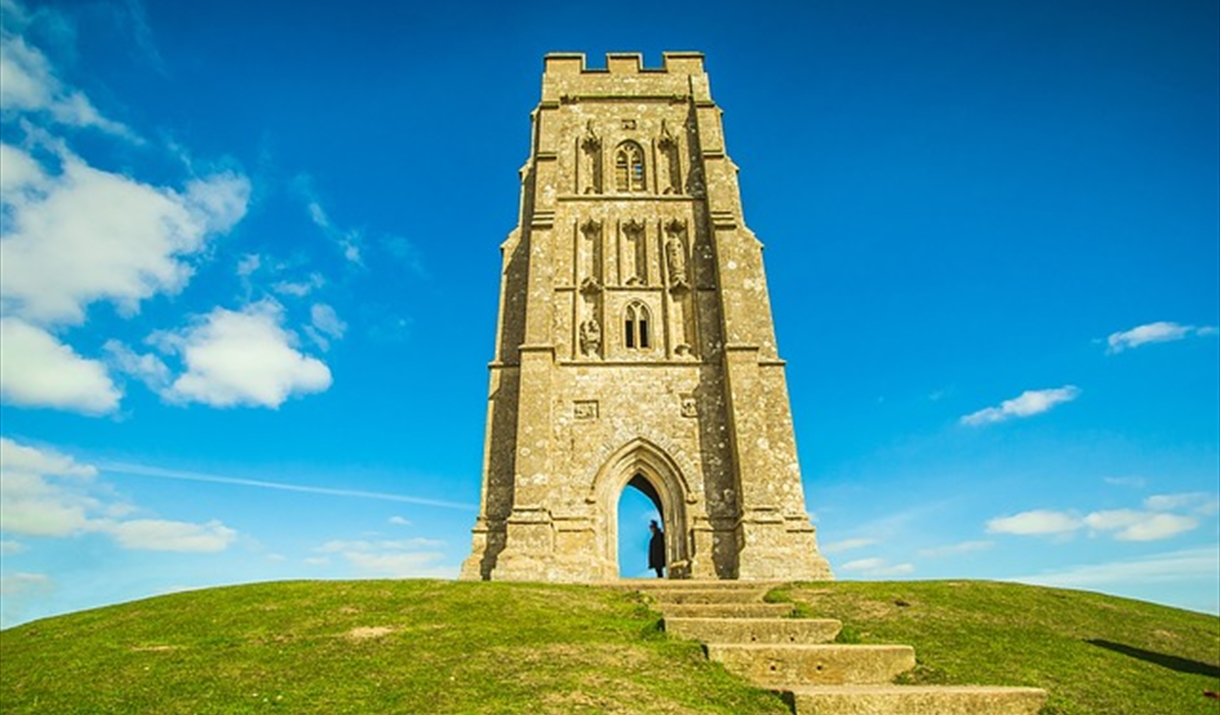
Rising dramatically from the sweeping Somerset Levels, Glastonbury Tor is one of England’s most iconic and evocative landmarks. Crowned by the solitary tower of St. Michael’s Church, it appears on the horizon like a beacon—an island of myth, history, and spiritual energy. For centuries, the Tor has been a place of pilgrimage, meditation, celebration, and storytelling. It draws visitors from all walks of life: hikers, photographers, spiritual seekers, historians, and those who simply want to experience one of the most striking viewpoints in southern England.
Visiting Glastonbury Tor is not just a walk up a hill—it’s a journey through layers of ancient legend, natural beauty, and cultural meaning. It is a landscape where every stone and every gust of wind seems to whisper stories from long ago. This post explores those stories, the experience of climbing the Tor, and why this remarkable hill continues to enchant thousands every year.
A Landmark Carved by Nature, Myth, and Time
At first glance, Glastonbury Tor looks like a naturally perfect cone, punctuated by the medieval tower at its summit. But the hill’s distinctive shape, with a series of stepped terraces spiraling around it, remains one of its greatest mysteries. These terraces—called lynchets—have sparked countless theories. Some suggest they were created by Iron Age farmers for agriculture; others believe they are the remains of a defensive structure. More mystical interpretations propose that they formed part of a Neolithic labyrinth, a ceremonial path leading pilgrims in winding circles up to the sacred summit.
There is no definitive answer, but perhaps that uncertainty adds to the Tor’s timeless allure. Here, history blends seamlessly with imagination.
The Tor rises 158 meters above sea level and once appeared as an island above the marshy wetlands of the Somerset Levels, long before the landscape was drained for farming. This ancient island gave birth to one of Glastonbury’s most enduring legends: that the Tor was the mystical Isle of Avalon, home to the enchantress Morgan le Fay and the final resting place of King Arthur.
Whether a center of ancient ritual or simply an impressive natural formation, the Tor’s presence dominates the surrounding countryside. It is a natural focal point, a spiritual symbol, and a beloved hiking destination all at once.
The Spiritual Heart of Glastonbury
Glastonbury is often called one of the most spiritual towns in England, and the Tor stands at the center of that reputation. Some visitors feel a strong sense of peace or connection when they reach the summit; others come specifically to meditate, practice yoga, or simply breathe in the open air. The Tor is a meeting place of cultures, beliefs, and faiths.
A Convergence of Legends
The Tor is steeped in myth from multiple traditions:
1. Celtic mythology
In ancient Celtic belief, Glastonbury Tor was said to be an entrance to Annwn, the Otherworld—a place of gods, spirits, and eternal youth. Some stories say that Gwyn ap Nudd, the king of faeries and the underworld, ruled from beneath the Tor.
2. Christian tradition
In Christian lore, the Tor was home to a medieval church dedicated to St. Michael, a figure associated with high places and spiritual battles. The tower that remains today is the last standing part of that church.
3. Arthurian legend
Avalon, the legendary island of enchantment, healing, and magic, is often linked to Glastonbury. According to medieval tales, King Arthur’s wounded body was taken to Avalon to rest. When Glastonbury Abbey monks claimed in the 12th century to have found Arthur’s grave, the Tor’s mythical connection deepened even further.
4. Earth energies and ley lines
Modern spiritual seekers often describe the Tor as a powerful energy center. It is said to sit at the convergence of ley lines, particularly the Michael and Mary lines, which some believe create a unique energetic balance. Whether one subscribes to these ideas or not, the Tor undeniably has an atmosphere that feels different—charged, peaceful, and deeply symbolic.
Climbing the Tor: The Experience
Walking up Glastonbury Tor is one of the simplest yet most rewarding outdoor experiences in Somerset. The climb is not overly long, but its steepness can be a gentle test for the legs. However, the path is well maintained, and the ascent typically takes around 20–30 minutes depending on pace.
The most popular route begins at Wellhouse Lane, where visitors follow a stone path that winds up the hillside. As you climb, the town of Glastonbury gradually recedes behind you, replaced by vast panoramic views of the Levels. On clear days, the horizon stretches out to the Mendip Hills, the Quantocks, and even the distant shimmer of the Bristol Channel.
A Tower Touching the Sky
At the peak stands St. Michael’s Tower, a Grade I listed building and one of the most photographed architectural silhouettes in England. The original church was destroyed in an earthquake in 1275 and later rebuilt, only for the nave to fall into ruin during the Dissolution of the Monasteries. What remains today is the 14th-century tower, austere yet elegant, its pointed arches framing the sky.
Inside, the tower offers a place of shelter from wind and rain and a frame for contemplation. Visitors often leave ribbons, crystals, or small tokens—not official offerings, but signs of the personal significance the Tor holds for so many.
The Atmosphere at the Top
The summit of the Tor is a place where conversations feel softer, where strangers exchange smiles, and where people sit for long stretches simply watching the world unfold beneath them. The wind is almost constant, adding to the sense that this place belongs both to the earth and the sky.
Sunrises and sunsets here are legendary—fiery horizons casting dramatic shadows across the Levels. On misty mornings, the Tor appears as if floating above clouds, an island in the sky.
Nature, Wildlife, and the Somerset Landscape
Beyond its spiritual meaning, Glastonbury Tor is a haven for wildlife and a beautifully preserved natural habitat. The surrounding fields support grazing sheep, while birds circle the summit on warm currents of air. The Somerset Levels, with their patchwork of wetlands, waterways, and meadows, make the view from the Tor uniquely picturesque.
In spring and summer, the hillside bursts with wildflowers. In autumn, the air is crisp, and the tower stands silhouetted against dramatic skies. Winter brings frost and fog, enhancing the Tor’s mystical reputation.
A Living Symbol of Glastonbury
What makes Glastonbury Tor so special is not just its myths or its views, but the way it seems to bring people together. No two visitors experience it in exactly the same way. For some, it is a place of healing; for others, a historical curiosity. Some climb it as part of a pilgrimage, others for the simple joy of an afternoon walk.
Despite its fame, the Tor remains remarkably peaceful. It is open year-round, free to access, and deeply cherished by locals and visitors alike. It stands as a symbol of the town’s unique blend of spirituality, creativity, and ancient mystery.
Why You Should Visit
Whether you’re a walker, a photographer, a history lover, a spiritual explorer, or simply someone who appreciates a breathtaking view, Glastonbury Tor offers something unforgettable. It is a landmark that transcends labels—a place where the physical world and the imaginative spirit meet.
Walking up the Tor feels like stepping into a story: one that has been told for thousands of years and will continue long after we are gone. Its myths inspire the imagination, its atmosphere soothes the soul, and its sweeping views remind us of our deep connection to the landscape and to the past.
Glastonbury Tor is not just a hill. It is a living legend.
