
Glastonbury, nestled in the heart of Somerset, is a town unlike any other in England—a place where myth and history are so tightly interwoven that it is often difficult to distinguish between the two. Known the world over for its spiritual ambiance, legendary associations with King Arthur, striking natural landmarks, and vibrant alternative culture, Glastonbury has a character that feels both ancient and ever-evolving. It is a small town that holds an enormous place in Britain’s cultural imagination, drawing pilgrims, historians, musicians, and curious wanderers from across the globe.
A Landscape of Legends: The Myths of Glastonbury
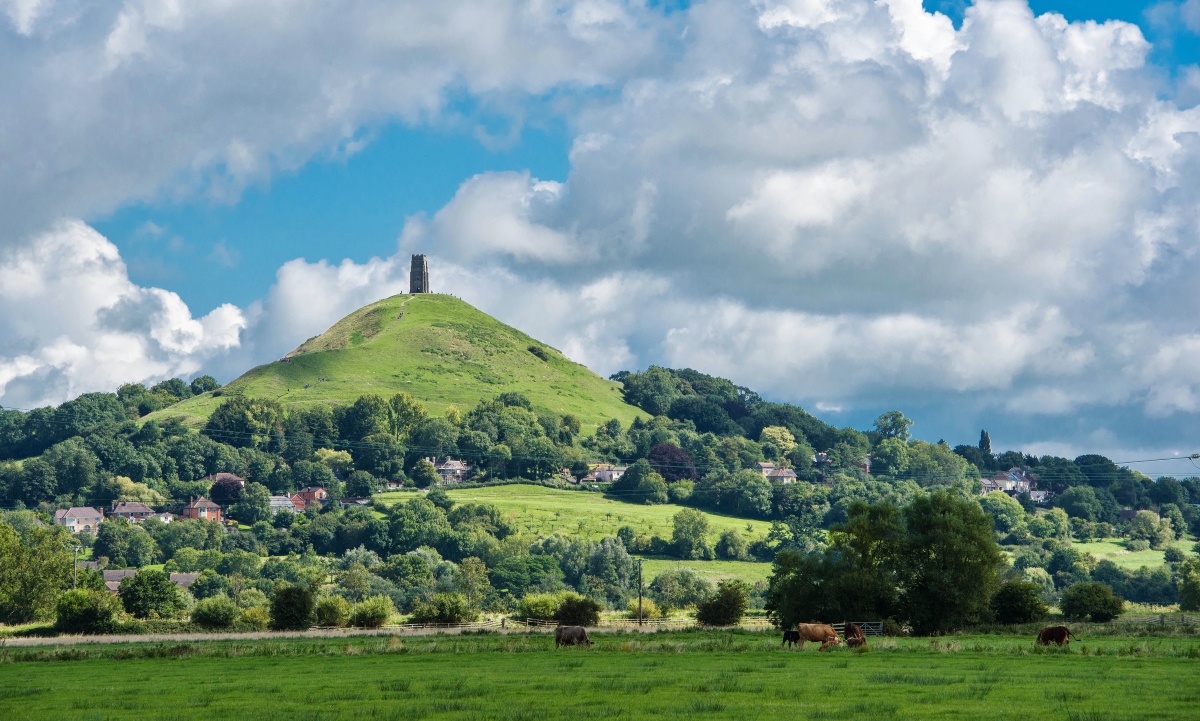
Few places can boast such a dense array of legends as Glastonbury. Its most iconic feature, the Glastonbury Tor, rises dramatically from the flat Somerset Levels, crowned by St. Michael’s Tower, the solitary remnant of a medieval church. The Tor is a place steeped in myth—Celtic stories describe it as a gateway to Annwn, the Otherworld, while Christian tradition ties it to the archangel Michael and the victory of good over evil. Many visitors speak of the Tor’s distinctive energy; whether spiritual or simply the power of its sweeping views, it remains a compelling and mysterious presence.
Glastonbury is equally famous for its links to Arthurian legend. For centuries, it has been associated with the mystical Isle of Avalon. According to medieval accounts from Glastonbury Abbey, monks claimed to have discovered the graves of King Arthur and Queen Guinevere on the abbey grounds in 1191. Whether a fundraising tactic by monks or the real resting place of Camelot’s legendary rulers, the story became embedded in the town’s identity. Today, many visitors come to walk in the footsteps of Arthur, Merlin, and the Knights of the Round Table, blending historical curiosity with mythic wonder.
Glastonbury Abbey: Echoes of a Sacred Past
The ruins of Glastonbury Abbey are among the most evocative in England. Once one of the richest and most influential monasteries in the country, the abbey’s origins stretch back to the early medieval period, with some traditions claiming even earlier beginnings. The architecture that remains—towering arches, mossy stone walls, and wide grassy expanses—invites visitors to imagine its former grandeur.
The abbey’s history is closely intertwined with its legends. It was revered as the site of the earliest Christian church in Britain, believed by some to have been founded by Joseph of Arimathea, who according to lore brought the Holy Grail to Glastonbury. The famous Holy Thorn Tree, which blooms unusually around Christmas, is said to have sprouted from Joseph’s staff. While botanists identify the tree as a Middle Eastern hawthorn, its symbolic significance runs far deeper for locals and pilgrims.
The dissolution of the monasteries under Henry VIII brought the abbey’s physical destruction, but its spiritual and legendary legacy remains very much alive. Today, it is not just a historical ruin but a place of contemplation, ceremony, and inspiration for visitors from around the world.
The Chalice Well and Gardens: A Sanctuary of Peace
Perhaps the most tranquil and spiritually charged location in Glastonbury is the Chalice Well, a natural spring that has flowed for thousands of years. The well’s iron-rich waters, tinged with a reddish hue, gave rise to myths linking it to the blood of Christ or the Holy Grail. Set within beautiful gardens filled with flowers, symbolic artwork, and meditation spaces, the Chalice Well is a serene oasis where visitors gather to relax, reflect, and reconnect with nature.
The White Spring, located directly opposite the Chalice Well, offers a very different experience. Enclosed within a candlelit chamber, its calcium-rich waters flow into pools used for ritual bathing and spiritual practices. Together, the Red and White Springs represent a unique duality—two natural features symbolizing balance, healing, and harmony.
A Haven for Spiritual Seekers
What makes Glastonbury a truly distinctive town is its vibrant spiritual culture. Its high street is lined with shops selling crystals, books on ancient wisdom and mysticism, ceremonial clothing, tarot decks, and handcrafted items inspired by pagan, Druidic, Buddhist, and esoteric traditions. It is a place where alternative spirituality is not just tolerated but celebrated.
Retreat centers, healing workshops, yoga studios, and meditation groups create an atmosphere that feels both deeply introspective and warmly communal. Many visitors arrive seeking transformation, clarity, or renewal, while others simply enjoy the town’s colourful, open-minded character. Street musicians, artists, and storytellers contribute to the town’s creative energy, making even a simple walk through the center of Glastonbury a sensory experience.
Festivals and Cultural Life
Glastonbury is, of course, famous for its association with the world-renowned Glastonbury Festival, held at nearby Worthy Farm. While not technically in the town itself, the festival’s global impact has made Glastonbury synonymous with music, arts, and counterculture. However, the town hosts its own rich calendar of events, including the Glastonbury Goddess Conference, Beltane and Samhain celebrations, Druid gatherings, and seasonal processions up the Tor.
These events reinforce the town’s connection to ancient cycles of the year and its role as a gathering point for modern pagan, spiritual, and artistic communities.
Nature, Walking, and the Somerset Levels
Beyond its spiritual landmarks, Glastonbury is surrounded by beautiful countryside. The Somerset Levels, once marshy wetlands, stretch out around the town, offering wide-open views and a sense of timelessness. Walking paths lead through quiet meadows, past rivers and wildlife reserves, and into nearby villages filled with historic charm.
The climb up Glastonbury Tor is one of the most rewarding walks in the region, with panoramic views that show how the Tor once appeared to float above the misty marshes—perhaps inspiring its identification as the mystical Isle of Avalon.
Nearby attractions such as Gog and Magog, ancient oak trees believed to be the last remnants of a ceremonial processional route, highlight the area’s deep significance to pre-Christian cultures.
A Town of Dualities
What makes Glastonbury particularly fascinating is its balance of the ancient and the modern, the mystical and the everyday. It is a town where archaeological evidence and centuries-old ruins coexist with stories of magic, myth, and spirituality. It welcomes both the scholar and the free spirit—the historian, the pilgrim, and the curious traveler.
Whether one arrives seeking historical insight, spiritual renewal, scenic beauty, or simply a unique cultural experience, Glastonbury offers something profound. It is a place that invites introspection and imagination, encouraging visitors to explore not only its landscapes and legends but also their own sense of meaning.
Conclusion
Glastonbury is more than a town—it is a phenomenon. Its combination of mythic history, spiritual atmosphere, natural beauty, and cultural vibrancy makes it one of England’s most compelling destinations. Few places manage to feel so mystical yet so welcoming, so ancient yet so alive. Whether wandering through the ruins of the abbey, climbing the Tor at sunrise, meditating at the Chalice Well, or simply exploring its eclectic streets, visitors often leave Glastonbury with a sense of connection—to history, to the landscape, and, perhaps most of all, to themselves.
