
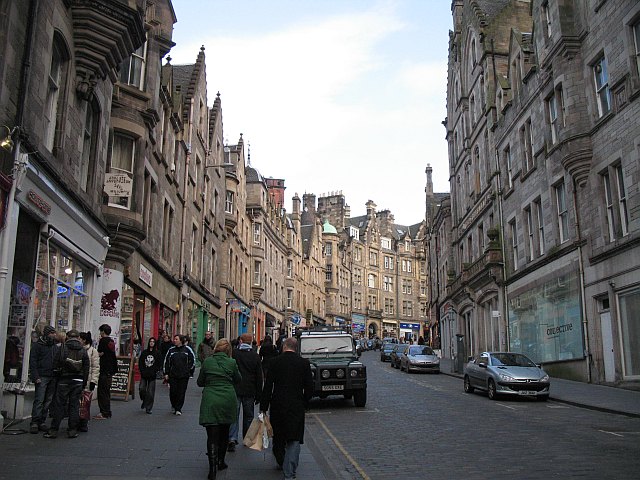
Cockburn Street is one of Edinburgh’s most distinctive thoroughfares: a picturesque, winding street connecting the historic Royal Mile to Edinburgh Waverley Station — the city’s main railway hub. Created in the mid-19th century, its purpose was both practical and aesthetic: to provide a gentler route for pedestrians and carriages between the steep medieval closes of the Old Town and the rail terminus below, while respecting and enhancing Edinburgh’s historic urban fabric.
Origins and Naming
The street was originally built in 1856–1859 by the High Street and Railway Station Access Company under Parliamentary acts of 1853 and 1860, part of a major project to improve access between the High Street (Royal Mile) and Waverley Station which had opened in 1846. Previously, travellers faced a network of narrow, steep lanes called closes which made access difficult, especially for luggage and carts. Cockburn Street was designed with a gentle, serpentine gradient — a maximum of about 1:14 — making the journey much smoother. Its name honours Henry, Lord Cockburn (1779–1854), a Scottish lawyer, judge, and writer widely respected for his early advocacy of architectural conservation in Edinburgh. Lord Cockburn was vocal about preserving the beauty and heritage of his native city at a time when Victorian development threatened many historic structures. The street was briefly called Lord Cockburn Street before the “Lord” was dropped within a decade. A stone carving of his head still watches over No. 1 Cockburn Street — originally the Cockburn Hotel and now offices for the Edinburgh Military Tattoo.
Architecture: Scots Baronial Meets Urban Street Design
Cockburn Street is architecturally remarkable because it applies the Scots Baronial style — traditionally seen in country houses — to a city centre commercial street. This was the work of the prominent architectural firm Peddie & Kinnear (often with engineer James Peddie and Henry J. Wylie). Their designs blended historical reference with contemporary Victorian urban needs.
Style and Details
The buildings lining the street are predominantly four storeys tall, with richly textured stone, crow-stepped gables, corbels, small turrets, and other elements drawn from medieval and renaissance Scottish architecture. Yet they were designed for practical urban use: shops at street level with tenement housing above. They replaced the cramped and narrow closes with a sweeping yet intimate street that feels both historic and human in scale. One of the architectural intentions was to conceal the diagonal route of the street from Princes Street — the grand Georgian thoroughfare of the New Town — by careful detailing and layout. This blending of utility and refined heritage sensitivity helped Cockburn Street become a much-imitated urban design.
City Chambers and Nearby Structures
From the lower end of Cockburn Street, the rear elevation of the Edinburgh City Chambers dominates the skyline — soaring about twelve storeys high above the street, a reminder that verticality in Edinburgh’s urban silhouette has deep roots going back to the 18th century. Nearby notable structures include tenement blocks designed for mixed use, some once housing the Orderly Rooms of the City of Edinburgh Rifle Brigade, and others built as hotels or retail spaces. You can still spot intriguing carved initials, stone animals, and decorative flourishes high up on façades.
Medieval Closes: Echoes of Old Town Edinburgh
Though Cockburn Street carved its way through the original maze of medieval closes, many of those alleyways still survive — albeit truncated — and can be explored from the street’s sides.
On the south side, leading up to the Royal Mile, you’ll find Warriston Close and Advocates Close, both containing architectural remnants from the 16th century. These narrow lanes remind visitors that beneath and behind the Victorian street lie layers of Edinburgh history dating back centuries. These closes are steep and atmospheric, offering glimpses up stairways and framed views toward landmarks like the Scott Monument. Advocates Close, in particular, has seen careful redevelopment in recent years, blending restored historic buildings with modern architectural inserts.
The Street’s Character Today
Today, Cockburn Street is much more than a link between two busy transport hubs. It is a vibrant urban space with a strong sense of place — a survival of heritage, community, and commercial life.
Specialist Shops and Independent Retail
Over the years, the street has become known for its array of independent shops, cafés, galleries, and eateries. Many of the businesses emphasize local character and creativity rather than international chains. From vintage boutiques and design shops to quirky gift stores, Cockburn Street invites lingering and exploration. Among these, places like Pie in the Sky and other indie retail outlets contribute to the street’s eclectic, bohemian atmosphere — a mix of residents, visitors, and locals who make this part of the Old Town feel lively and personal. In recent years, the local council and heritage groups have led regeneration efforts to preserve the character of the street, restore historic façades, widen pavements, and encourage pedestrian-friendly spaces with outdoor seating and public art. These efforts were recognised in 2012 with Cockburn Street receiving a Great Street Award for its blend of heritage preservation and active urban life.
Cockburn Street in Popular Culture
Beyond its architectural and commercial significance, Cockburn Street has featured in film and television. The rooftop and doorway of 51 Cockburn Street appear in the film Hallam Foe. More recently, scenes were shot here for Marvel’s Avengers: Infinity War (2017), and the street also appeared in Trainspotting 2 during an intense chase sequence.
This cinematic presence underscores the street’s atmospheric quality — its dramatic slope, historic facades, and quirky character make it visually compelling.
Challenges and Community Perspectives
Like all urban places, Cockburn Street evolves — and not always without debate. Some locals and commentators have expressed concern over commercial changes, outdoor dining structures, and the balance between tourism and city life. Discussions about retaining authentic independent shops versus more tourist-oriented outlets reflect broader tensions in historic city centres worldwide. Despite these challenges, there remains a strong community ethos among shopkeepers and residents who care deeply about the street’s unique identity. Collaboration with the Council and heritage organisations continues to guide how Cockburn Street navigates the 21st century while honouring its past.
Conclusion: A Street of Contrasts and Continuity
Cockburn Street is much more than just a connecting road. It stands as a symbol of Edinburgh’s urban ingenuity — a place where Victorian progress met medieval remnants; where architectural beauty meets the everyday bustle of shops and cafés; where historic stone façades frame modern life.
Walking along its gentle curve from Waverley Station up to the Royal Mile is like tracing a microcosm of Edinburgh’s history: the medieval closes beneath, Victorian expansion around, and vibrant contemporary city life within it.
