
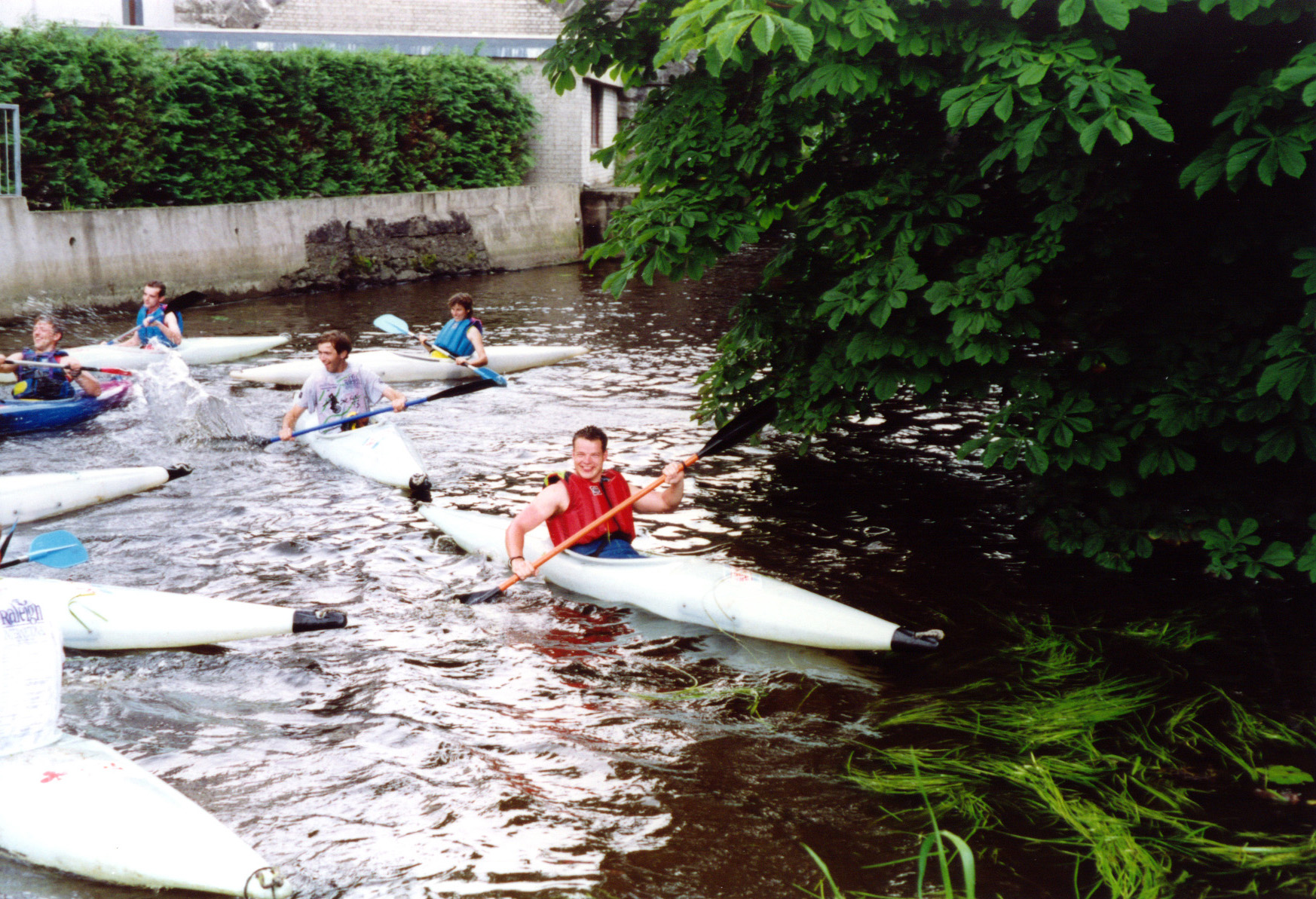
In 1993, during the Raleigh International bike ride, I found myself in Enniskillen, County Fermanagh, working on a community project that was both demanding and deeply rewarding. The days were physically tiring, structured around teamwork, responsibility, and a shared sense of purpose. When the opportunity arose to take a well-deserved break and spend time canoeing on the River Erne, it felt not only like a moment of rest, but a chance to experience Enniskillen in an entirely different way — quietly, slowly, and from the water.
Canoeing the River Erne became one of those experiences that linger long after the moment has passed. It was not dramatic or extreme, but calm, reflective, and grounding — a perfect counterbalance to the intensity of both the bike ride and the community work we had been immersed in.
Enniskillen and the River Erne
Enniskillen is uniquely shaped by the River Erne, sitting between Upper and Lower Lough Erne, with water threading its way through the town. From the streets and bridges, the river feels ever-present, but being on the water itself offers a completely different perspective. The River Erne is not a fast or aggressive river; it flows with patience, widening into loughs, narrowing through channels, and carrying with it a quiet sense of continuity.
After days of physical labour and structured routines, stepping into a canoe felt like stepping into another rhythm altogether — one dictated by paddles dipping into water, gentle currents, and the need to work in harmony rather than haste.
A Break Earned
The community project we were involved in during the Raleigh International bike ride required commitment, cooperation, and resilience. We had arrived in Enniskillen as outsiders, but were welcomed warmly, and the work we did felt meaningful. Still, the physical demands accumulated quickly — long days, tired muscles, and the constant momentum of the programme.
The canoeing trip on the River Erne felt like a reward, but also a release. It was a chance to step away from tasks and schedules and simply exist in the landscape. There was no finish line, no targets to meet — just water, paddles, and time.
Taking to the Water
As we launched the canoes, there was a brief moment of adjustment — finding balance, coordinating movements, and settling into a steady rhythm. Canoeing demands attention, but not urgency. Every movement has consequence, but nothing needs to be rushed.
The water was calm, reflecting the sky above and the greenery along the riverbanks. The town gradually receded behind us, replaced by quieter stretches of river where the sounds of daily life faded into the background. The only consistent noises were the splash of paddles, the creak of the canoe, and the occasional call of birds.
The Rhythm of Canoeing
What struck me most about canoeing on the River Erne was the pace. After weeks of cycling, effort, and exertion, this was movement of a different kind. It required cooperation rather than endurance, awareness rather than force.
Each stroke of the paddle became meditative. There was time to look around, to notice details: reeds bending at the water’s edge, ripples spreading outward from the canoe, clouds drifting overhead. The river encouraged observation and reflection.
In contrast to the intensity of the bike ride, canoeing felt almost timeless. There was no pressure to go faster, no sense of competition. The river accepted us at whatever pace we chose.
Enniskillen from the Water
Seeing Enniskillen from the River Erne gave me a deeper appreciation of the town. Buildings and bridges appeared gentler from the water, their reflections wavering softly on the surface. The river revealed how integral water is to Enniskillen’s identity — not just geographically, but culturally.
It was easy to understand why the river had been so important historically, shaping trade, movement, and settlement. From the canoe, Enniskillen felt connected rather than divided by the water, its islands and waterways forming a natural unity.
Quiet Reflection
As we paddled further, conversation naturally ebbed and flowed, often giving way to silence. It was the kind of silence that feels comfortable rather than awkward — shared without explanation. The physical effort was light, but the mental space it created was expansive.
I found myself reflecting on the journey up to that point: the miles cycled, the people met, the challenges faced. The Raleigh International bike ride was about far more than cycling; it was about connection, resilience, and shared experience. Canoeing on the River Erne felt like a moment to absorb all of that, to let it settle.
Nature and Stillness
The natural environment along the river was quietly beautiful. Trees leaned toward the water, their reflections broken only by the passage of the canoe. Birds skimmed the surface, and occasional fish disturbed the water with sudden flashes of movement.
There was something reassuring about being immersed in nature without needing to conquer it. Unlike cycling hills or tackling physical obstacles, canoeing on the River Erne felt collaborative rather than confrontational. We were guests on the river, moving with it rather than against it.
Shared Experience
Although the canoeing offered space for personal reflection, it was also a shared experience. Working together to steer, to avoid obstacles, and to maintain direction reinforced the teamwork that had defined the community project. There was quiet laughter, the occasional misjudged stroke, and moments of gentle correction.
These small interactions mattered. They strengthened bonds formed through hard work and shared effort, reminding us that connection doesn’t always come from intensity — sometimes it grows best in moments of ease.
A Contrast to the Bike Ride
The contrast between cycling and canoeing was striking. The bike ride demanded forward momentum, endurance, and determination. Canoeing on the River Erne asked for balance, patience, and awareness. Both required effort, but in very different ways.
That contrast made the canoeing experience feel even more valuable. It was not just rest for the body, but rest for the mind. It offered a different way of engaging with the journey, one that complemented the challenges we had faced on land.
Lasting Impressions
When we eventually returned to shore, there was a quiet reluctance to leave the water. The canoeing had passed without drama or spectacle, yet it left a deep impression. It was one of those experiences that doesn’t announce its importance at the time, but reveals it later through memory.
The River Erne had offered space — physical and mental — at exactly the right moment. It reminded me that travel is not only about movement and achievement, but about pauses, perspective, and presence.
Looking Back
Looking back now, decades later, the memory of canoeing on the River Erne remains vivid. It is inseparable from the wider experience of the Raleigh International bike ride in 1993, from the community work in Enniskillen, and from the friendships formed along the way.
That gentle journey on the river stands out precisely because it was simple. No grand challenge, no dramatic scenery — just water, effort, and time. In the midst of a demanding and transformative journey, it provided balance.
Final Thoughts
Canoeing on the River Erne was more than a recreational activity; it was a moment of renewal. It allowed reflection, reinforced connection, and deepened my appreciation for Enniskillen and its landscape.
In a journey defined by motion and effort, the river offered stillness without stagnation — movement without urgency. It was, in every sense, a well-deserved break, and one that remains an enduring highlight of my time in Enniskillen during the Raleigh International bike ride of 1993.
Sometimes the quietest experiences leave the strongest echoes.
