
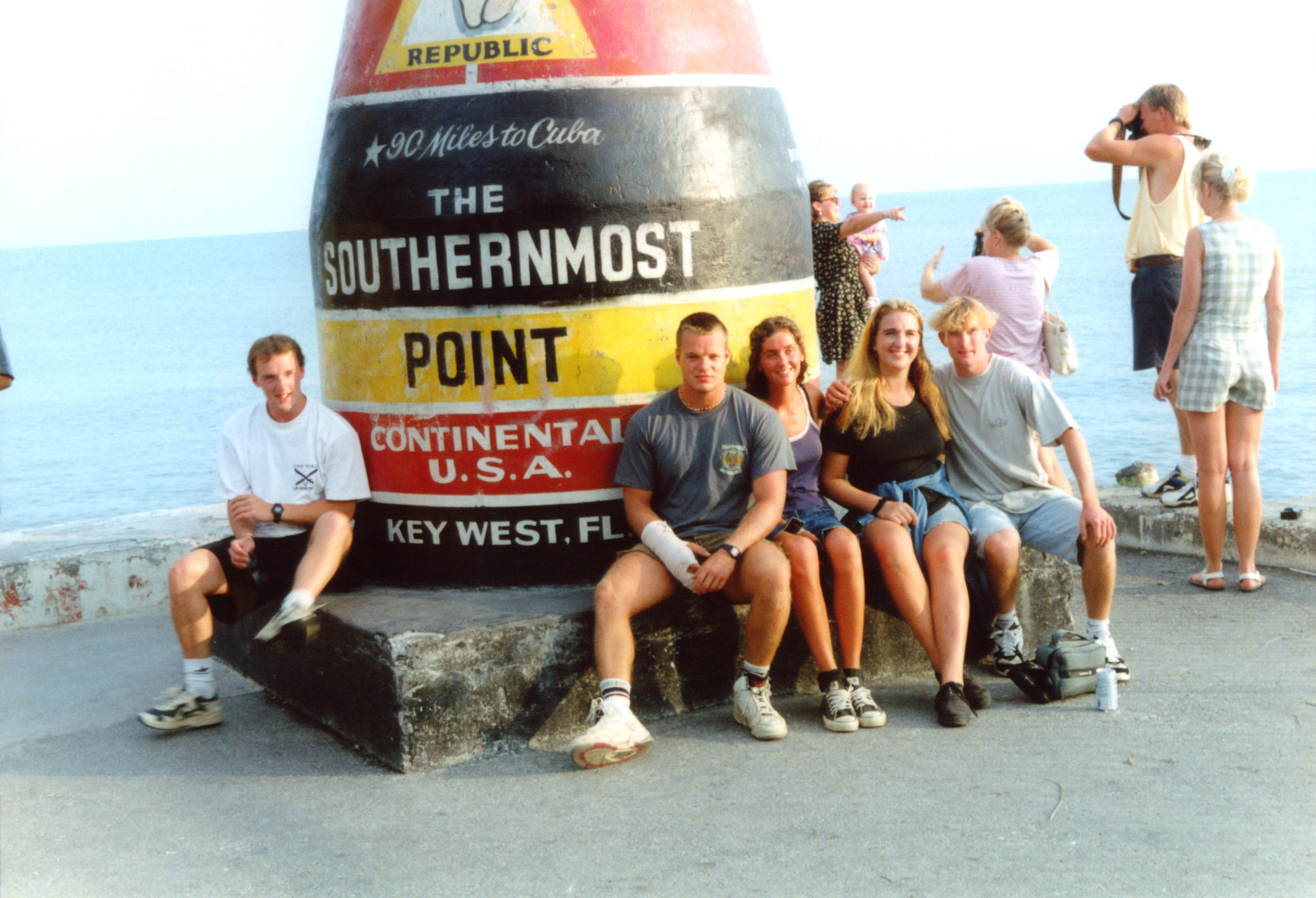
There are places you visit because they are beautiful, places you visit because they are famous, and then there are places you visit because they carry symbolic weight. The Southernmost Point Buoy in Key West, Florida, belongs firmly in the third category. Standing beside that brightly painted concrete buoy, marked boldly with the words “Southernmost Point Continental U.S.A.”, I felt not just geographically distant from home, but emotionally and mentally at the edge of something — a boundary where land, sea, history, and personal reflection converge.
Key West itself has a distinct character unlike anywhere else in the United States. It feels less like the end of Florida and more like a world unto itself. The island hums with a laid-back energy, infused with Caribbean influences, maritime history, and a sense that time moves differently here. By the time I reached the Southernmost Point, I had already begun to understand why so many writers, wanderers, and dreamers had been drawn to this place.
The Journey Through the Florida Keys
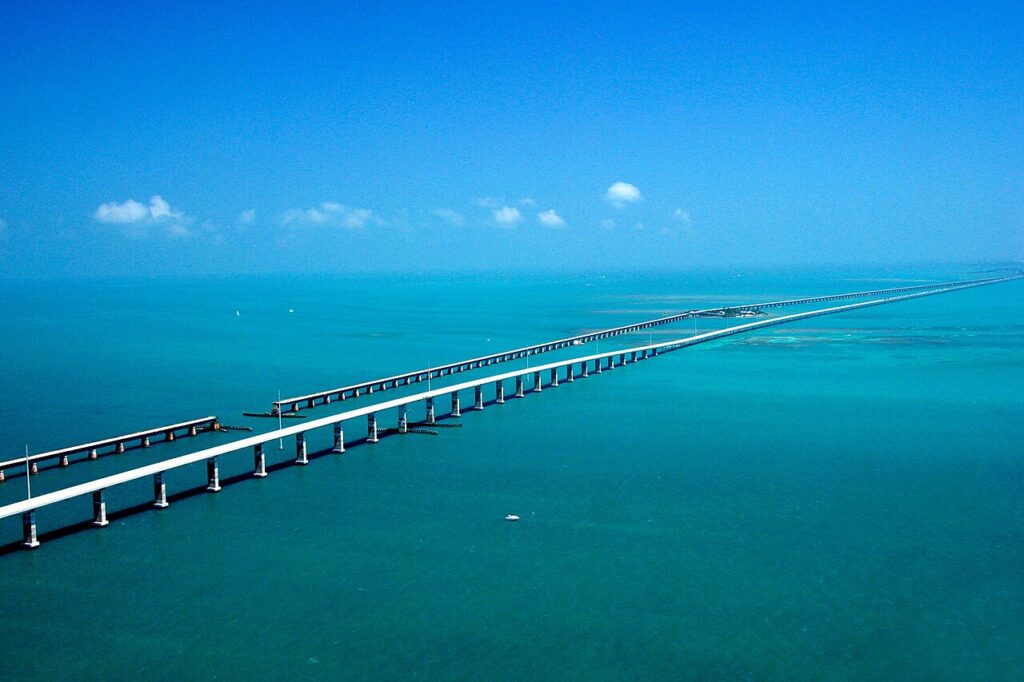
Reaching Key West is an experience in itself. Traveling along U.S. Route 1, the Overseas Highway, feels like driving across the ocean. Bridges stretch endlessly over turquoise water, linking small islands that seem to float between sky and sea. The sense of isolation grows with each mile south, and with it, a quiet excitement builds — a feeling of approaching a destination that marks both an ending and a beginning.
As the islands narrow and the road tightens, the mainland feels increasingly distant. There is something symbolic about this journey: the gradual shedding of routine, structure, and urgency. By the time I arrived in Key West, the atmosphere had already done its work — slowing my pace, sharpening my awareness, and opening me up to the moment.
First Glimpse of the Southernmost Point
The Southernmost Point Buoy sits near the edge of the island, just steps from the sea, facing toward Cuba, which lies a mere 90 miles away. Despite its significance, it is surprisingly modest in size. Painted in red, yellow, and black, the buoy stands quietly against the backdrop of the Atlantic, waves crashing against the seawall behind it.
Approaching the buoy, I noticed the steady stream of visitors lining up for photos. People from all over the world waited patiently, smiling, chatting, and sharing stories of their journeys. There was a sense of collective accomplishment in the air — as if simply being there meant you had completed something, even if the journey itself had taken many different forms.
Standing at the Edge
When it was finally my turn to stand beside the buoy, I felt an unexpected wave of emotion. This was not just a photo opportunity; it was a moment of reflection. Standing at the southernmost point of the continental United States, I felt both grounded and suspended — aware of my physical location, yet mentally adrift.
Behind me, the land ended. Ahead, the sea stretched endlessly toward the horizon. The wind carried the scent of salt and the sound of waves breaking against the rocks. It felt like standing at the threshold between stability and possibility, between what is known and what lies beyond.
The Symbolism of the Place
What makes the Southernmost Point so compelling is not its size or grandeur, but its symbolism. It represents an edge — not just geographically, but psychologically. It is a reminder that every journey has a boundary, and every boundary invites reflection.
For me, standing there was about more than reaching a destination. It was about acknowledging the journeys that had brought me there — the roads traveled, the risks taken, the experiences accumulated. It was a moment to pause, to take stock, and to appreciate the freedom that travel offers: the ability to choose direction, to explore, and to redefine what “far” and “near” truly mean.
The Atmosphere Around the Buoy
Despite the crowds, the atmosphere around the Southernmost Point is remarkably relaxed. Street performers, cyclists, and passing pedestrians add to the rhythm of the place. Locals pass by without ceremony, accustomed to the constant presence of visitors, while tourists linger, savoring the significance of the spot.
The surrounding neighborhood reflects Key West’s eclectic charm. Colorful houses, palm trees, and narrow streets create a sense of intimacy and warmth. There is no sense of urgency here — no pressure to move on quickly. Even after taking photos, many people linger, soaking in the view and the feeling of being somewhere truly distinctive.
Looking Toward the Horizon
Facing south, it is impossible not to think about what lies beyond. The idea that Cuba is only 90 miles away adds a layer of historical and political resonance to the location. This narrow stretch of sea has been a crossing point for explorers, refugees, traders, and dreamers for centuries.
Standing there, I thought about the countless lives shaped by that distance — the hopes, fears, and stories carried across the water. The buoy, simple as it is, becomes a silent witness to these narratives, marking a place where geography and human history intersect.
Key West’s Spirit
The Southernmost Point cannot be separated from the spirit of Key West itself. The island embraces individuality, creativity, and nonconformity. There is an unspoken permission here to be exactly who you are, to let go of expectations, and to embrace the present.
This spirit is palpable at the buoy. People pose playfully, laugh openly, and share stories with strangers. There is a sense of openness and acceptance that makes the experience feel communal rather than transactional. It is not just about being there, but about belonging there, even if only briefly.
Personal Reflection
As I stepped away from the buoy, I carried with me more than just photographs. I carried a sense of closure and clarity — a reminder that travel is not always about movement, but about moments of stillness. Standing at the southernmost point, I felt both small and expansive, aware of my place in the world and my freedom within it.
It was a moment that invited introspection: about where I had been, where I was going, and why I travel at all. Travel, I realized, is not just about seeing new places, but about encountering new perspectives — about allowing places like this to shape your understanding of yourself.
Why the Southernmost Point Matters
The Southernmost Point Buoy may be a simple concrete marker, but its significance runs deep. It marks an edge, a limit, a place where land yields to sea. It reminds us that boundaries are not just ends — they are beginnings, invitations to look outward and inward at the same time.
For anyone visiting Key West, standing beside the buoy is a moment worth savoring. It is a place to pause, to breathe, and to acknowledge the journey — not just the miles traveled, but the experiences gathered along the way.
Conclusion
Visiting the Southernmost Point Buoy in Key West was not about ticking a box or capturing a postcard image. It was about standing at the edge of something — geographically, emotionally, and symbolically. It was a reminder of why we travel: to reach places that make us feel present, reflective, and alive.
As the waves rolled in behind me and the sun dipped lower in the sky, I left the buoy with a sense of quiet fulfillment. Some places stay with you not because of what you see, but because of how they make you feel. The Southernmost Point is one of those places — a simple marker at the edge of the continent that somehow marks something much deeper within.
