
Egypt is a land of monuments, temples, and ancient stories, but few places convey the scale of human ambition and artistic genius like Abu Simbel. Nestled in the southern reaches of the country, near the border with Sudan, this monumental complex is a testament to the vision of Ramesses II, one of Egypt’s most powerful pharaohs. Visiting Abu Simbel is more than a sightseeing experience — it is stepping into a moment frozen in stone, surrounded by colossal statues, intricate reliefs, and the desert landscape that has witnessed centuries of history.
The Journey to Abu Simbel
Reaching Abu Simbel is a journey in itself. Flying over the southern Nile, the landscape transforms into a dramatic blend of desert, sandstone cliffs, and the winding river that has nourished civilizations for millennia. From the air, the temple appears as a small anomaly on the vast, arid plateau, but as we descended, the scale became apparent. The desert is silent and immense, and Abu Simbel rises from it like a carved monument to eternity.
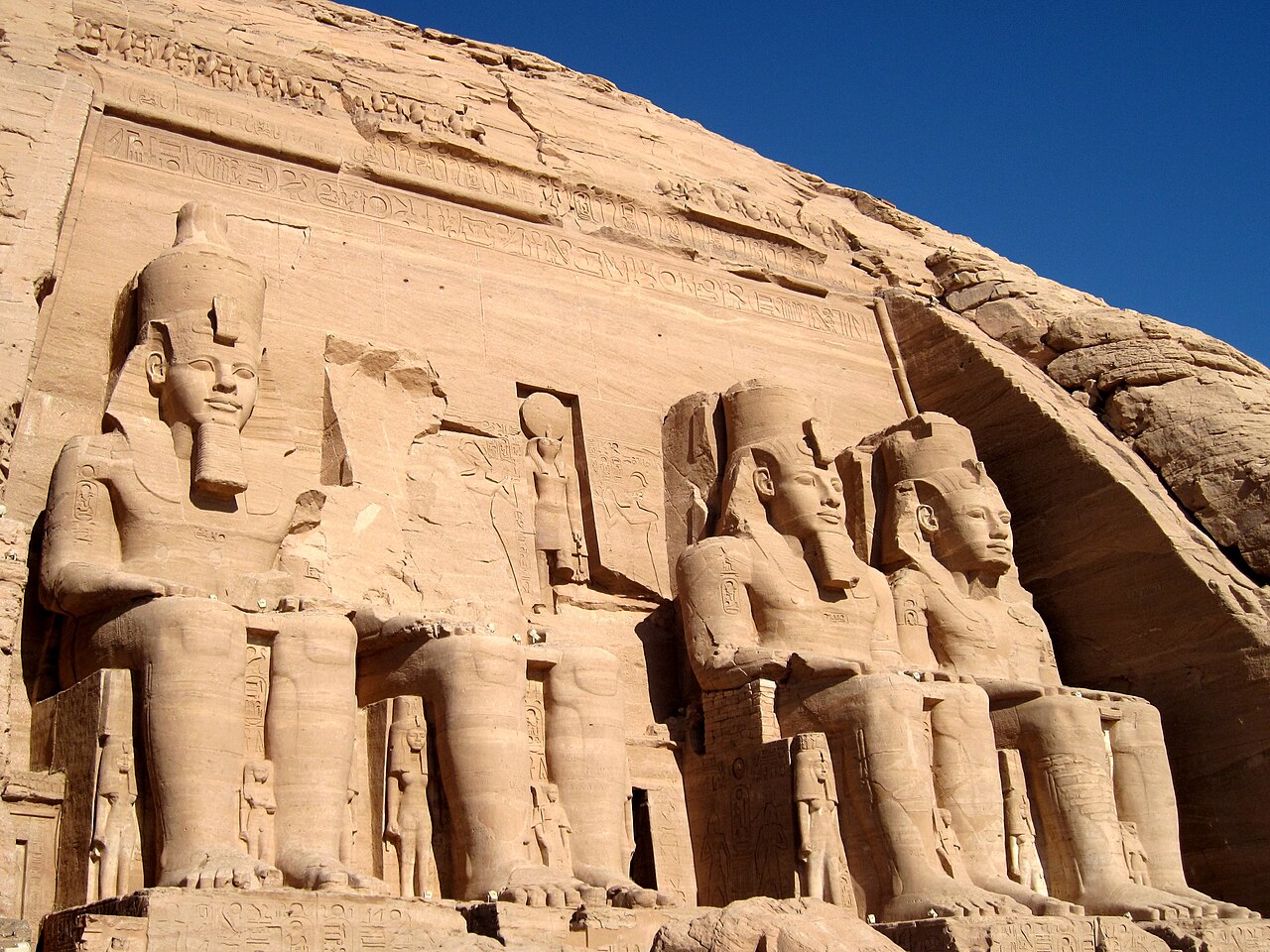
Upon landing and approaching the site, I felt a mixture of excitement and reverence. Even from a distance, the colossal statues of Ramesses II dominate the horizon. Four seated figures, each more than 20 meters high, flank the entrance to the Great Temple, their imposing presence both awe-inspiring and intimidating. The sight immediately conveys the intention behind Abu Simbel: a statement of power, divinity, and legacy.
The Great Temple: Ramesses II in Stone
Walking closer, I was struck by the intricate artistry and monumental scale of the Great Temple. The seated statues of Ramesses II at the entrance, carved directly into the cliff face, display both majesty and permanence. Each figure exudes authority, with detailed features, lifelike proportions, and a sense of calm confidence. Even with the centuries of erosion and exposure to the elements, the statues remain powerful symbols of Ramesses’ reign.
Entering the temple is like stepping into another world. The interior is lined with rows of statues, columns, and reliefs, each narrating stories of conquest, devotion to the gods, and the pharaoh’s role as intermediary between humans and divinity. The walls are adorned with depictions of military victories, divine ceremonies, and offerings to deities. The detail is extraordinary: every carving, every hieroglyph tells a story, and I found myself lingering at each panel, trying to imagine the scenes in full color and motion as they would have been experienced in the time of Ramesses II.
The Solar Alignment
One of the most fascinating features of Abu Simbel is its solar alignment. Twice a year, on or around February 22 and October 22, sunlight penetrates the temple’s inner sanctuary, illuminating statues of Ramesses and the gods seated at the back. Standing in the temple, I imagined the ancient Egyptians’ precise astronomical knowledge and engineering skill required to achieve this effect. It is a reminder that the site was not only a political statement but also a spiritual and scientific marvel. Even knowing that I was not witnessing the phenomenon firsthand, the concept added an almost mystical dimension to the visit.
The Smaller Temple: Nefertari’s Dedication
Adjacent to the Great Temple is the Temple of Hathor, dedicated to Queen Nefertari, Ramesses II’s beloved wife. Though smaller in scale, it is no less impressive. The entrance is flanked by statues of the queen, equal in height to those of the pharaoh, which is unusual in Egyptian temple architecture. This temple celebrates both love and devotion, illustrating that Abu Simbel was as much a personal monument as a public declaration of power.
Walking through this temple, I was struck by the elegance of the reliefs. Scenes depict Nefertari in ritual and ceremonial contexts, surrounded by deities, with meticulous attention to proportion and detail. The walls convey reverence, grace, and a sense of intimacy that contrasts with the overwhelming grandeur of the Great Temple.
The Relocation: A Modern Miracle
Visiting Abu Simbel today also comes with the knowledge of its modern history. In the 1960s, the construction of the Aswan High Dam threatened to submerge the temples under Lake Nasser. An extraordinary international effort was undertaken to cut the temples into massive blocks, move them, and reconstruct them on higher ground. Walking among the temples, I was struck by the ingenuity and precision required to save these monuments. It is a modern testament to human determination, echoing the ambitions of the original builders in its own way.
Knowing that I was standing on what is essentially a reconstructed site added another layer of awe. The preservation of Abu Simbel is both a tribute to ancient skill and modern engineering, allowing visitors to experience history in a tangible, immediate way.
Immersed in History and Artistry
What makes Abu Simbel extraordinary is the immersive experience it provides. The scale of the statues, the height of the columns, and the precision of the carvings create a sense of awe that is hard to replicate elsewhere. Walking through the temples, I felt surrounded by centuries of human endeavor — the labor of stonecutters, artists, and architects, all under the patronage of a pharaoh determined to leave a legacy.
The reliefs themselves tell countless stories. I lingered on panels depicting battles, religious ceremonies, and interactions with gods. Each figure, each symbol, is imbued with meaning. I imagined the temple lit by oil lamps, echoing with chants and prayers, with priests and officials moving through the halls in solemn procession. The combination of artistry, religion, and political messaging is a powerful reminder that Abu Simbel was designed to impress on multiple levels — spiritually, politically, and emotionally.
Experiencing the Desert Surroundings
Stepping outside, the desert heat was intense, but it did little to diminish the grandeur of the site. The cliffs surrounding Abu Simbel rise dramatically from the sand, and the vast horizon amplifies the monumentality of the temples. Walking along the perimeter, I could see how the location was strategically chosen — visible from a great distance along the Nile, asserting the power and reach of Ramesses II to all who approached.
The desert itself added to the sense of timelessness. It is a harsh, unforgiving landscape, yet one that frames the temples beautifully. The combination of stone and sand, permanence and impermanence, human and natural forces, creates a profound impression that lingers long after leaving the site.
Reflections on Legacy and Power
Visiting Abu Simbel left me contemplating the nature of legacy. Ramesses II sought to immortalize himself through monumental architecture, art, and inscriptions, and thousands of years later, his vision continues to inspire awe. There is a lesson in ambition, creativity, and endurance — that human endeavors, when guided by vision and skill, can transcend time.
At the same time, Abu Simbel reminds us of the fragility of human achievements. Without the modern relocation project, these temples would have been lost beneath Lake Nasser. Preservation is as much a part of legacy as creation, and walking among these ancient stones, I was grateful that this modern intervention allowed me to witness history firsthand.
Conclusion
Visiting Abu Simbel is an unforgettable journey into the heart of ancient Egypt. From the colossal statues of Ramesses II to the intricate reliefs, the solar-aligned sanctuaries, and the intimate spaces honoring Nefertari, every element tells a story of power, devotion, artistry, and vision.
The experience is immersive: walking through temples that echo with centuries of history, standing in the shadow of monumental statues, and gazing across the desert that has witnessed millennia. Abu Simbel is more than a site; it is a lesson in human creativity, determination, and the desire to be remembered.
As I left the plateau, I carried with me the sense of awe and reflection that only such a place can inspire. Abu Simbel is a reminder that monuments are not merely stone; they are stories frozen in time, waiting for those who come to see, to reflect, and to understand the civilization that built them. It is a place where past and present converge, leaving every visitor profoundly moved by the scale of human ambition and the endurance of history.
