
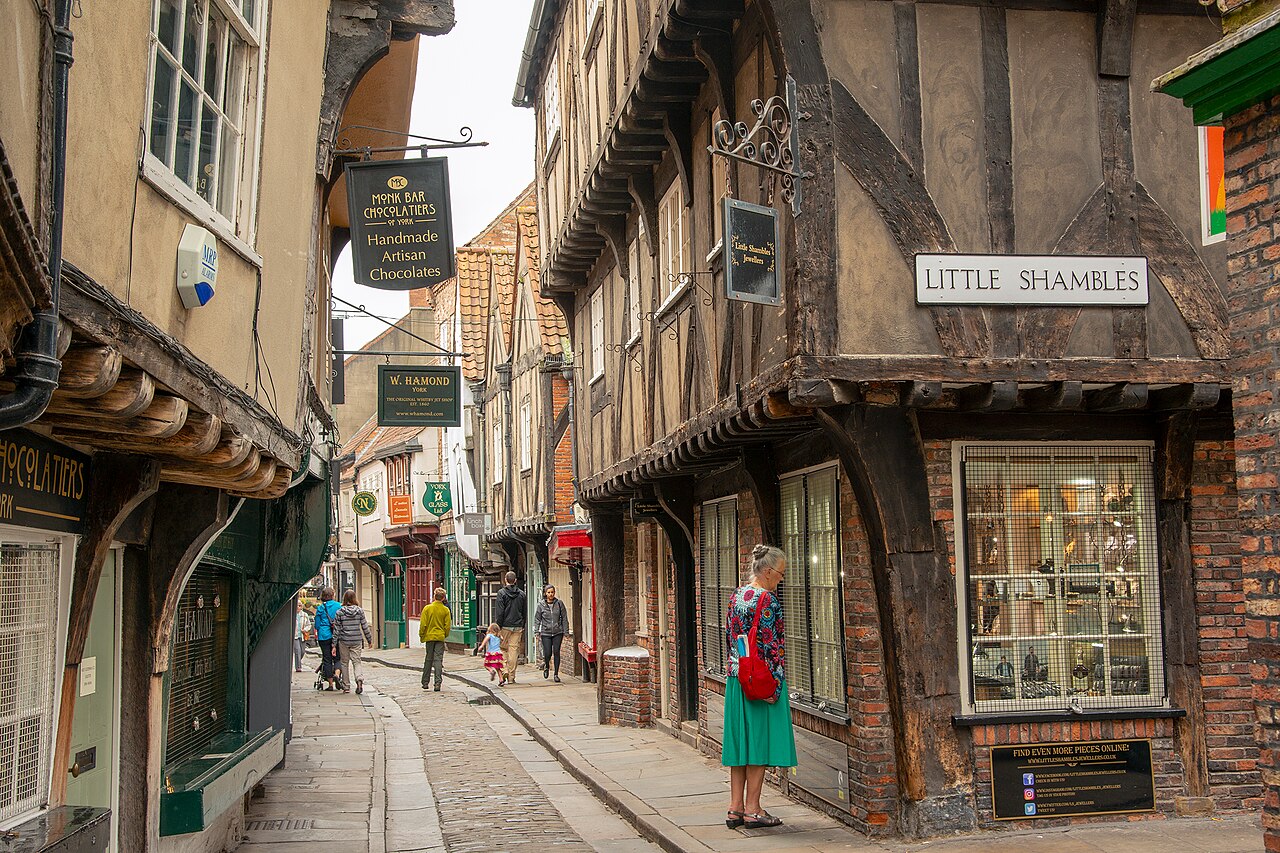
Introduction – A Spur-of-the-Moment Journey
Some trips are planned months in advance, researched down to the finest detail, and scheduled with military precision. Others happen almost by accident, sparked by a sudden idea that refuses to go away. My visit to York firmly belonged in the second category. With Christmas approaching and the festive season in full swing, I found myself wanting to squeeze in one more city before the year drew to a close. York, with its reputation for atmospheric Christmas markets, medieval streets, and layered history, felt like the perfect choice.
Another motivation sat quietly in the background: I had recently purchased an Action Pro 5 camera and was eager to put it through its paces. I wanted to capture video rather than my usual still photography—walking footage, street scenes, historic buildings, and the subtle movement of a city preparing for Christmas. York, compact yet rich in character, seemed ideal for this experiment.
The decision was made at the last minute. I booked my train and, the night before, signed up for a free walking tour run by the Association of Voluntary Guides to the City of York. I had encountered similar volunteer-led tours in other cities, but York’s guiding association has a particularly strong reputation. With everything in place, I set my alarm for an early start and looked forward to a full day of walking, filming, and soaking up history.
An Early Start – The Journey to York
The day began with an early train north-to-south, leaving Newcastle while the morning was still quiet. Winter travel has its own character: darker mornings, condensation on carriage windows, and passengers wrapped in coats and scarves, clutching takeaway coffees. As the train moved south, I reviewed my loose plan for the day—nothing too rigid, just key locations and the walking tour as an anchor point.
Arriving at York Station is always an experience in itself. The station is one of the grander railway termini in the country, its sweeping curved roof immediately setting a tone of Victorian confidence and ambition. Even before stepping fully into the city, York announces itself as a place shaped by history.
Leaving the station, I headed toward the city centre, following part of York’s ancient city walls. This felt like the perfect transition from modern transport to medieval streets. The walls are not just a tourist attraction but a living route, offering elevated views of streets, rooftops, and church towers. Walking along them, even briefly, creates a sense of continuity—centuries of travellers entering York through the same approaches.
York Museum Gardens – A Quiet Start
Before the walking tour, I had some time to spare, so I made my way to the York Museum Gardens. Tucked alongside the River Ouse, the gardens provide a calm, almost reflective counterpoint to the busy streets beyond. In winter, the gardens feel especially atmospheric: bare trees reveal architectural details that summer foliage often hides, and the cold air sharpens the outlines of ruins and stonework.
The centrepiece of the gardens is the ruins of St Mary’s Abbey. Once one of the wealthiest Benedictine monasteries in England, the abbey’s remains are monumental even in their ruined state. Tall stone walls, arched windows open to the sky, and massive pillars hint at the scale and importance of the original structure. Standing among the ruins, camera in hand, I felt the contrast between permanence and impermanence—stone that has endured for centuries, and human institutions that rose and fell around it.
I filmed slow pans of the abbey walls, experimenting with the Action Pro 5’s stabilisation as I walked. This was exactly the kind of environment I had hoped to capture: quiet, textured, and steeped in history.
Nearby stands the Hospitium, a beautifully preserved medieval building that once served as a guesthouse for visitors to the abbey. Its timber-framed upper level and stone base make it one of the most recognisable buildings in the gardens. Learning later that it dates back to the 14th century only deepened my appreciation. The Hospitium feels welcoming even now, centuries after its original purpose, and it remains a powerful reminder of York’s role as a destination long before modern tourism.
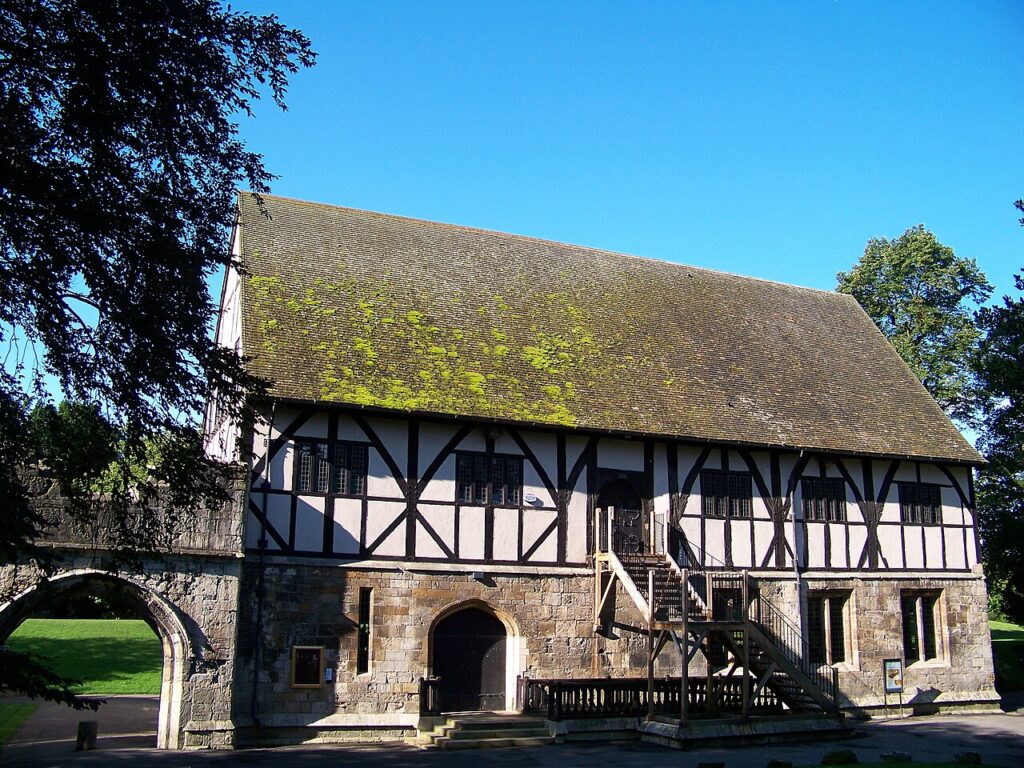
Image: The Hospitium
Time slipped by quickly, but I had allowed enough margin to make my way to Exhibition Square, where the walking tour was due to begin.
Meeting the Guides – The Association of Voluntary Guides to the City of York
The tour assembled outside the York Art Gallery in Exhibition Square. As I arrived, it was clear that I was not the only one keen to explore the city on foot—there were enough participants for two separate groups. This alone spoke volumes about the popularity and reputation of the tours.
The Association of Voluntary Guides to the City of York (AVG) has been offering complimentary guided tours since 1951. Their model is simple but powerful: local experts sharing their knowledge and enthusiasm with visitors from around the world. With over 80 guides, they run two tours daily—at 10:30am and 1:15pm—every day except Christmas Day. Each tour lasts approximately two hours and departs from Exhibition Square.
What struck me immediately was the warmth and confidence of the guides. These were not scripted performances but passionate storytellers who clearly loved their city. After a brief introduction and group division, we set off, beginning a journey that would thread together centuries of York’s history.
King’s Manor – Power, Religion, and Authority
Our first major stop was King’s Manor, a striking complex of buildings with deep historical roots. Originally built as the abbot’s house for St Mary’s Abbey, it later became a residence for the King’s Council of the North. This transformation alone reflects York’s shifting role—from religious centre to administrative powerhouse.
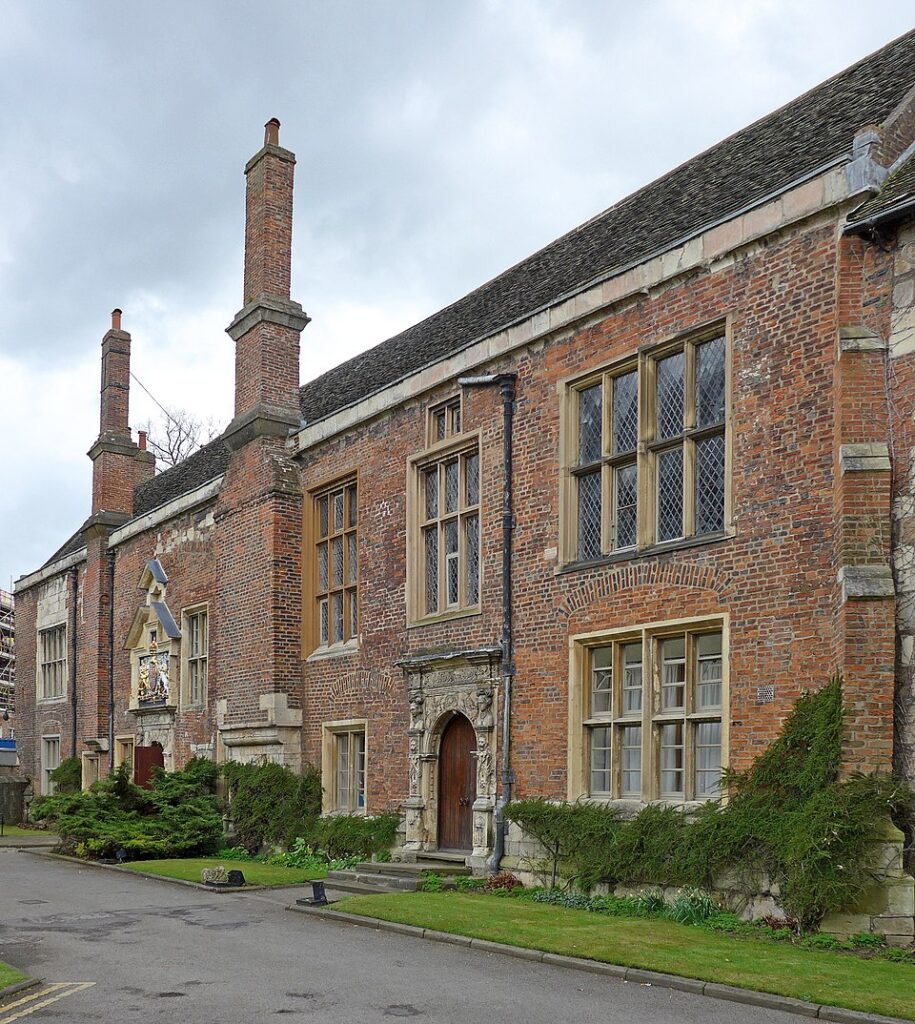
Image: Front facade of King’s Manor
Standing in the courtyard, the guide explained how King’s Manor became a symbol of royal authority in the north of England. Its architecture tells a story of adaptation, with medieval foundations supporting later additions. Today, the building is part of the University of York, continuing a long tradition of learning and governance.
Filming here, I tried to capture the sense of enclosed space and quiet authority. It is a place that feels both intimate and imposing, a reminder that power often operates behind thick walls and modest facades.
Returning to York Museum Gardens – Layers of History
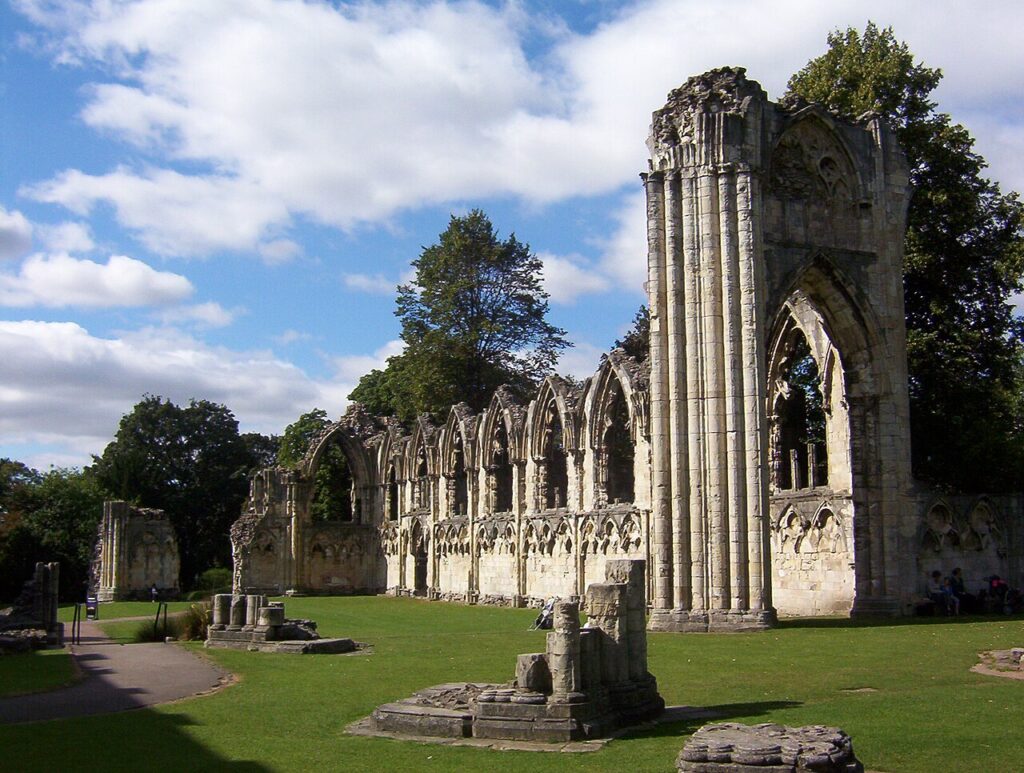
Image: Ruins of St Mary’s Abbey church, York
From King’s Manor, we re-entered the York Museum Gardens, this time with the benefit of the guide’s commentary. St Mary’s Abbey took on new significance as we learned about its wealth, influence, and eventual dissolution under Henry VIII. The guide painted vivid pictures of monastic life—daily routines, economic power, and the abbey’s relationship with the city.
We revisited the Hospitium, learning more about its role as a guesthouse for important visitors. Nearby, the Roman Multangular Tower added another historical layer. Built in the late Roman period, the tower is one of the best-preserved Roman structures in York. Its distinctive ten-sided shape and stone-and-brick construction speak of a time when York—then Eboracum—was a major Roman stronghold.
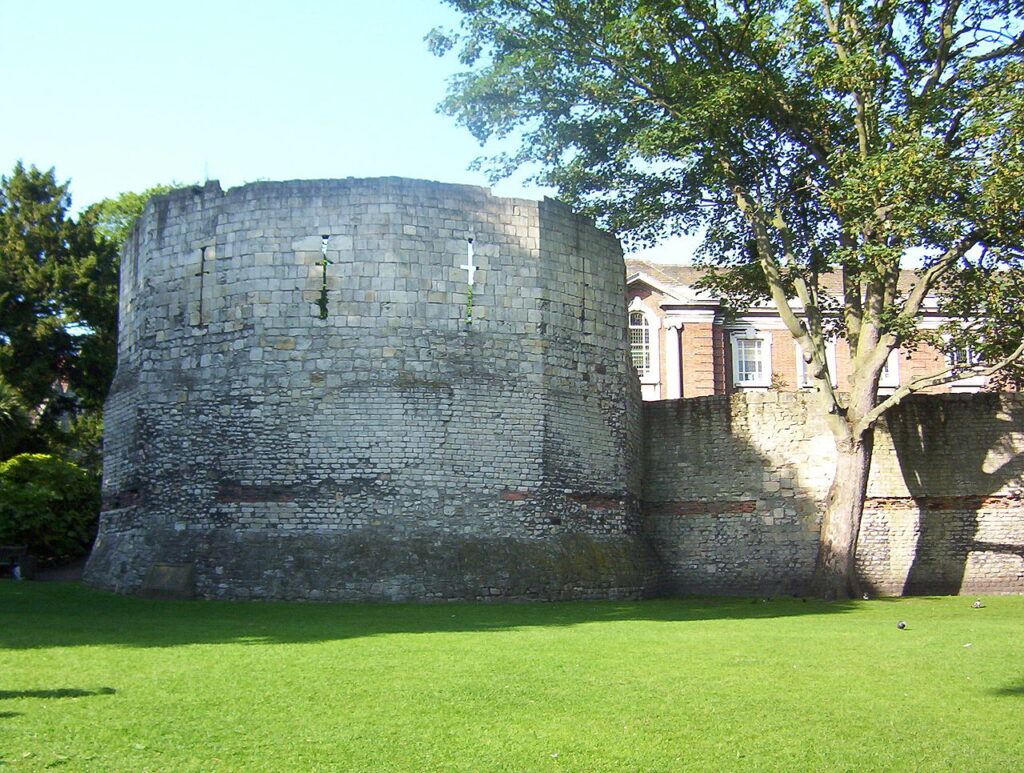
Image: The Multangular Tower and Roman Wall
The presence of Roman, medieval, and later structures within such a compact space is one of York’s defining features. It is not a city that has replaced its past but one that has built upon it, layer by layer.
St Leonard’s Hospital – Charity and Care
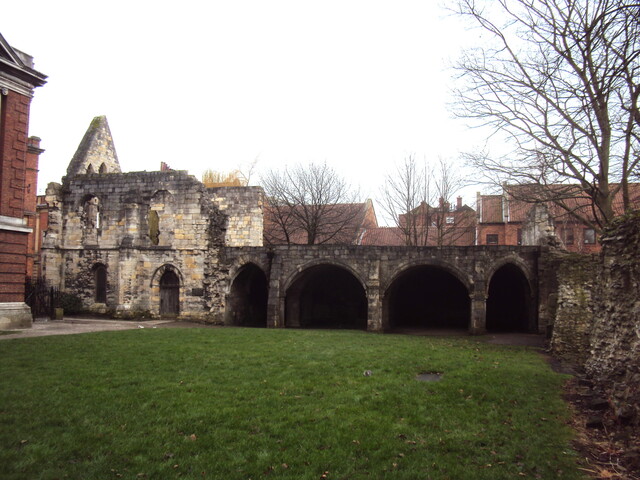
Image: St Leonard’s Hospital
Our next stop took us to the ruins of St Leonard’s Hospital, once one of the largest medieval hospitals in England. Founded in the 12th century, it provided care for the poor, sick, and elderly. The guide emphasised that medieval hospitals were not hospitals in the modern medical sense but institutions of charity and refuge.
Walking among the ruins, I was struck by their scale. Even in fragments, the hospital complex conveys a sense of organisation and purpose. Filming here felt different—more contemplative. These walls once sheltered some of the most vulnerable people in medieval society, and that legacy still seems to linger.
Onto the City Walls – Micklegate Bar
From the hospital ruins, we made our way onto the city walls at Micklegate Bar. Micklegate Bar is perhaps the most historically significant of York’s gatehouses, marking the traditional southern entrance to the city. Kings and queens entering York would pass through here, and it was also the grim location where the heads of traitors were once displayed.
Today, Micklegate Bar is undergoing transformation, with plans to develop it as a venue incorporating an art gallery and shop. This blending of historic structure with contemporary cultural use feels fitting for York—a city that continually reinvents itself while respecting its past.
Walking along the walls provided elevated views across the city, rooftops dusted with winter light, and glimpses of church spires and narrow streets below. The guide pointed out defensive features, explaining how the walls evolved over time to meet changing military needs.
Monk Bar, York Minster, and the Heart of the City
We descended from the walls near Monk Bar, close to York Minster. Although the tour did not include a full visit to the Minster, its presence dominated the area. York Minster is one of the largest Gothic cathedrals in Northern Europe, and even a brief encounter with it is awe-inspiring. Its intricate stonework and immense scale make it a focal point of the city, both physically and spiritually.
I captured some footage of the Minster’s exterior, conscious that this was more of a teaser than a deep exploration. A full visit deserves time and attention, something to be saved for another day.
The Shambles – Timber, Trade, and Time
From the Minster area, the tour led us to one of York’s most famous streets: the Shambles. Narrow, crowded, and lined with overhanging timber-framed buildings, the Shambles feels almost theatrical. Historically associated with butchers’ shops, the street’s layout and architecture have survived remarkably intact.
One building in particular drew attention: 35–36 The Shambles, the former home of St Margaret Clitherow. A 16th-century Catholic martyr, Margaret Clitherow lived here with her butcher husband. The house served as a refuge for Catholic priests during a time of religious persecution. Her eventual execution in 1586 adds a sobering note to an otherwise picturesque street. Today, the house stands as a shrine, reminding visitors that beauty and tragedy often coexist in historic places.
The tour concluded at Newgate, one of the exits from the Shambles. After thanking our guide and fellow participants, we dispersed into the city.
After the Tour – Filming the Shambles and Lunch at Drake’s
With the formal tour over, I decided to spend more time on the Shambles, walking up and down the street several times to capture additional video footage. The crowds ebbed and flowed, and I experimented with angles, pacing, and movement. This was one of the highlights of the day for me—combining creative exploration with an iconic setting.
Eventually, hunger set in, and I headed to Drake’s Fisheries. Known for its fish and chips, Drake’s provided a much-needed rest. I ordered fish and chips accompanied by a pot of tea—a simple but deeply satisfying meal after hours of walking. Sitting there, warming up and reviewing some of the footage on my camera, I felt content and unhurried.
Clifford’s Tower and the York Army Museum – Plans Deferred
After lunch, I made my way toward Clifford’s Tower, intending to visit the York Army Museum nearby. Along the way, I filmed more street scenes, capturing the everyday rhythm of the city. Unfortunately, upon arrival, I discovered that the Army Museum was closed.
I briefly considered visiting Clifford’s Tower itself, but as daylight faded and with the entry price in mind, I decided against it. I had visited the tower years before on a trip with my mother, and it felt like something better saved for another day—perhaps with more time and better light.
The National Railway Museum – A Rushed Visit
With my train departure approaching, I turned my attention to the National Railway Museum. Its proximity to York Station made it an appealing final stop, and I estimated I would have about an hour to explore.
However, reaching the museum proved more time-consuming than expected. The usual direct route from the station had been closed by the council, turning what should have been a ten-minute walk into a twenty-to-thirty-minute detour. By the time I reached the entrance, a significant portion of my available time had already gone.
Despite this, the National Railway Museum remains an extraordinary place. Housing iconic locomotives such as the Flying Scotsman and the Japanese Shinkansen, the museum tells the story of rail transport as a driver of industrial, social, and cultural change. Even moving at a faster pace than I would have liked, I managed to capture video of several key exhibits.
The scale of the Great Hall, the gleaming engines, and the sense of engineering ambition all came through on camera. Although rushed and slightly tired, I was glad I made the effort to visit.
Deepening the Experience – York at Christmas
One element that deserves far more attention than a passing mention is York’s Christmas atmosphere. Visiting the city in winter fundamentally changes how it feels. Shorter days, colder air, and festive lighting combine to create an almost theatrical backdrop to the city’s already dramatic streetscape.
Christmas markets dotted the city centre, particularly around Parliament Street and St Sampson’s Square. Wooden chalets lined the streets, selling mulled wine, hot chocolate, festive food, handmade crafts, and seasonal gifts. Even when busy, the markets retained a warmth that felt genuine rather than overly commercial. The smell of spiced wine and roasting food drifted through the air, mixing with the cold stone scent of the medieval streets.
Filming during this time presented its own challenges and rewards. Low winter light created long shadows and a softer colour palette, but the Christmas lights compensated, adding warmth and contrast. The Action Pro 5 handled movement well, even in crowded areas, and I found myself slowing down, letting people pass, and capturing moments rather than rushing to the next landmark.
York at Christmas feels like a city aware of its own story. The decorations do not overpower the architecture; instead, they seem to sit gently upon it, as though the city is temporarily dressed for celebration rather than transformed into something else.
York Minster – A Colossal Presence
Although I did not enter York Minster on this trip, its presence was impossible to ignore and deserves a deeper reflection. York Minster dominates the city skyline, rising above rooftops and streets like a stone ship anchored in the heart of the city. Approaching it from almost any direction, it reveals itself gradually—first a tower, then a wall, then suddenly the full western façade.
The Minster is one of the largest Gothic cathedrals in Northern Europe and stands on a site that has been a place of worship for nearly two thousand years. Roman buildings, Anglo-Saxon churches, and Norman structures all preceded the current Gothic masterpiece. That continuity gives the Minster a gravity that goes beyond its architectural scale.
Walking around its exterior, I filmed slow upward movements, trying to convey its vertical ambition. The detailed stone carvings, vast stained-glass windows, and flying buttresses speak of medieval faith, craftsmanship, and an extraordinary investment of time and resources. Even without stepping inside, the Minster communicates power, devotion, and permanence.
At Christmas, the Minster takes on an added layer of meaning. Services, carols, and seasonal events tie the building back to its original spiritual purpose. While many visitors experience it primarily as a historic monument, in winter it feels closer to its living role as a place of worship and community.
Jorvik and the Viking Shadow
Although I did not visit the Jorvik Viking Centre on this occasion, its influence on York’s identity is significant enough to warrant discussion. York’s Viking past is not a minor footnote; it is one of the defining chapters of the city’s story. Known as Jorvik during the Viking era, the city was a major trading hub and political centre.
The Jorvik Viking Centre sits near Coppergate, close to where archaeological excavations in the 1970s uncovered remarkably preserved Viking-age remains. These discoveries reshaped understanding of everyday Viking life, revealing details about housing, trade, craftsmanship, and diet.
Walking through York, especially near the river and the older commercial streets, it is easy to imagine the Viking presence beneath the surface. Street names, archaeological markers, and museums all hint at a city that once thrived as part of a vast Norse network.
For a future visit, Jorvik represents an opportunity to explore a very different layer of York’s history—one that contrasts sharply with the Roman order and medieval piety seen elsewhere in the city. It is a reminder that York has always been shaped by movement, migration, and exchange.
The City Walls – A Complete Circuit in Thought
Earlier in the day, my time on the city walls was limited to specific sections as part of the walking tour. However, York’s walls deserve deeper consideration as a continuous structure. At approximately two miles long, they form the most complete medieval city walls in England.
Each bar—Micklegate Bar, Monk Bar, Walmgate Bar, and Bootham Bar—once controlled access to the city, serving defensive, ceremonial, and administrative functions. The walls were not just military structures but statements of authority and identity.
Walking the walls offers a unique perspective on York. From above, the city reveals its layers: Roman foundations, medieval churches, Georgian streets, Victorian railways, and modern developments. Few cities allow visitors to literally walk their perimeter and observe such continuity.
In winter, the walls feel more exposed but also more honest. Without summer foliage, the city’s shape becomes clearer. Filming along the walls, I tried to capture the rhythm of walking—stone underfoot, wind at height, and the slow reveal of views around each bend.
Fatigue, Distance, and the Reality of Travel
By mid-afternoon, the cumulative effect of walking began to make itself felt. York is compact, but a full day of exploration—especially one that includes walls, gardens, and extended filming—adds up. This physical fatigue shaped my later decisions, such as skipping Clifford’s Tower and moving more quickly through the National Railway Museum.
Rather than detracting from the experience, this tiredness grounded it. Travel is not just about highlights but about endurance, pacing, and knowing when to stop. The city remained generous even when I slowed down.
The National Railway Museum – Engineering and Empire
The National Railway Museum is not merely a collection of trains; it is a narrative of Britain’s industrial, social, and imperial history. Railways reshaped the country, connecting cities, enabling mass movement, and altering perceptions of distance and time.
Inside the Great Hall, locomotives stand like monuments. The Flying Scotsman, perhaps the most famous steam engine in the world, embodies speed, innovation, and national pride. Nearby, royal carriages reflect the railway’s role in reinforcing hierarchy and ceremony.
Despite my limited time, I moved through the museum with intent, focusing on visual storytelling rather than detailed reading. Wide shots captured scale; close-ups highlighted rivets, nameplates, and wheels. The Action Pro 5 again proved its worth, allowing smooth footage even while walking briskly.
The museum’s international exhibits, including the Japanese Shinkansen, place Britain’s railway story in a global context. Innovation did not stop at national borders, and the museum quietly acknowledges both influence and competition.
Leaving the museum, I felt that familiar mix of satisfaction and regret—glad I had visited, but wishing for more time.
The Journey Home – Delays and Perspective
Returning to York Station brought the day full circle. The station’s grandeur, now lit by early evening light, felt almost comforting. Train delays are rarely welcome, but in this case they offered a pause—a moment to sit, drink coffee, and reflect.
The last-minute platform change injected a brief moment of chaos, passengers hurrying across the concourse, bags swinging and coats flapping. Once aboard, the journey north resumed, punctuated by a further delay outside Newcastle Central Station while waiting for a platform.
In isolation, a thirty-minute delay is an inconvenience. In the context of a full day spent immersed in history, movement, and discovery, it felt insignificant.
Final Reflections – Why York Endures
York endures because it does not belong to a single period. Roman, Viking, medieval, industrial, and modern layers coexist, sometimes uneasily, often beautifully. A last-minute trip revealed this complexity not through exhaustive exploration but through movement—walking, filming, pausing, and moving again.
This visit reinforced something I have learned repeatedly through travel: that depth often matters more than completeness. I did not see everything. I did not need to. York offered enough to fill the day and leave something deliberately unfinished.
I will return—to walk the full circuit of the walls, to enter the Minster properly, to revisit Jorvik, and perhaps to climb Clifford’s Tower once more. Until then, this winter journey, captured on video and carried in memory, stands as a reminder that some of the best trips begin with a simple, last-minute decision.
