
Crossing borders is often described as a journey between nations, but crossing from Pakistan into India at the Wagah Border felt like stepping into a different rhythm of life entirely. Having spent days exploring Lahore and the surrounding areas of Pakistan, the border crossing marked not only a physical transition but a cultural and spiritual one. I arrived in Amritsar, the spiritual heart of Sikhism, carrying a sense of anticipation for what awaited: a stay at the Golden Temple, an experience that would remain one of the most profound and humbling of my travels.
Crossing the Wagah Border
The journey began at the Wagah Border, where Pakistan meets India in a place charged with history, ceremony, and emotion. The crossing itself was orderly but vibrant. Flags fluttered on both sides, officers moved with precise coordination, and crowds of travelers, soldiers, and locals bustled through the checkpoints. There was a ceremonial aspect too — the famous flag-lowering ceremony occurs daily, a theatrical display of nationalism and discipline, with soldiers performing synchronized drills to the beat of drums and shouts.
Crossing into India, there was a palpable change in atmosphere. The language shifted, the markets took on a different color palette, and the energy of Amritsar awaited just a few miles away. I boarded a local taxi, the city growing larger and busier with every turn, until the Golden Temple complex rose before me, glinting in the afternoon sun.
The Golden Temple: First Impressions
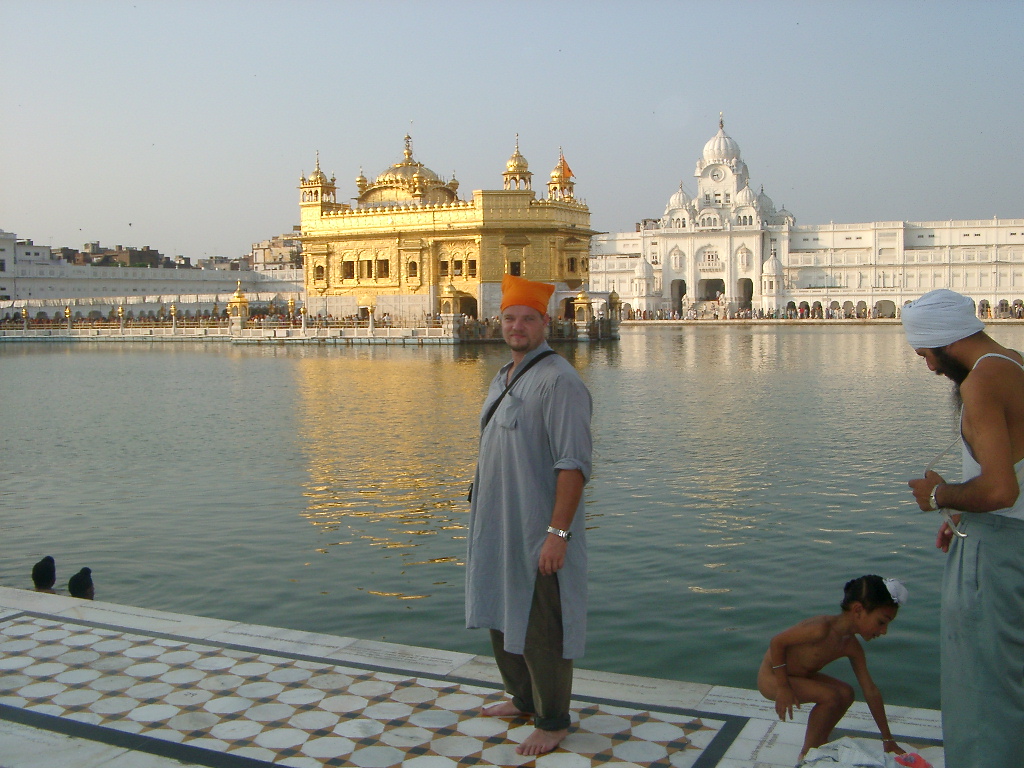
Approaching the Harmandir Sahib, commonly known as the Golden Temple, I was struck immediately by its beauty and serenity. Surrounded by the sacred Amrit Sarovar, the pool of nectar, the temple seemed to float on water, its gold-plated façade shimmering in the sunlight. Pilgrims and visitors moved around the complex with a quiet purpose, barefoot and respectful, some bowing in reverence, others meditating or offering prayers.
The sheer scale of the temple complex is awe-inspiring. The central shrine rises from the middle of the pool, connected to the surrounding walkway by a causeway that leads pilgrims directly into the heart of worship. Ornate carvings, gilded walls, and intricate inlays all contribute to the sense of devotion that permeates every corner.
Free Accommodation and the Langar Experience
One of the most remarkable aspects of staying at the Golden Temple was the hospitality extended to visitors and pilgrims, irrespective of faith or nationality. The temple provides free accommodation in simple, clean rooms or dormitories, maintained by volunteers who operate with quiet efficiency and generosity.
I was assigned a room that was modest but comfortable, with basic furnishings, clean bedding, and the essential facilities. What struck me most was not the room itself but the ethos behind it — the principle of seva, or selfless service, which is central to Sikhism. Volunteers ensured everything ran smoothly, offering guidance, tea, and assistance without expectation of payment.
Equally impressive was the langar, the temple’s community kitchen. Every visitor is welcome to sit on the floor and partake in a free vegetarian meal, prepared and served by volunteers. The kitchen operates on a massive scale, feeding thousands daily, yet everything is done with humility and devotion. I remember the rhythm of the kitchen: the chopping of vegetables, the simmering of lentils, the rolling of flatbreads, all moving in harmony with a sense of purpose. Sharing this meal with people from all walks of life — pilgrims, locals, and international travelers alike — felt like a profound act of community and equality.
Immersing in Spiritual Life
Staying at the Golden Temple is not merely about the accommodation; it is about immersing oneself in a spiritual rhythm that has endured for centuries. Each day began early, with the morning aarti echoing through the complex, the sound of hymns carried over the water. Pilgrims moved silently, some standing in meditation, others dipping their hands or feet into the sacred pool. I joined them, barefoot, feeling the smooth marble beneath my feet, the cool water of the Sarovar brushing against my hands, and the sense of timeless devotion enveloping me.
Walking the perimeter of the temple, observing rituals, and listening to the continuous recitation of the Guru Granth Sahib allowed me to feel the heart of Sikh practice. The temple operates 24 hours a day, and there is always a flow of activity — from volunteers cleaning and preparing food to pilgrims paying their respects, to musicians performing kirtan that rises into the evening air. It was a lesson in service, humility, and devotion, made tangible in every small detail of daily life.
Interactions with the People
What made the experience unforgettable were the interactions with the people — volunteers, pilgrims, and fellow travelers. Many volunteers spoke little English but conveyed warmth and guidance through smiles, gestures, and patience. Pilgrims shared stories of their faith, their journeys, and the meaning the temple held in their lives. One elderly man explained the significance of bathing in the Sarovar, describing it as an act of purification and devotion, not just ritual.
Travelers like me, many of whom had arrived with curiosity rather than faith, were welcomed without judgment. Sharing the communal meals, walking together along the causeways, and observing the rituals fostered a sense of belonging and humanity that transcended borders and backgrounds.
Evening at the Temple
As evening fell, the Golden Temple transformed once again. The lights illuminated the gilded structure, casting golden reflections onto the calm waters of the Sarovar. The kirtan, devotional singing, became more resonant, echoing across the courtyard and across the water. Standing there, watching pilgrims float along the reflection of the temple, I felt a deep sense of peace.
Evening meals in the langar continued, and I joined in the preparation and serving, helping fold chapatis and distribute dal. The work was simple but meditative, and I felt part of the timeless rhythm that sustains the temple and its community. The devotion, discipline, and generosity on display were humbling, reminding me that this was not a tourist experience in the traditional sense — it was living in a place of devotion, however briefly.
Reflection on the Journey
Staying at the Golden Temple and experiencing its free accommodation and food was a lesson in generosity, humility, and shared humanity. It was also a reminder of the power of faith to shape not just beliefs but daily life — to create structures, routines, and a community that nurtures all who enter.
Crossing the Wagah Border earlier that day and arriving in Amritsar provided an added layer of context. The transition from one country to another, from one political reality to another, contrasted sharply with the sense of unity and equality experienced within the temple complex. Here, distinctions of nationality, wealth, or status melted away, leaving only a shared human experience — of devotion, service, and gratitude.
The Golden Temple is not just an architectural wonder; it is a living, breathing community. Staying there allows one to witness the principles of Sikhism enacted in daily life, from the kirtan and rituals to the preparation of the langar and the care extended to every visitor. It is an experience that enriches the mind, heart, and spirit, leaving a lasting impression long after departure.
Departure
Leaving the temple the next morning, I felt a mixture of awe, gratitude, and reflection. The city of Amritsar awaited beyond the temple gates, but the serenity and sense of purpose I had experienced at the Golden Temple lingered. I carried with me not just memories of golden walls and serene waters, but a renewed sense of respect for faith, hospitality, and community.
The journey from the Wagah Border to the Golden Temple was more than a physical trip; it was a passage into a space where history, culture, and spirituality converge. It was a journey that reminded me why travel is not just about seeing sights, but about immersing oneself in experiences that transform perspective.
In the end, staying at the Golden Temple was a lesson in living with generosity, humility, and awareness. It is an experience I would recommend to anyone seeking more than sightseeing — to those who want to feel, reflect, and connect with a world of devotion that continues to thrive in the modern age.
