
Some travel experiences stay with you not because of how long they last, but because of how completely they change your perspective. My helicopter ride over the Twelve Apostles in Australia was one of those moments. It was brief in terms of minutes, yet vast in impact, offering a view of one of the world’s most dramatic coastlines from an angle few ever experience.
The Twelve Apostles, located along the Great Ocean Road in Victoria, are iconic limestone stacks rising from the Southern Ocean. From ground level, they are impressive — towering, weathered formations shaped by millions of years of erosion. But from the air, their true scale, isolation, and fragility become strikingly clear. Seeing them from above transformed what might otherwise have been a sightseeing stop into something deeply memorable.
Arrival at the Coast
The journey along the Great Ocean Road had already been spectacular. The road hugs the coastline, weaving between cliffs, beaches, and dense coastal forest. Every turn reveals another dramatic view, and the air carries the unmistakable scent of salt and eucalyptus. By the time I arrived near the Twelve Apostles, I had already seen countless photographs and postcards — yet nothing truly prepares you for the reality.
Standing on the viewing platform, watching waves crash against the base of the stacks, I felt a mixture of awe and anticipation. The limestone towers rise abruptly from the sea, their pale surfaces contrasting sharply with the dark blue water below. The wind was strong, the ocean restless, and the entire scene felt raw and untamed.
It was at this point that the helicopter experience shifted from a novelty to something essential. The cliffs stretch for miles, and from the ground you only ever see fragments. The promise of seeing the entire coastline unfold from the air was irresistible.
Preparing for Take-Off
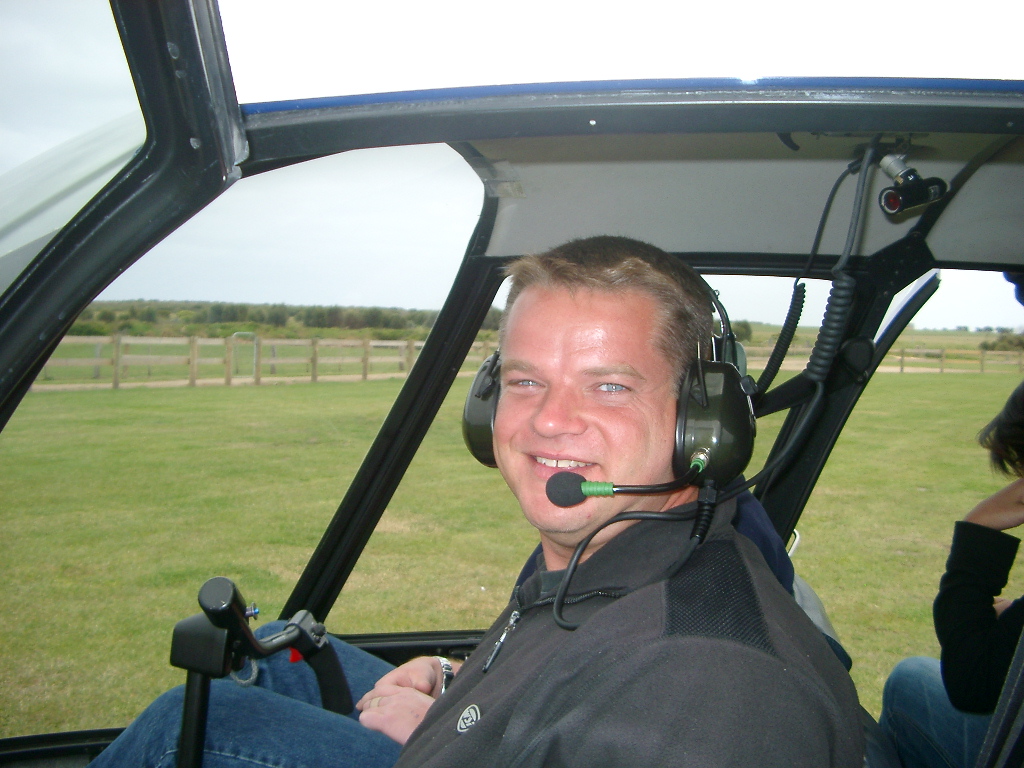
The helicopter base was modest and functional, set back slightly from the cliffs. Safety briefings were clear and reassuring, and the pilot’s calm confidence immediately put me at ease. As I approached the aircraft, its compact size made the experience feel more personal and intimate. This was not a large tour operation; it felt like a focused journey designed to showcase the landscape rather than overwhelm it.
Climbing into the helicopter, fastening the harness, and slipping on the headset created an immediate sense of separation from the world outside. The sound of the rotors starting up was both powerful and rhythmic, building steadily as the aircraft came to life.
When we lifted off the ground, it happened more smoothly than I expected. There was no dramatic lurch, just a gentle rise as the coastline fell away beneath us. Almost instantly, the view changed completely.
First Sight From Above
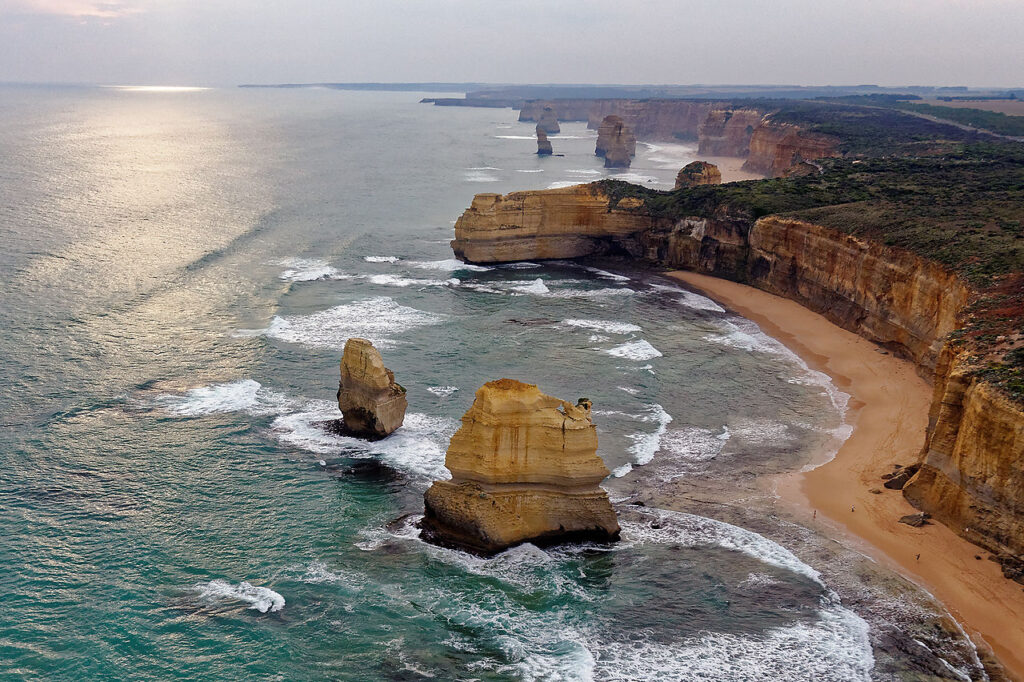
As we moved toward the Twelve Apostles, the scale of the landscape became clear. From above, the coastline looked like a living thing — cliffs eroded into sharp edges and curves, beaches carved into narrow strips, and the ocean constantly reshaping everything it touched.
The Twelve Apostles themselves came into view one by one, scattered like sentinels along the shore. From the air, it was obvious that they were never truly twelve at once, and that erosion continues to claim them one by one. Seeing the remaining stacks isolated in the vastness of the Southern Ocean made them feel both monumental and fragile.
The water below shifted constantly in colour, from deep navy to turquoise, as sunlight reflected off the surface. Waves curled and broke against the base of the stacks, sending white spray into the air. From this height, the relentless power of the ocean was unmistakable.
A Different Perspective
What struck me most during the flight was how the helicopter changed my sense of distance and time. On foot, the cliffs feel imposing and distant, their scale difficult to fully comprehend. From the air, everything aligns — the stacks, the cliffs, the shoreline — forming a coherent story of erosion, movement, and geological time.
The pilot provided commentary through the headset, pointing out formations, collapsed stacks, and hidden coves only visible from above. Hearing about how wind, water, and time have sculpted this landscape added depth to what I was seeing. It was not just a scenic flight; it was a lesson in natural history unfolding in real time beneath us.
The Southern Ocean Below
Flying out over the ocean itself was a powerful experience. The Southern Ocean has a reputation for strength and unpredictability, and seeing it from above reinforced that reputation. There was a sense of vastness that felt almost overwhelming — nothing but water stretching to the horizon.
Looking straight down, I could see patterns in the waves, shifting and reforming constantly. It was a reminder that the landscape below is never static. The cliffs and stacks may appear solid, but they are in a constant state of change, shaped by forces far larger than human time scales.
There was also a strange sense of calm. Despite the power of the ocean, being suspended above it felt peaceful. The steady hum of the helicopter and the smooth motion through the air created a feeling of detachment, as though I was observing something ancient and ongoing rather than something dramatic or threatening.
Moments of Stillness
Although the helicopter was in motion, there were moments that felt almost still. Circling the stacks, the pilot adjusted position to give everyone the best possible view. During these slow passes, time seemed to stretch. I found myself focusing on details — the texture of the limestone, the shadows cast by the afternoon sun, the thin lines of surf tracing the shoreline.
Photography felt secondary to simply being present. While it was tempting to capture every angle, some views felt too complete to reduce to an image. They demanded attention rather than documentation.
Returning to Land
The return flight followed the coastline back toward the landing area, offering one final, sweeping view of the cliffs. As we descended, the perspective shifted again. Features that had seemed vast from the air gradually regained their ground-level proportions.
Touching down felt surprisingly abrupt, as though the experience had ended too soon. Removing the headset and stepping back onto solid ground, the sounds of wind and surf rushed back in. The world felt louder, more immediate.
Reflection After the Flight
Standing once again on the viewing platform, I looked out at the Twelve Apostles with a completely new understanding. I could trace the coastline in my mind, seeing connections that had been invisible before. The helicopter ride had not replaced the ground experience — it had completed it.
What made the experience so powerful was not just the scenery, but the perspective it offered. From the air, the Twelve Apostles are not isolated landmarks; they are part of a continuous, evolving landscape shaped by immense natural forces.
Final Thoughts
My helicopter ride over the Twelve Apostles was more than a sightseeing activity. It was a moment of perspective, scale, and reflection. It revealed the coastline not as a static postcard image, but as a living system — fragile, powerful, and constantly changing.
Some experiences remind you how small you are. Others remind you how extraordinary the world can be. This did both at once. Long after leaving the Great Ocean Road, the memory of hovering above those limestone stacks, suspended between sky and sea, remains one of the most vivid travel moments I have ever had.
