
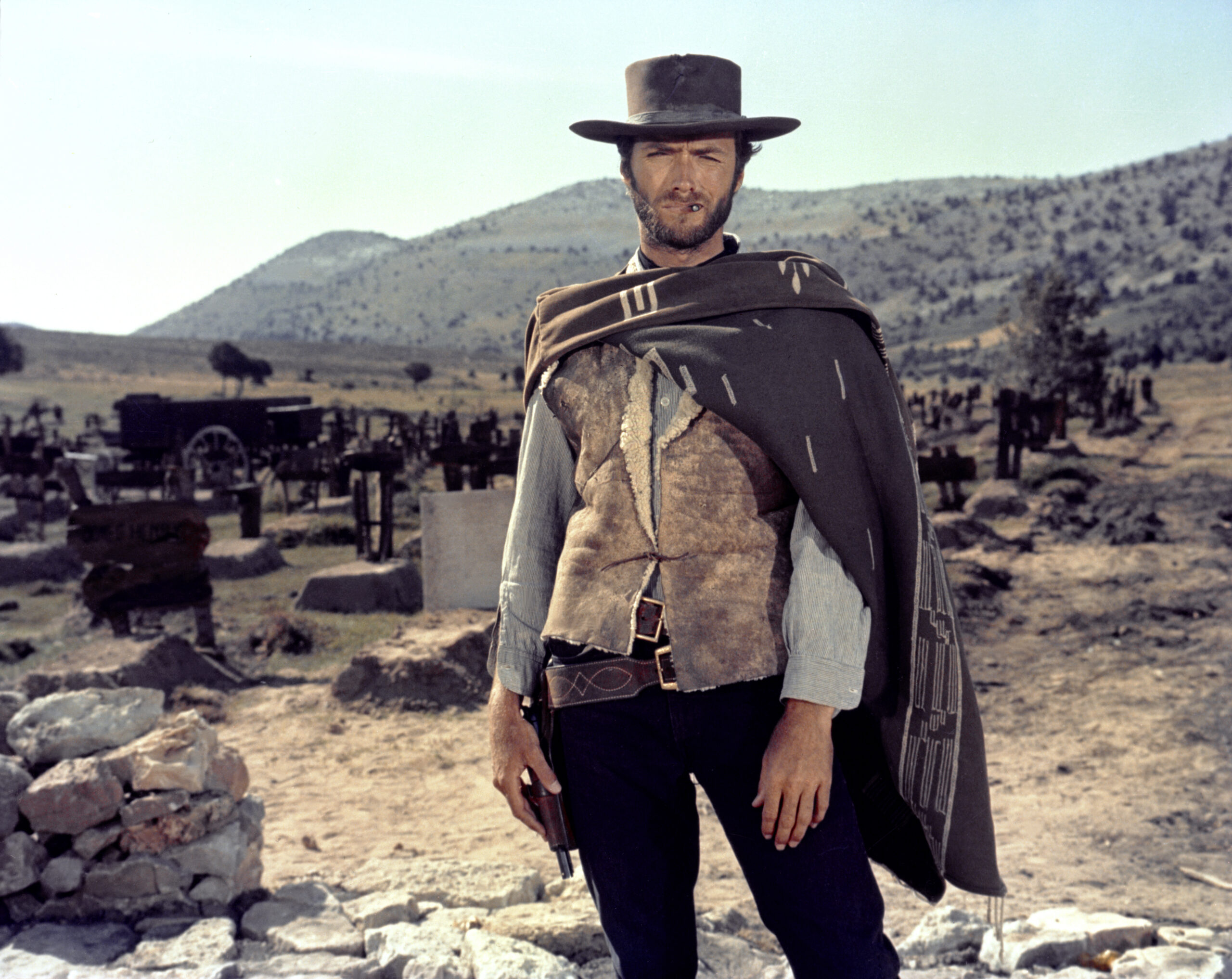
A Fistful of Dollars is a landmark Western film released in 1964 and directed by Sergio Leone. The movie stars Clint Eastwood in the role that helped establish him as an international film star. It is widely regarded as one of the most influential Western films ever made and is credited with helping to popularise the “Spaghetti Western” genre — Western films produced by Italian filmmakers, often shot in Spain or Italy.
The film tells the story of a mysterious gunman who arrives in a small Mexican border town controlled by two rival criminal families. Through clever manipulation, skill with firearms, and careful strategy, the stranger plays both sides against each other in order to achieve his own goals. With its distinctive visual style, minimal dialogue, and iconic musical score, A Fistful of Dollars redefined the Western genre and influenced countless filmmakers.
Historical Background
During the early 1960s, the popularity of traditional American Western films had begun to decline. Audiences were becoming more interested in new styles of storytelling that reflected moral complexity rather than simple portrayals of heroes and villains. Sergio Leone’s approach to filmmaking brought a fresh perspective to the Western genre.
A Fistful of Dollars was inspired in part by the Japanese film Yojimbo directed by Akira Kurosawa. Yojimbo tells the story of a wandering samurai who manipulates rival gangs in a small town, a narrative structure that closely parallels Leone’s film. Although the similarities led to legal disputes, the influence of Kurosawa’s work is widely acknowledged.
Despite its relatively low budget, the film achieved considerable commercial success. It was followed by two sequels, For a Few Dollars More and The Good, the Bad and the Ugly, forming what is often referred to as the “Dollars Trilogy.”
Plot Summary
The story begins with the arrival of a lone stranger in the small border town of San Miguel. The town is divided between two competing families — the Rojo brothers and the Baxter family — who are engaged in a violent struggle for power and control.
The stranger, known simply as “The Man with No Name,” quickly observes the conflict and recognises an opportunity to profit from the situation. Rather than choosing a side, he carefully manipulates both families, offering his services as a hired gun.
Through deception and strategic thinking, the stranger encourages mistrust between the rival groups, increasing tensions and escalating violence. At the same time, he demonstrates moments of compassion, particularly when he helps a family attempting to escape the dangerous environment.
As the conflict intensifies, the stranger’s actions are eventually discovered, leading to a brutal confrontation with the Rojo family. Despite suffering severe injuries, he ultimately recovers and returns to confront his enemies in a dramatic final showdown.
The film concludes with the stranger leaving the town, maintaining his mysterious identity and reinforcing the theme of the lone outsider who lives by his own moral code.
Characters
The Man with No Name
The central character of the film is portrayed by Clint Eastwood. His performance is notable for its restraint, as the character speaks relatively little but communicates through facial expressions, body language, and actions.
Unlike traditional Western heroes, the Man with No Name is morally ambiguous. He is neither purely good nor purely bad, operating according to his own personal sense of justice. His calm demeanour and exceptional gun skills make him a compelling and memorable character.
Ramón Rojo
Ramón Rojo serves as the primary antagonist in the film. He is a ruthless and calculating leader who uses violence to maintain control. Ramón’s confidence in his rifle skills creates tension in his confrontations with the stranger.
Supporting Characters
Several supporting characters contribute to the atmosphere of the film, including members of the Baxter family and townspeople caught between the two rival factions. Their presence highlights the destructive consequences of greed and violence.
Cinematic Style
Sergio Leone’s directing style played a significant role in distinguishing A Fistful of Dollars from earlier Western films. The film uses close-up shots to emphasise facial expressions, creating dramatic tension during confrontations.
Leone also used wide landscape shots to establish atmosphere and highlight the isolation of the characters. The contrast between extreme close-ups and expansive scenery became a defining feature of the Spaghetti Western style.
Another notable aspect of the film is its pacing. Leone often allowed scenes to unfold slowly, building suspense before moments of sudden action. This approach created a sense of anticipation that influenced later filmmakers.
Music
The musical score for A Fistful of Dollars was composed by Ennio Morricone, whose work became one of the defining elements of the film.
Morricone’s music combines unconventional sounds such as whistling, electric guitar, and percussion to create a distinctive atmosphere. The main theme is instantly recognisable and contributes to the film’s sense of tension and drama.
The collaboration between Sergio Leone and Ennio Morricone continued throughout the Dollars Trilogy, producing some of the most memorable film music ever composed.
Themes
Moral Ambiguity
One of the most important themes in A Fistful of Dollars is moral complexity. The protagonist is not a traditional hero motivated purely by noble ideals. Instead, he is a pragmatic individual who uses his skills for personal benefit while occasionally demonstrating compassion.
This morally ambiguous approach represented a departure from earlier Western films, which often portrayed clear distinctions between good and evil.
Power and Greed
The conflict between the Rojo and Baxter families illustrates the destructive nature of greed and the desire for power. Both groups are willing to use violence to achieve their goals, creating a town dominated by fear and instability.
The film suggests that unchecked ambition leads to suffering for both individuals and communities.
The Lone Outsider
The Man with No Name represents the archetype of the outsider who exists outside conventional society. His independence allows him to act according to his own principles rather than conforming to social expectations.
This theme has appeared in many Western films and continues to influence storytelling in modern cinema.
Influence on Cinema
A Fistful of Dollars had a lasting impact on the film industry. It helped establish Clint Eastwood as a major actor and contributed to the international popularity of Spaghetti Westerns.
The film’s visual style, pacing, and music influenced directors such as Quentin Tarantino, whose work often reflects Leone’s emphasis on dramatic tension and stylised violence.
The Dollars Trilogy remains an important reference point for filmmakers interested in genre innovation.
Reception
Upon its release, A Fistful of Dollars achieved strong box office success, particularly in Europe. Although some critics initially questioned its departure from traditional Western conventions, the film’s reputation grew over time.
Today, the film is widely regarded as a classic and is frequently included in lists of the greatest Western films ever made. Its influence can be seen in both cinema and popular culture.
Conclusion
A Fistful of Dollars remains one of the most influential Western films in cinematic history. Through Sergio Leone’s innovative direction, Clint Eastwood’s iconic performance, and Ennio Morricone’s memorable music, the film transformed the Western genre and introduced audiences to a new style of storytelling.
The film’s themes of moral ambiguity, independence, and the consequences of greed continue to resonate with modern audiences. Its distinctive visual style and dramatic tension have inspired generations of filmmakers.
More than sixty years after its release, A Fistful of Dollars continues to be celebrated as a pioneering work that reshaped the Western genre and helped establish the global reputation of Italian cinema.
