
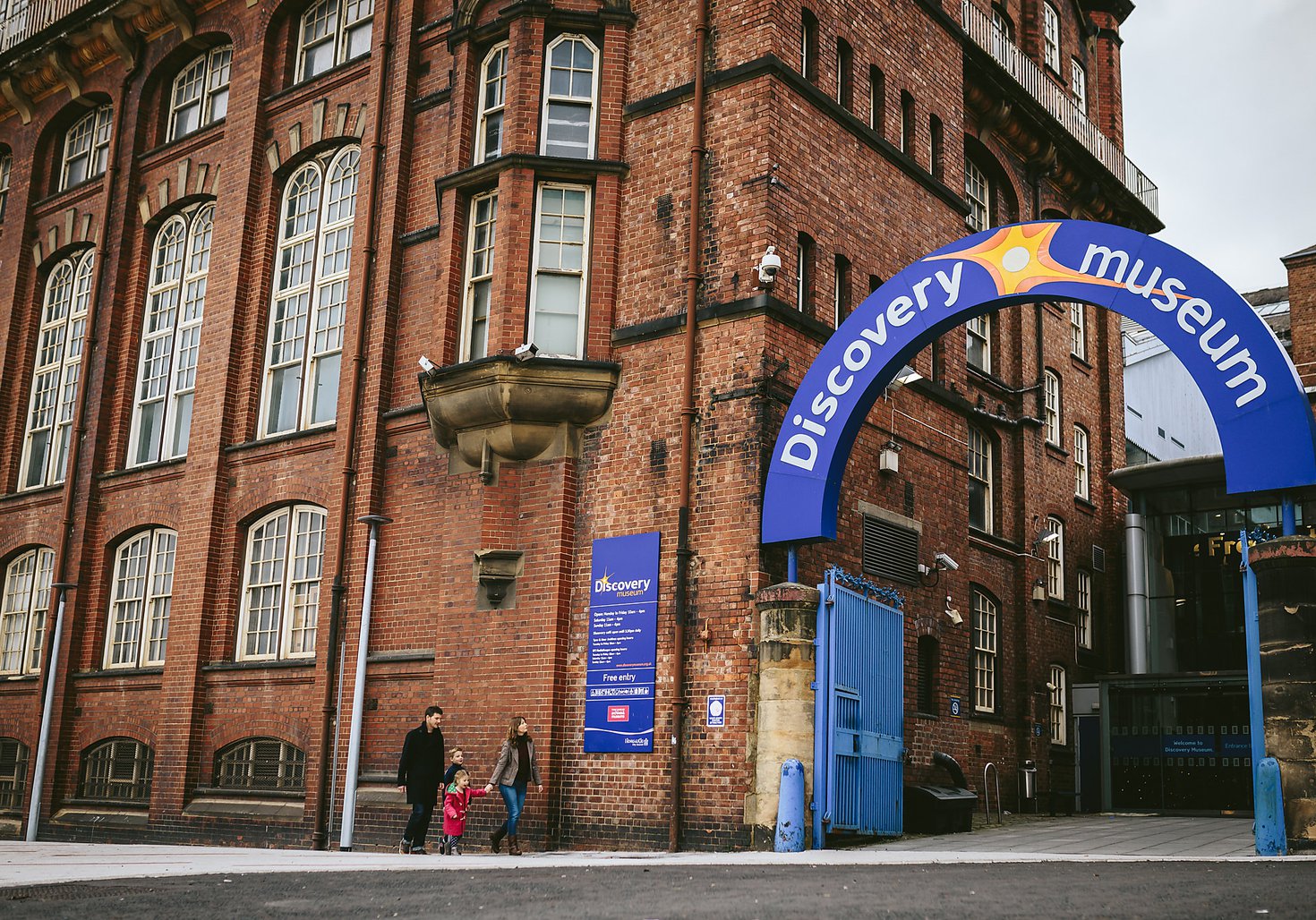
The Discovery Museum in Newcastle upon Tyne is one of the most important cultural and educational attractions in the North East of England. Located in Blandford Square, close to Newcastle Central Station, the museum offers visitors a fascinating journey through the region’s scientific, industrial, maritime, and social history. With its engaging interactive exhibits, historic artefacts, and strong focus on innovation, the Discovery Museum has become a key destination for families, students, tourists, and anyone interested in the story of Tyneside’s remarkable contributions to the modern world.
The museum traces its roots back to the early twentieth century, when Newcastle began to celebrate its role as a centre of engineering, shipbuilding, and technological development. The collection originated as the Municipal Museum of Science and Industry in 1934, one of the first science museums outside London. Over time, the collections expanded and eventually moved to the historic former Co-operative Wholesale Society building in Blandford Square, where the Discovery Museum is located today.
One of the most iconic exhibits in the museum is Turbinia, a revolutionary ship that transformed maritime engineering. Built by engineer Charles Parsons, Turbinia was the first vessel powered by a steam turbine and, at the time of its launch in 1894, was the fastest ship in the world. Measuring around 34–35 metres in length, the vessel demonstrated the power and efficiency of turbine propulsion, influencing naval engineering for decades to come. Today, Turbinia dominates the museum’s main hall and remains a symbol of Tyneside’s engineering brilliance.
The Discovery Museum showcases a wide range of exhibitions that explore the development of industry and technology in the North East of England. Visitors can learn about shipbuilding on the River Tyne, coal mining, railways, and the manufacturing industries that helped shape Britain’s industrial revolution. The region’s history as a hub for heavy engineering and innovation is explored through displays of machinery, tools, and models that illustrate how local inventors contributed to global progress.
Another important aspect of the museum is its focus on scientific discovery and technological advancement. Exhibits highlight the work of important inventors such as Joseph Swan, who played a crucial role in the development of the incandescent light bulb. Swan demonstrated his electric lighting system in Newcastle in the late nineteenth century, marking a major milestone in the history of modern lighting technology. Through displays like these, visitors gain an appreciation of how local innovators helped shape everyday life across the world.
The Discovery Museum is designed to be interactive and engaging, especially for younger visitors. Many of the displays encourage hands-on exploration, allowing children and adults alike to experiment with scientific principles and mechanical systems. The museum includes activity areas where families can explore concepts such as energy, motion, and electricity through play-based learning. This interactive approach makes the museum an enjoyable and educational experience, combining entertainment with knowledge.
One of the notable exhibitions in recent years is Steam to Green: A North East Energy Revolution, which examines how the region’s traditional industrial strengths are being transformed to meet modern environmental challenges. This exhibition connects the historical achievements of the North East with contemporary developments in renewable energy, sustainability, and engineering innovation. By linking past achievements with future possibilities, the museum highlights the continuing importance of science and technology in shaping society.
In addition to science and industry, the Discovery Museum explores social and cultural history. Exhibits focus on everyday life in Tyneside, including fashion, military history, transport, and working life. The museum’s displays show how people lived, worked, and adapted to changing economic conditions across different periods. By combining personal stories with artefacts, the museum presents a human perspective on historical change, helping visitors connect emotionally with the past.
The building itself is an important part of the museum’s appeal. Originally constructed as offices for the Co-operative Wholesale Society, the structure reflects the commercial and industrial importance of Newcastle during the late nineteenth and early twentieth centuries. The building’s large interior spaces allow for dramatic displays of large objects such as vehicles, engines, and maritime equipment. The architecture adds to the sense of historical continuity, linking the museum’s exhibits with the broader story of industrial development in the city.
Accessibility and affordability are central to the museum’s mission. Admission to the Discovery Museum is free, making it accessible to a wide audience. The museum also provides facilities such as a café, gift shop, and wheelchair access, ensuring that visitors of all backgrounds can enjoy the experience comfortably. Opening hours typically run from 10:00am to 4:00pm on weekdays and from 11:00am to 4:00pm at weekends, although visitors are encouraged to check current times before travelling.
The Discovery Museum is part of Tyne & Wear Archives & Museums, a regional organisation that manages several important heritage sites. Through partnerships with schools, universities, and cultural institutions, the museum contributes to education and research in subjects such as engineering, history, and science communication. Workshops, talks, and special exhibitions help keep the museum relevant in the modern digital age, ensuring that new generations remain engaged with the region’s heritage.
Tourists visiting Newcastle often combine a visit to the Discovery Museum with other nearby attractions such as the Great North Museum: Hancock, the Life Science Centre, and the Laing Art Gallery. Together, these institutions create a rich cultural landscape that reflects the intellectual and artistic vitality of the North East. The Discovery Museum plays a key role within this network by focusing specifically on innovation and technological development.
The museum’s popularity demonstrates the continuing importance of regional heritage. With hundreds of thousands of visitors each year, it remains one of the most visited museums in the area. Many visitors return multiple times, as the museum frequently updates its exhibitions and educational programmes. This ongoing renewal ensures that the Discovery Museum continues to provide fresh insights into both historical achievements and future possibilities.
In conclusion, the Discovery Museum in Newcastle upon Tyne is far more than a traditional museum. It is a celebration of human creativity, scientific progress, and the industrial heritage of the North East of England. Through its impressive collection of artefacts, interactive displays, and educational activities, the museum demonstrates how local innovations have influenced global developments in engineering, transport, and technology. From the iconic Turbinia ship to modern exhibitions exploring sustainable energy, the Discovery Museum offers a comprehensive and inspiring view of the past, present, and future of innovation.
For visitors interested in science, history, or engineering, the Discovery Museum provides an engaging and informative experience that highlights the importance of curiosity, experimentation, and creativity in shaping the modern world.
