
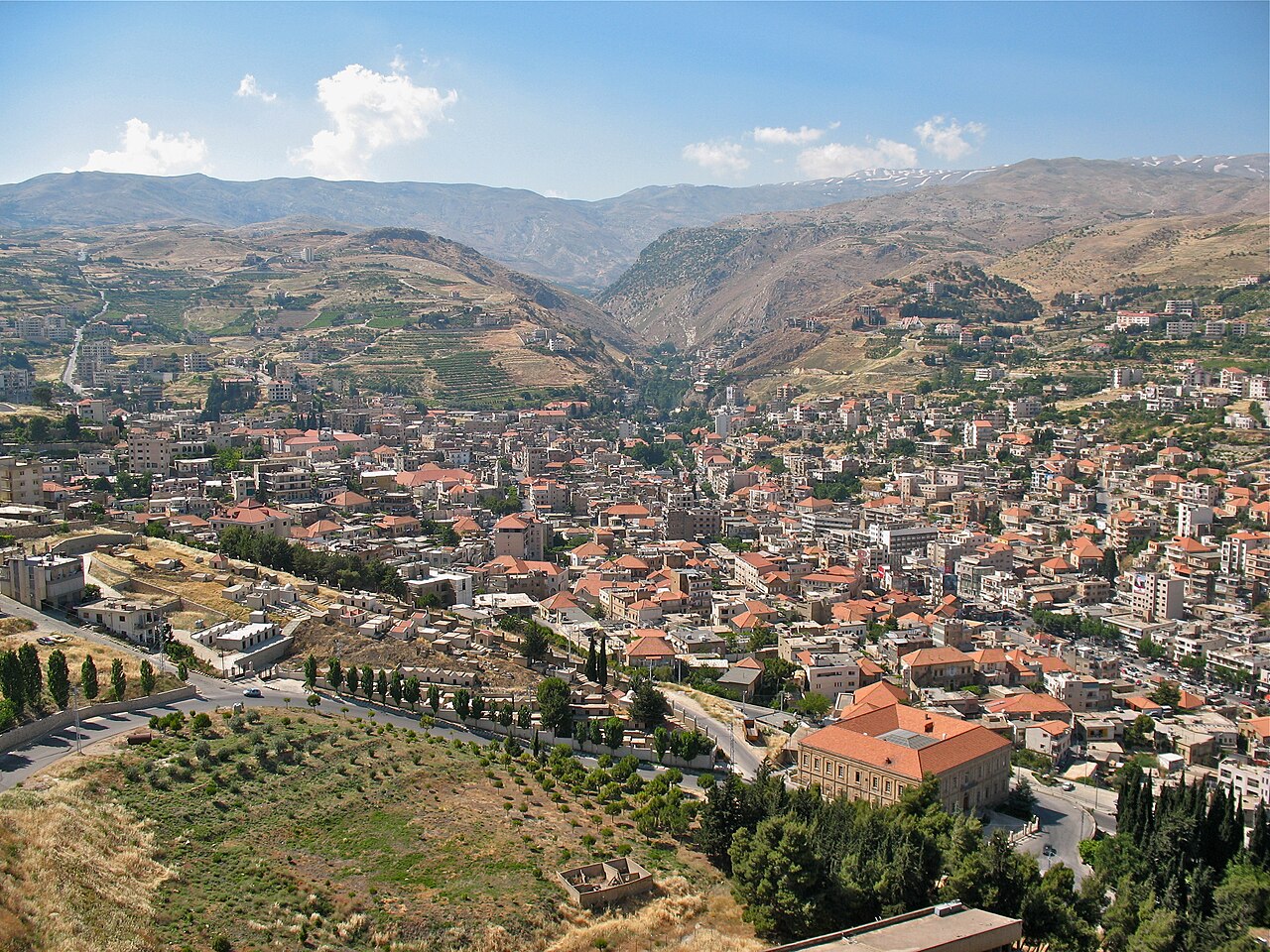
Participating in a Middle East Council of Churches (MECC) work camp in the Beqaa Valley was a deeply enriching and humbling experience that became a defining part of my journey through the Middle East. As I travelled through Lebanon, Jordan, Israel, and Egypt, each country offered its own perspectives, histories, and challenges. However, my time in Lebanon’s Bekaa Valley stood out as a powerful lesson in resilience, community, and the impact of collective action in a region shaped by complexity and hardship.
The Beqaa Valley itself is a striking landscape—fertile land framed by mountain ranges, steeped in history and cultural significance. Yet beneath its natural beauty lies a reality shaped by political instability, economic hardship, and the long-term effects of regional conflict. Entering the valley, I was immediately aware that this was not simply a place we were passing through, but a community living with challenges that demanded empathy, understanding, and long-term commitment rather than short-term solutions.
The Middle East Council of Churches work camp brought together volunteers from a wide range of countries and backgrounds, united by a shared desire to contribute positively while learning from the communities we were supporting. This diversity became one of the work camp’s greatest strengths. Each volunteer brought their own experiences, perspectives, and motivations, creating an environment of mutual learning and reflection. Conversations often extended late into the evening, as we discussed what we had seen during the day, compared experiences from other countries, and challenged one another to think more critically about global inequality and social responsibility.
Our work in the Bekaa Valley focused on supporting education initiatives, infrastructure development, and broader community empowerment projects. Working in partnership with MECC and local organisations, we quickly learned the importance of listening before acting. Rather than imposing external ideas, the projects were guided by local needs and priorities. This approach reinforced the idea that sustainable development must be rooted in collaboration and respect for local knowledge.
Education emerged as a central theme throughout the work camp. Many of the initiatives we supported were aimed at improving access to learning resources, maintaining educational facilities, or creating safe and supportive environments for young people. Witnessing the value placed on education by local communities was deeply inspiring. Despite limited resources and uncertain futures, there was a clear belief that education offered a pathway toward empowerment, opportunity, and long-term change.
Infrastructure projects, while often physically demanding, carried a strong sense of purpose. Whether assisting with repairs, construction, or maintenance, each task contributed to improving daily life within the community. These efforts were not grand or dramatic, but they were meaningful. They demonstrated how small, practical actions, when carried out collectively, could have a tangible and lasting impact.
One of the most powerful aspects of the work camp was the opportunity to engage directly with local people. Through shared meals, conversations, and informal interactions, we learned about their lives, their challenges, and their hopes for the future. Hospitality was a constant presence; despite facing their own hardships, people were generous with their time, stories, and kindness. These interactions humanised the region in a way no book or documentary ever could.
The resilience of the people in the Beqaa Valley left a lasting impression on me. Many had lived through years of instability, displacement, and economic difficulty, yet there was a quiet strength and determination in how they approached daily life. Rather than focusing on what had been lost, there was a strong emphasis on what could still be built—stronger communities, better opportunities for young people, and a more hopeful future.
Working alongside fellow volunteers also played a significant role in shaping the experience. The shared challenges of physical work, cultural adjustment, and emotional reflection created strong bonds among us. We supported one another, learned from each other’s perspectives, and grew collectively through the experience. These connections reinforced the idea that international solidarity, when grounded in humility and respect, can be a powerful force for understanding and change.
Emotionally, the work camp was both challenging and rewarding. There were moments of discomfort as I confronted the realities of poverty, displacement, and limited access to resources. At times, it was difficult to reconcile these experiences with the privileges I had taken for granted in my own life. Yet these moments of discomfort were essential. They prompted deeper reflection and encouraged a more honest engagement with global issues rather than a detached or superficial understanding.
Travelling through the wider Middle East provided valuable context for the experience in the Beqaa Valley. Moving between Lebanon, Jordan, Israel, and Egypt highlighted both the diversity of the region and the shared challenges faced by its people. Borders, politics, and histories varied, but common themes of resilience, hospitality, and a desire for stability and opportunity emerged everywhere I went. The work camp acted as an anchor point in this journey, grounding my travels in meaningful engagement rather than observation alone.
On a personal level, the MECC work camp profoundly influenced how I view volunteering and international engagement. It challenged the notion of “helping” as a one-directional act and replaced it with a deeper understanding of partnership, mutual learning, and shared humanity. I came to realise that the most valuable contributions often come not from grand gestures, but from presence, listening, and a willingness to learn.
The experience also encouraged me to think more critically about my role in the wider world. It raised important questions about responsibility, privilege, and how individuals can contribute to positive change without reinforcing existing inequalities. These reflections did not end when the work camp finished; they have continued to shape how I approach my personal, professional, and creative projects ever since.
Looking back, my time at the Middle East Council of Churches work camp in the Beqaa Valley remains one of the most meaningful experiences of my journey through the Middle East. It offered lessons that extended far beyond the physical work we carried out—lessons about resilience, cooperation, and the power of community in the face of adversity. The people I met, the stories I heard, and the shared efforts we undertook left a lasting impression that continues to influence how I understand the region and my place within a global community.
Ultimately, the Beqaa Valley work camp reaffirmed a simple but powerful truth: meaningful change begins with connection. By working together across cultures, listening with empathy, and acting with humility, it is possible to contribute—however modestly—to a more just and understanding world.
