
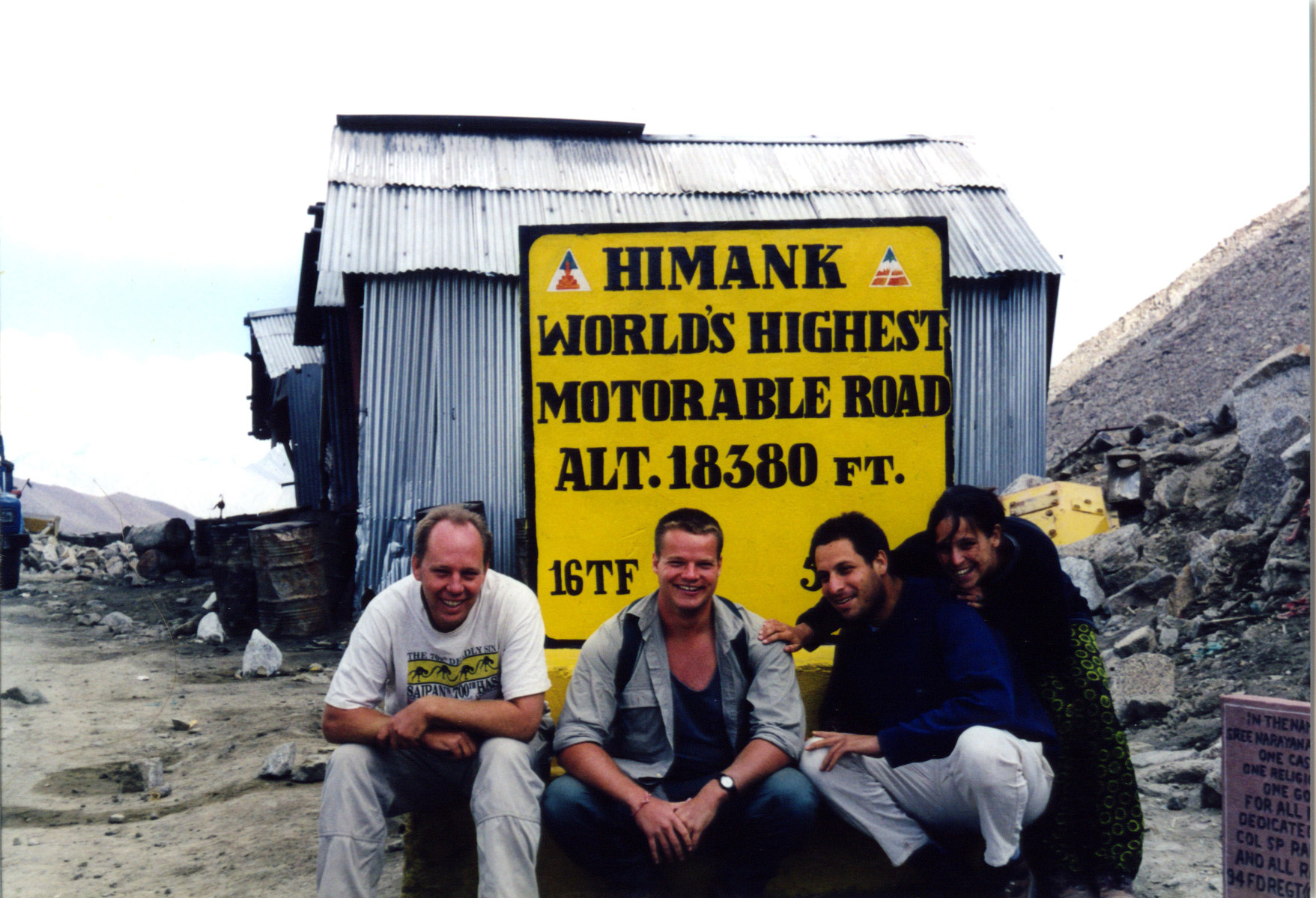
Standing at Himank, the point marking the world’s highest motorable road at 18,380 feet, was one of those rare travel moments where altitude, isolation, and human perseverance converge into something deeply humbling. The journey there was not simply about reaching a record-breaking height; it was about the road itself, the people I shared it with, and the gradual realisation that in places like Ladakh, scale is measured not only in metres above sea level, but in silence, resilience, and perspective.
Setting Out from Leh
Leh, nestled in a high-altitude desert, has a way of quietly preparing you for what lies beyond it. The town feels suspended between worlds — part ancient trade route, part modern traveller’s hub. After days of acclimatisation, wandering monasteries, and exchanging stories with fellow travellers, a small group of us decided to journey onward together toward the Nubra Valley. We were strangers at first, brought together by shared curiosity and the understanding that in this landscape, companionship mattered.
Our vehicle — sturdy, practical, and well-used — carried not just supplies but expectation. The driver, calm and unhurried, knew the road intimately. We trusted him implicitly, knowing that in the Himalayas, experience often matters more than speed.
The Climb Begins
Leaving Leh, the terrain quickly reminded us that this was no ordinary road trip. The landscape grew harsher and more expansive, stripped of excess colour but rich in texture. Rocky slopes stretched endlessly, punctuated by prayer flags fluttering in the wind. The sky felt closer here — a deep, unbroken blue that seemed to intensify with every metre of elevation.
As we climbed, conversation inside the vehicle ebbed and flowed. At times, silence took over, not from discomfort but from collective awe. Breathing became more deliberate. Even simple movements required awareness, a reminder that at this altitude, nothing could be taken for granted.
Altitude and Awareness
At over 18,000 feet, the body becomes acutely aware of itself. Headaches threatened, energy levels fluctuated, and hydration became a constant priority. We checked in on one another regularly, sharing snacks, water, and encouragement. There was an unspoken understanding that reaching Himank was not a competition — it was a shared effort.
The thin air altered perception. Sounds felt muted, movements slower, thoughts more deliberate. Time itself seemed to stretch, as though the mountains dictated their own rhythm.
Reaching Himank
The arrival at Himank was understated yet profound. A simple sign marked the achievement — a testament not to grandeur but to endurance. Standing beside it, we took photographs, but none of us rushed. This was a place that demanded pause.
At 18,380 feet, the wind cut sharply through layers of clothing. The cold was immediate, unfiltered, and invigorating. Looking around, the vastness of the Himalayas unfolded in every direction — peaks upon peaks, ridges layered like brushstrokes across the horizon. There were no trees, no settlements, no distractions. Just rock, sky, and snow.
It was difficult to articulate the feeling. Pride, perhaps, but more than that, humility. The road existed not to conquer the mountains, but to coexist with them.
Shared Moments with Fellow Travellers
The group dynamic at that altitude felt different. Small gestures carried weight — a shared smile, a helping hand, a joke made lighter by the thin air. We had met only days earlier in Leh, yet here we were, standing together at one of the highest accessible points on Earth.
Stories were exchanged: where we had come from, what had brought us to Ladakh, where we were headed next. In a place so remote, connection felt amplified. We were bound not by familiarity, but by shared experience.
The Role of the Border Roads Organisation
Himank is more than a tourist milestone; it represents the extraordinary efforts of the Border Roads Organisation (BRO). Maintaining roads at such altitudes, under extreme weather conditions, is a feat of engineering and human resilience. Signs along the way offered both practical advice and philosophical reminders: “Drive Carefully”, “This Is Not a Race”, “Be Gentle on My Curves.”
These messages felt especially meaningful here. The road was not just infrastructure; it was lifeline, connecting isolated regions and communities across unforgiving terrain.
Descending Toward Nubra Valley
Leaving Himank behind, the descent toward the Nubra Valley felt like a transition between worlds. Gradually, the harsh, barren landscape softened. Valleys widened, colours returned, and the air grew noticeably richer.
The Nubra Valley revealed itself as a surprising contrast — sand dunes, rivers, and patches of greenery framed by towering mountains. After the stark minimalism of the high pass, Nubra felt almost lush.
Reflection on the Journey
What stayed with me most was not the height itself, but the process of getting there. Travelling through Ladakh strips travel down to its essentials: movement, awareness, respect. There is little room for ego in a place where nature dictates the terms.
Sharing that journey with fellow travellers added depth to the experience. We arrived as individuals, but the road forged a temporary community — one built on mutual support and shared wonder.
Perspective at Altitude
Standing at 18,380 feet changes how you see the world — literally and metaphorically. Problems that once felt significant seemed smaller, less urgent. The vastness of the landscape offered perspective, reminding me how brief and precious moments of connection truly are.
In a world increasingly defined by speed and immediacy, Himank offered stillness. It invited reflection rather than conquest, presence rather than performance.
Conclusion
Visiting Himank, the world’s highest motorable road, on the way to the Nubra Valley was not just a highlight of my time in Ladakh — it was a defining experience. It was a reminder that travel is not measured by distance or altitude alone, but by the moments that challenge, connect, and transform us.
The road may lead onward, but the memory of standing at that height, surrounded by mountains and shared humanity, remains firmly grounded — long after the descent back into the valley.
