
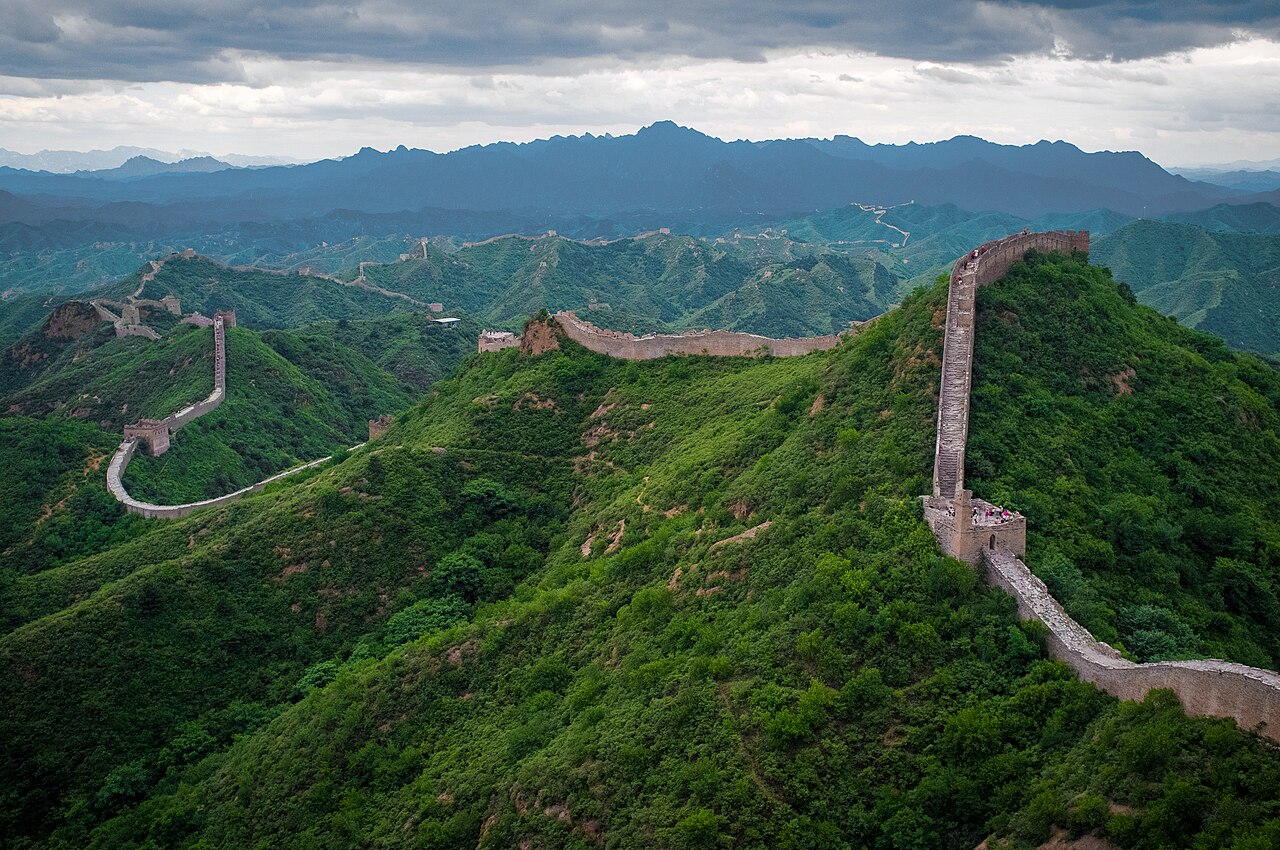
Few sights in the world carry the combination of history, scale, and human achievement like the Great Wall of China. Standing on its weathered stones, looking across mountains and valleys that stretch endlessly, I was immediately struck by the enormity of the task undertaken thousands of years ago. Visiting the Wall was not just sightseeing; it was an immersion into centuries of Chinese history, a physical challenge, and an encounter with a symbol of human perseverance and ingenuity.
Arrival at the Wall
My journey to the Wall began with the bustling energy of Beijing, a city of contrasts: ancient temples and modern skyscrapers coexist side by side, streets buzzing with life, and the scent of street food wafting through the air. From the city, the landscape slowly changed. Skyscrapers gave way to rolling hills and forests, and eventually, the terrain steepened into the mountains where the Wall snakes its way across the ridges like a stone dragon.
Arriving at the access point, I caught my first full view of the Wall stretching across the mountains. It was breathtaking. From this distance, it seemed to float above the landscape, rising and falling with the contours of the hills. The sheer scale was difficult to comprehend — stone ramparts and watchtowers punctuated the ridges for as far as the eye could see. Even in photographs, the Wall seems monumental, but standing before it, I realized how dramatically it dominates the landscape.
Beginning the Ascent
Climbing the Wall requires preparation, focus, and energy. The steps are uneven, worn smooth by centuries of visitors, and often steeper than they appear from a distance. Starting at the base, I immediately noticed how the Wall adapts to the mountains — rising sharply in places, curving around cliffs, and plunging into valleys. Every turn presented a new perspective, a new challenge.
The first few minutes were physically demanding. Each step required attention; missteps could result in a stumble or a twisted ankle. Yet, with effort came a sense of exhilaration. There is something unifying about the act of climbing the Wall, a connection with the countless people who had walked, patrolled, or defended it over centuries. I felt part of a long chain of history stretching back to the Ming dynasty and beyond.
Observing the Watchtowers
Every few hundred meters, watchtowers punctuate the Wall. Climbing inside one of these structures was like stepping back in time. These towers once served as defensive strongholds, observation points, and signal stations. From their heights, guards would have watched for approaching armies, sending smoke or fire signals to warn distant posts. Standing inside one, I imagined the lives of soldiers, their long days of vigilance, the tension of potential conflict, and the isolation of life atop these remote mountains.
The views from the towers were stunning. Looking out across the Wall winding over hills and ridges, I was struck by both the engineering brilliance and the natural beauty. The Wall follows the contours of the mountains perfectly, as if it grew from the land itself. From this height, the scale and ambition of the construction became clear, and I felt a deep appreciation for the manpower, planning, and skill required to complete such a monumental project.
The Physical Challenge
As I continued along the Wall, the climb became more demanding. In some sections, the steps were uneven and steep, and the Wall narrowed precariously along cliff edges. The exertion was intense; my legs burned, my hands gripped the rough stone, and I paused often to catch my breath. Yet, these challenges added to the sense of accomplishment. Each step felt like a personal victory, a small triumph against fatigue and gravity.
The climb also allowed for reflection. I thought about the historical significance of the Wall: the empires that built it, the soldiers who defended it, and the workers who constructed it under grueling conditions. The physical difficulty of the climb offered a small taste of the effort and endurance required to create and maintain this extraordinary structure.
Walking Through History
One of the most profound aspects of visiting the Great Wall is the sense of walking through history. The stones beneath my feet are worn smooth by generations of footsteps, carrying stories of construction, defense, and daily life along the Wall. Every brick, every crevice, every weathered corner is evidence of the human endeavor that shaped it.
Along the path, I encountered inscriptions and markers left by travelers and soldiers, and I imagined the conversations, conflicts, and daily routines of those who once occupied these mountains. The Wall was not just a physical barrier; it was a living, breathing part of history, intertwined with the people and cultures of the region.
Immersion in the Landscape
The natural beauty surrounding the Wall is equally captivating. The Wall winds through forests, crosses mountain ridges, and overlooks valleys that stretch to the horizon. From some vantage points, the mountains rise sharply, creating a dramatic backdrop. In others, the landscape spreads into gentle hills, dotted with villages and farmland.
The air at this elevation is crisp, carrying the scent of pine and wildflowers. Birds occasionally dart across the ramparts, and the wind whistles through the stonework. This combination of natural and manmade wonder creates a sense of timelessness, a reminder that the Wall is both a human achievement and a part of the environment it traverses.
The Challenge of the Steep Sections
Not all sections of the Wall are restored or easy to navigate. Some stretches are steep, crumbling, and narrow, demanding concentration and caution. These segments, though challenging, are the most rewarding. They allow a closer connection to the original structure, the stonework less altered by modern reconstruction. Walking these parts required careful steps, hands gripping the rough stone, and a focus that heightened my awareness of both history and my surroundings.
Reaching these sections offered an unparalleled sense of adventure. Each steep incline, uneven step, and exposed ridge tested physical endurance while simultaneously rewarding with breathtaking views. The combination of challenge and scenery creates an experience that is both exhilarating and deeply reflective.
Sunset on the Wall
I timed part of my visit to coincide with sunset, and the experience was unforgettable. As the sun dipped below the mountains, the Wall seemed to glow with golden light, each brick illuminated by a soft, warm glow. Shadows lengthened along the ridges, accentuating the contours of the landscape and highlighting the Wall’s sinuous path through the mountains.
The temperature cooled, and the crowds thinned, leaving a rare quiet atop the stones. Standing in this moment, I felt a profound sense of connection — to history, to the land, and to the countless people who had walked this path before me. It was a moment of reflection, awe, and serenity, where human achievement and natural beauty converged.
Lessons and Reflections
Visiting the Great Wall offers more than just physical activity or sightseeing; it is an experience that teaches lessons about perseverance, vision, and human ingenuity. The Wall reminds us that monumental achievements require planning, collaboration, and determination. It also illustrates the interplay between humans and the natural world, showing how structures can follow the land while asserting presence and purpose.
Walking along the Wall, I reflected on the endurance of civilizations, the impermanence of human life in contrast to enduring stone, and the importance of preserving cultural heritage. The Great Wall is a reminder that history is not abstract — it is tangible, lived, and continuously experienced by those who visit and appreciate it.
Conclusion
Visiting the Great Wall of China was an unforgettable journey. It combined physical challenge, historical immersion, and natural beauty in a way that few other sites can. Walking along its ancient stones, climbing its towers, navigating steep sections, and pausing to take in the sweeping vistas was an experience that left a lasting impression.
The Great Wall is more than a structure; it is a symbol of human ambition, endurance, and ingenuity. It connects past and present, civilization and nature, challenge and achievement. Standing atop the Wall, looking across mountains and valleys that stretch seemingly endlessly, I felt both humbled and inspired — a witness to one of the most remarkable accomplishments in human history, and a participant in its living legacy.
Visiting the Great Wall is not merely a tourist activity. It is an immersion in time, space, and human endeavor, an opportunity to reflect on history while testing one’s endurance, and a chance to witness one of the most enduring symbols of human creativity and determination. Every step, every breath, every view from the Wall remains etched in memory, a reminder that the greatest journeys are both physical and reflective, rooted in both history and the natural world.
