
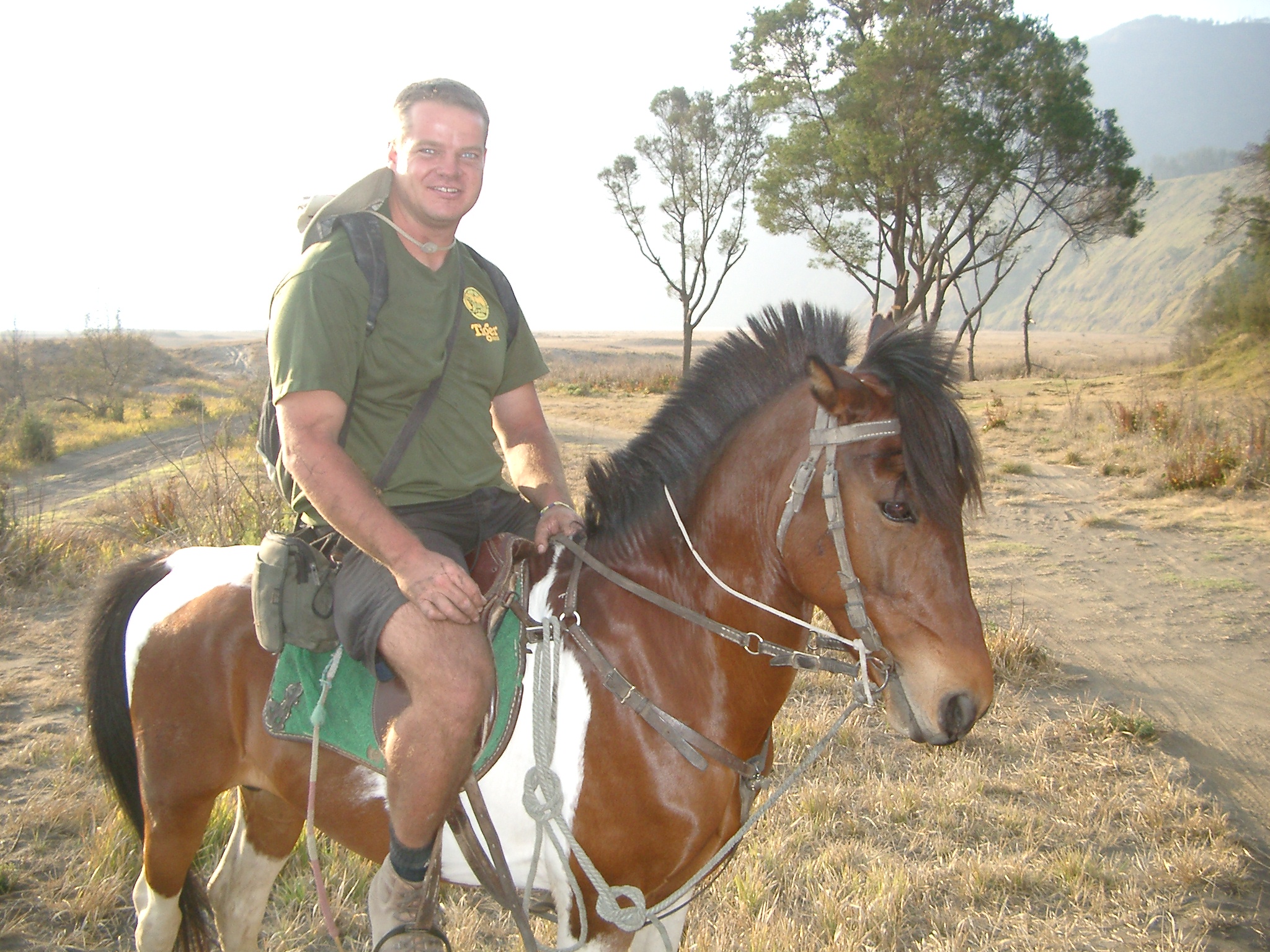
The landscape around Mount Bromo in Indonesia is otherworldly. Towering volcanic peaks, vast fields of ash, and wisps of smoke rising from craters create a scene that feels suspended between reality and a dream. I had just completed the descent from the summit — legs sore, lungs still catching the high-altitude air, and eyes wide from the awe of witnessing the sunrise over this unique volcanic landscape. The sky had shifted from the soft purples of dawn to the brighter hues of morning, and the sprawling “Sea of Sand” stretched out beneath me like a monochromatic desert. I felt exhilarated, exhausted, and yet curiously grounded all at once.
As I walked across the sandy plain toward the base, a pair of local boys from a nearby village approached, their smiles wide, their energy infectious. They were young — perhaps twelve or thirteen — and yet their confidence in the terrain was remarkable. They had horses, and with a mix of gestures and broken English, they encouraged us to ride. Initially, I hesitated. My mind was still half-absorbed in the enormity of Mount Bromo and the physical effort of the climb and descent. But there was something about their insistence, their eagerness, that was impossible to ignore.
The First Encounter With the Horses
The horses themselves were lean, sturdy, and seemingly accustomed to the volcanic terrain. They moved with a calm assurance, as if the ash and sand beneath their hooves were familiar companions rather than obstacles. The boys guided us toward the animals, patting their flanks and urging us to mount. The saddle felt different from anything I had experienced. It was simple — no frills, no luxuries, just functional leather and rope, designed to withstand long hours in rugged conditions.
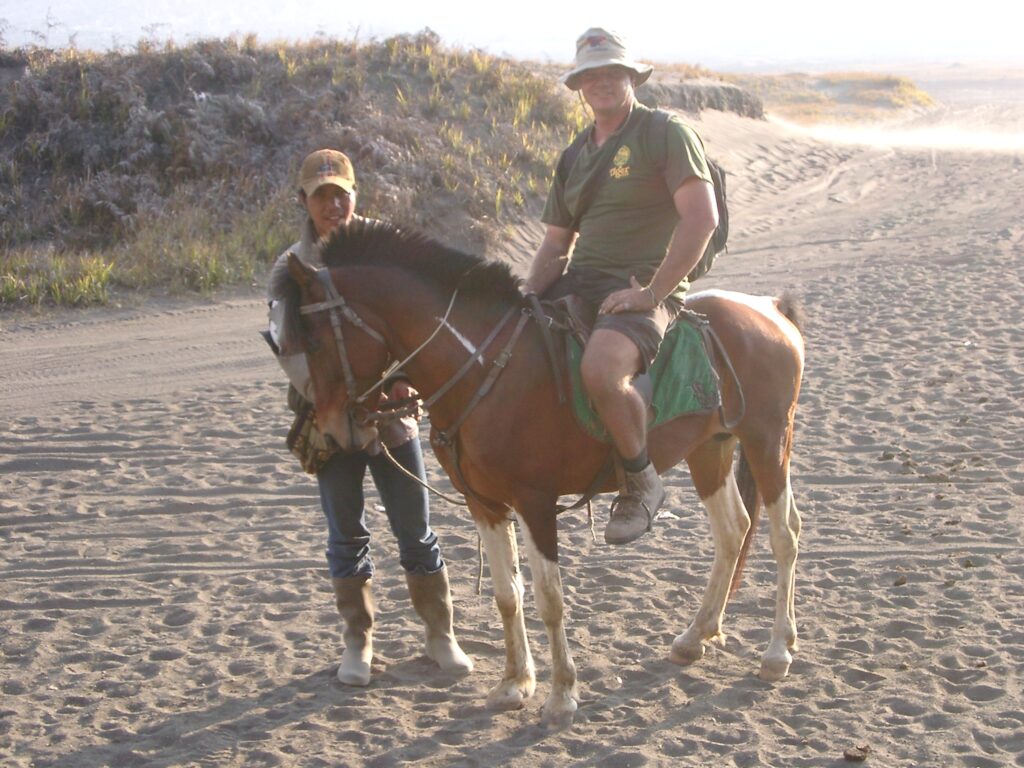
Mounting the horse required focus. My legs were still tired from the descent, and my muscles were stiff, but once I settled into the saddle, a surprising calmness overtook me. The horses shifted beneath me, their weight solid and reassuring. I could feel each muscle, each subtle movement, as they adjusted to my presence. There was a rhythm to it — an unspoken communication between rider and animal.
The Ride Begins
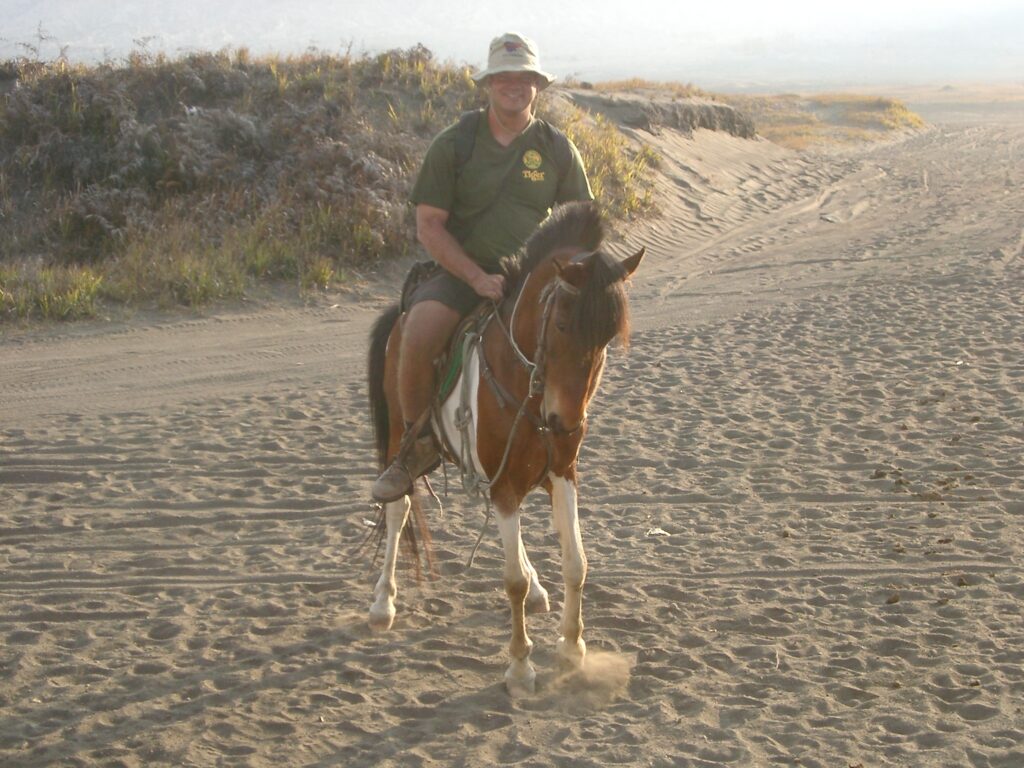
As we moved forward, the volcanic ash crunched under the hooves, sending tiny clouds of dust spiraling into the air. The smell of sulfur from Bromo’s active crater mingled with the faint scent of dry earth and horse, creating a sensory combination that was at once alien and grounding. The boys rode alongside us, laughing and gesturing toward the horses’ paths, encouraging us to relax, to feel the movement rather than resist it.
At first, my movements were hesitant. Every step the horse took seemed amplified, each shift of weight unsettling my balance. But slowly, I began to sync with the animal beneath me. The gentle sway of the saddle, the rhythm of the hooves against the sand, and the quiet breathing of the horse created a meditative cadence. I could feel the strength in the horse’s legs, the subtle shifts of muscle as it navigated small dips and ridges in the terrain.
The landscape unfolded in front of us: the “Sea of Sand” stretched endlessly, punctuated by the jagged volcanic peaks and the plume of smoke from Bromo itself. The contrast between the barren ash plain and the distant greenery of the surrounding hills was striking. Riding through it, I felt a sense of scale I rarely experience. The horse beneath me was a bridge between my small, human perspective and the vastness of this extraordinary landscape.
Learning From the Local Boys
The two boys who had encouraged us to ride were remarkable guides. Without formal instruction, they communicated with the horses through subtle shifts, gentle tugs on the reins, and soft whispers. Watching them, I realized how instinctive their movements were, how deeply they understood the animals. Their guidance was patient yet insistent: “Relax,” one said, “Feel the horse.”
I began to follow their advice. Instead of gripping tightly, I allowed my body to move with the horse, letting the sway guide me rather than trying to control it. The experience became less about riding and more about connection — between human and animal, between rider and landscape.
The boys pointed out features in the ash plain: small rocks hidden beneath the sand, ridges that could affect the horse’s footing, and the safest paths around shallow craters. I realized that riding here wasn’t just a recreational activity — it was a skill honed over years, requiring observation, instinct, and an understanding of both the terrain and the horses.
The Rhythm of the Ride
After a few minutes, I began to lose awareness of my fatigue. The horse’s movements became soothing, almost hypnotic. The repetitive clop of hooves on the volcanic sand, the sway of the saddle, and the quiet companionship of the boys created a rhythm that was both grounding and exhilarating.
There was also a sense of freedom. Having just descended from Mount Bromo, the physical effort and exertion of the climb still lingered. Riding allowed me to move through the landscape without that strain, to glide across the sand and observe the volcanic panorama from a new perspective. It felt as though the horses themselves were showing us the world, carrying us across a place both raw and beautiful.
Moments of Reflection
As we rode, I reflected on the experience. Climbing Mount Bromo had been physically demanding, mentally stimulating, and awe-inspiring. Descending had left me exhausted, yet it had also left me open, attentive, and eager for new experiences. The horse ride, unexpectedly, was the perfect follow-up. It allowed me to engage with the landscape in a way that walking could not. The rhythm, the perspective, and the subtle communication with the horses created a sense of harmony with the environment.
There was also something deeply humbling about riding here. The boys had grown up in this landscape; they understood the terrain and the horses instinctively. I, a visitor, had to adapt, listen, and follow their lead. It reminded me that adventure is not just about physical exertion or adrenaline — it is also about observation, respect, and collaboration.
Challenges on the Ride
The ride was not without its challenges. Navigating the uneven volcanic sand required attention, as some areas were soft and powdery while others were compacted and slick. The horses were steady, but sudden shifts in footing reminded me of the importance of balance and focus. I also had to control my own nerves — not about the horse itself, but about the vast openness of the landscape. The ash plain is expansive, almost endless, and the sense of scale can be intimidating.
Yet each challenge added to the experience. Every careful step, every adjustment in posture, strengthened my awareness and connection with the horse. By the end of the ride, I felt a sense of accomplishment that was quiet but profound: I had navigated an alien landscape on horseback, guided only by instinct, observation, and gentle mentorship.
Connection With the Horses
One of the most memorable aspects of the ride was the connection with the horses. They were strong yet gentle, patient yet responsive. I felt their energy beneath me, the subtle communication of muscle and weight, and the trust that developed in the brief moments we spent together. Riding became less about control and more about cooperation — a shared journey across the volcanic plain.
Each horse had its own personality. Some were calm and steady, allowing me to relax into the rhythm of movement. Others were more spirited, requiring attentiveness and subtle guidance. I learned quickly that riding here was not just about holding the reins; it was about listening, feeling, and responding.
Leaving the Plain
Eventually, the ride came to an end. As we dismounted and patted the horses, I felt a mix of gratitude, exhilaration, and awe. The boys waved and smiled, proud of their ability to share this experience. I walked back across the ash plain, now with a new perspective: a sense of how humans, animals, and landscape can interact in harmony, and how even a brief experience can leave a lasting impression.
The combination of Mount Bromo’s volcanic majesty and the gentle, rhythmic horse ride created a day that was unforgettable. It reminded me that adventure comes in many forms — sometimes it is the climb, sometimes it is the glide across the plain, and sometimes it is the quiet connection with those around you, human and animal alike.
Reflection
Horse riding after descending Mount Bromo was more than just an activity. It was an opportunity to move through a landscape that few ever experience, guided by locals who knew it intimately. It was a lesson in trust, patience, and observation. It was a reminder that some of the most memorable moments in travel are not planned, but arise spontaneously — in this case, encouraged by two enthusiastic boys from a nearby village.
That ride remains vivid in my memory: the crunch of volcanic ash under hooves, the rhythm of the horse beneath me, the laughter and guidance of the boys, and the surreal backdrop of Mount Bromo looming in the distance. It was a perfect, unexpected adventure — a moment when exhaustion, awe, and exhilaration combined to create a memory that will last a lifetime.
