
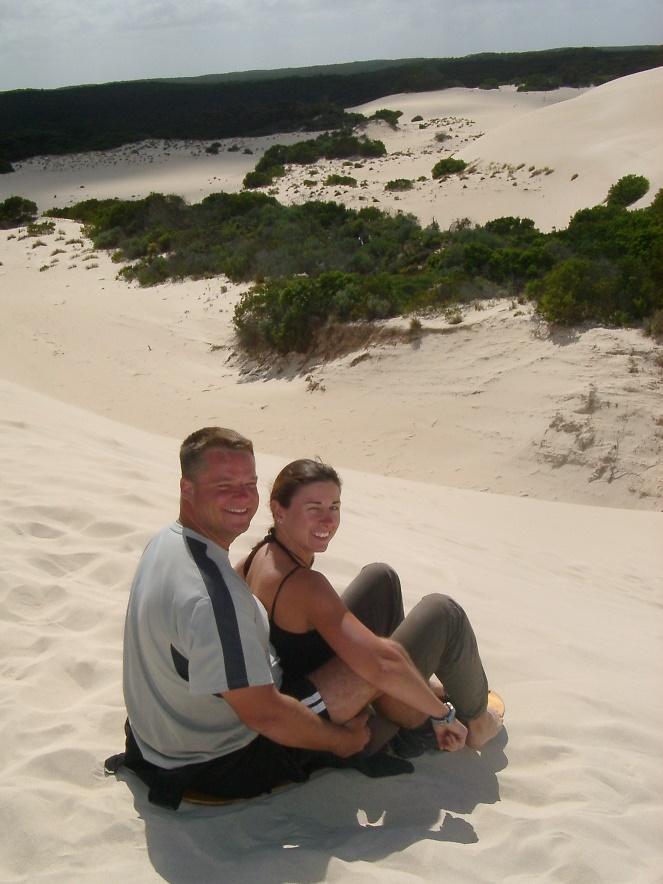
Kangaroo Island is often described as one of Australia’s last great wildernesses — a place where rugged coastlines, native wildlife, and wide open spaces dominate the landscape. While much of the island is known for its natural beauty and slow, immersive pace, my experience of sandboarding on Kangaroo Island added a completely different dimension to the visit. It was an activity that combined adrenaline, landscape, and a surprising amount of reflection, all set against one of the most dramatic backdrops I have ever encountered.
Sandboarding was not something I had initially associated with Kangaroo Island. I had imagined wildlife encounters, coastal walks, and quiet beaches. Yet as I stood at the base of towering sand dunes overlooking the Southern Ocean, it became clear that this was an experience perfectly suited to the island’s wild character.
Arrival at the Dunes
The journey to the sandboarding location was an experience in itself. Driving through the island’s varied terrain — from farmland and bushland to windswept coastal areas — reinforced just how diverse Kangaroo Island really is. Eventually, the vegetation thinned, and the landscape opened up to reveal vast expanses of pale sand shaped by wind and time.
The dunes rose sharply from the coastline, their smooth faces contrasting with the jagged cliffs and dark ocean below. The wind carried grains of sand across the surface, constantly reshaping the slopes. Standing at the base of the dunes, I felt small in the best possible way — confronted by a landscape that felt both ancient and alive.
Preparing to Sandboard
Before starting, there was a brief introduction to sandboarding technique and safety. The boards themselves were simple — lightweight, durable, and waxed underneath to reduce friction. Unlike snowboarding, there are no bindings; balance and stance are everything.
Carrying the board up the dune was the first challenge. Each step sank slightly into the sand, making the climb far more demanding than it appeared from below. The higher I climbed, the more expansive the view became. Behind me, the ocean stretched endlessly, waves rolling in with quiet persistence. Ahead, the dune crest curved sharply, hiding the slope beyond.
Reaching the top, heart rate elevated and legs already feeling the effort, I had a moment to pause. From this vantage point, the world felt wide open, stripped of unnecessary detail. Just sand, sky, and sea.
The First Descent
The first run was cautious. Sitting at the top of the dune, board positioned carefully, I took a moment to assess the slope. It was steeper than expected, dropping away sharply before levelling out near the base.
Pushing off, gravity took over almost immediately. The acceleration was smooth and rapid, the board gliding effortlessly over the sand. Wind rushed past, and the sound of the descent was a soft, rushing hiss. Unlike snow, sand absorbs sound, making the experience feel oddly quiet despite the speed.
Reaching the bottom far faster than anticipated, I came to a gentle stop, heart pounding and face split into an involuntary grin. The first descent broke any lingering hesitation. The dune demanded respect, but it was forgiving, allowing mistakes without punishment.
Building Confidence
With each subsequent run, confidence grew. Standing descents replaced seated ones, requiring more balance and control. Adjusting body position made a noticeable difference — leaning slightly forward increased speed, while subtle shifts helped guide the board.
What surprised me most was how quickly sandboarding became immersive. Each climb up the dune felt purposeful, driven by the anticipation of the next descent. Time lost its usual structure, broken only by runs up and rides down.
Between runs, I found myself pausing to take in the surroundings. The dunes seemed to stretch endlessly, their contours constantly shifting with the wind. The ocean below provided a steady counterpoint, its movement slow and deliberate compared to the fleeting rush of each descent.
The Physical Challenge
Sandboarding is more physically demanding than it looks. The descent is exhilarating, but the climb back up is where the effort lies. Each ascent tested endurance, particularly as legs tired and the sun beat down.
Yet there was something satisfying about the repetition. The climb became a rhythm — step, sink, step — a steady progression upward. Reaching the top felt earned each time, adding to the sense of achievement.
The physicality of the experience grounded it. This was not a passive thrill, but one that required participation, effort, and persistence.
The Landscape at Play
What truly set sandboarding on Kangaroo Island apart was the setting. The dunes felt raw and untamed, shaped entirely by natural forces. There were no artificial structures, no signs of overdevelopment — just wind, sand, and space.
Looking out from the crest of the dune, I could see the coastline curving away in both directions. The isolation was striking. It felt as though the landscape existed entirely on its own terms, and we were merely passing through.
This awareness added a reflective quality to the experience. The fleeting nature of each run contrasted sharply with the permanence of the dunes themselves. The sand shifted constantly, yet the landscape endured.
Moments of Stillness
Between runs, there were moments of quiet. Sitting at the top of the dune, board resting beside me, I watched the wind trace patterns across the sand. These pauses became as memorable as the descents themselves.
In those moments, sandboarding felt less like an extreme sport and more like a dialogue with the landscape — responding to gravity, wind, and terrain rather than trying to dominate them.
Final Runs and Reflection
As the session drew to a close, fatigue set in, but so did a sense of contentment. The final runs were slower, more deliberate, focused on control rather than speed. Each descent felt like a small celebration of balance and trust.
Walking away from the dunes, carrying the board one last time, I felt a deep appreciation for the experience. Sandboarding on Kangaroo Island had been exhilarating, challenging, and unexpectedly reflective.
Final Thoughts
Sandboarding on Kangaroo Island was more than just an adrenaline activity. It was a way of engaging directly with one of Australia’s most striking landscapes, feeling its scale, texture, and energy in a very personal way.
The combination of physical effort, speed, and solitude made it unforgettable. Long after leaving the island, the memory of gliding down those towering dunes — suspended between sky and sea — remained vivid.
In a place known for its stillness and wildlife, sandboarding offered movement and momentum. Together, they formed a complete picture of Kangaroo Island: wild, varied, and deeply compelling.
