
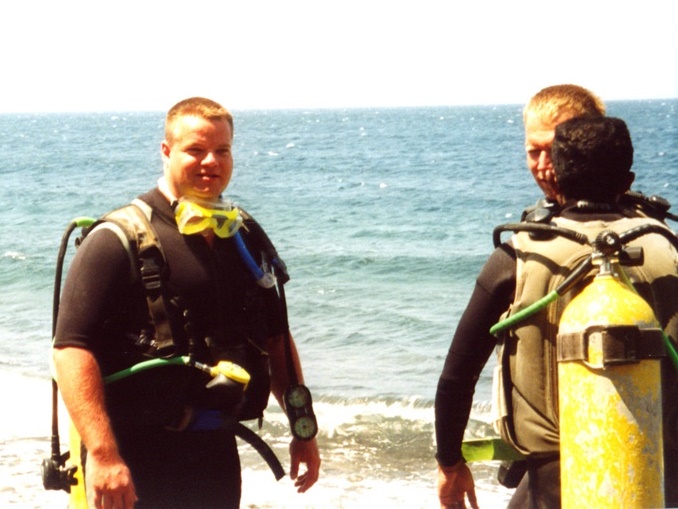
My diving experience in Bali, Indonesia marked a significant step forward in my journey as a diver. Having already built confidence through earlier dive holidays, Bali was where I moved beyond the basics and earned my PADI Advanced Open Water (AOW) qualification. This was not just about adding another certification card to my logbook; it was about expanding my comfort zone, refining my skills, and experiencing a wider range of underwater environments — including a 40-metre deep dive and a night dive, both of which left a lasting impression.
Bali is often celebrated for its temples, rice terraces, and vibrant culture, but beneath the surface lies an equally rich and diverse world. From coral gardens and volcanic sand slopes to historic wrecks and dramatic reef structures, Bali offers a remarkable variety of dive sites. Each location felt distinct, shaped by currents, geography, and marine life, and together they created an ideal setting for advanced training.
Stepping Up to Advanced Open Water
Beginning the Advanced Open Water course felt like a natural progression. The emphasis shifted from learning how to dive to learning how to dive better. Navigation, buoyancy, depth awareness, and situational control all became more important. The expectation was no longer simply to follow instructions, but to think, plan, and react.
The structure of the AOW course suited Bali perfectly. Each dive introduced a new challenge or environment, reinforcing the idea that no two dives are ever the same. The ocean, after all, does not offer standard conditions — and Bali exemplified this beautifully.
The 40 Metre Deep Dive
One of the most defining experiences of the course was the deep dive to 40 metres. Descending to that depth brought a noticeable change in both the environment and my own awareness. Colours faded quickly, water temperature dropped, and the sense of pressure became more pronounced.
At 40 metres, everything felt slower and heavier. Breathing required more control, and movements had to be deliberate. This dive demanded focus — monitoring depth, time, and air consumption became second nature rather than conscious effort. It was not an intimidating experience, but it was humbling. The deep dive reinforced respect for limits and the importance of planning and discipline.
Surfacing from that dive, I felt a quiet sense of achievement. It was not about reaching a number, but about understanding what depth truly means in practical terms.
The Night Dive
Equally memorable, though completely different in character, was the night dive. Entering the water after sunset transformed a familiar environment into something entirely new. Darkness narrowed perception, making the beam of my torch my primary connection to the underwater world.
At night, the reef comes alive in unexpected ways. Creatures that hide during the day emerge, and behaviour changes. Crustaceans scuttled across the seabed, moray eels hunted openly, and bioluminescence sparkled with every movement of my hand.
The night dive was both calming and intense. The darkness demanded heightened awareness, but it also created a sense of intimacy. Floating in the dark, guided by light and sound alone, was one of the most immersive diving experiences I have ever had.
Tulamben
One of Bali’s most famous dive areas, Tulamben, offered a powerful blend of history and marine life. The volcanic black sand created dramatic contrast, making colours stand out sharply. Diving here felt grounded and atmospheric, shaped by Bali’s volcanic origins.
Tulamben is known for its accessibility and richness, making it ideal for both training and exploration. The site allowed me to focus on buoyancy and observation, hovering calmly while life unfolded across the seabed. Macro life thrived here, rewarding slow, attentive diving.
Menjangan
Menjangan Island, part of Bali Barat National Park, felt pristine and expansive. The reefs here were healthy and well-preserved, with excellent visibility and dramatic walls. Descending alongside these walls created a strong sense of verticality, emphasising depth and scale.
Menjangan was a place to practise control — maintaining buoyancy while drifting gently along the reef face. Schools of fish moved effortlessly in the blue, while coral growth extended in all directions. The dives here felt serene and balanced, offering space to refine technique without distraction.
Menjangan Anchor Wreck
The Menjangan Anchor Wreck added an element of intrigue to the Menjangan dives. Smaller than major wrecks, it felt subtle and integrated into the reef rather than dominating it. Coral had claimed the structure, softening its outline and turning it into shelter for marine life.
This dive highlighted how quickly nature adapts and transforms human artefacts. Rather than feeling like an intrusion, the wreck felt like a natural extension of the reef — a quiet reminder of time and change beneath the surface.
Lovina Reef
Diving at Lovina Reef offered a gentler, more relaxed experience. The reef structure was varied and colourful, with a mix of coral formations and sandy patches. This was a site where patience paid off.
Lovina encouraged slow exploration. Small reef fish, subtle movement, and intricate coral details made it ideal for honing observation skills. It was a dive that reinforced the idea that not every memorable experience needs to be dramatic or extreme.
Eel Garden
Eel Garden was exactly as the name suggests — a sandy area dotted with garden eels swaying gently in the current. Approaching them required calm and control; sudden movements caused them to retreat instantly into their burrows.
Hovering neutrally above the seabed, watching dozens of eels emerge and retreat in unison, was strangely hypnotic. This dive was a lesson in stillness and restraint, emphasising how divers influence the environment simply by being present.
Moray Beach
At Moray Beach, the focus shifted to reef structure and predator behaviour. Moray eels were abundant, peering out from coral crevices with watchful eyes. The site felt alive with anticipation, as though something was always just about to happen.
This dive reinforced situational awareness — not just for safety, but for appreciation. Observing how different species interact within the reef gave the dive depth beyond scenery alone.
Horsea Island
Horsea Island offered a sense of exploration. The site felt less predictable, with changing terrain and a mix of reef and open water. Diving here encouraged adaptability, reinforcing the importance of awareness and communication.
Horsea Island felt dynamic, shaped by currents and geography. It was a fitting site for advanced diving, requiring confidence without complacency.
Madonna Rock
Madonna Rock was one of the more visually striking sites. Coral growth was dense, and the reef structure created layers of interest. Light played beautifully across the formations, highlighting textures and colours.
This dive felt like a culmination — a chance to apply everything learned throughout the AOW course. Buoyancy, navigation, awareness, and calm all came together naturally.
Final Reflections
Diving in Bali was a turning point in my development as a diver. Earning my PADI Advanced Open Water qualification there felt appropriate, given the variety and richness of the dive sites. From a 40-metre deep dive to the quiet intensity of a night dive, Bali offered experiences that challenged and rewarded in equal measure.
Each site — from Tulamben to Menjangan, from Eel Garden to Madonna Rock — contributed something unique. Together, they expanded not just my skills, but my understanding of what diving can be.
Looking back, Bali was not just a destination; it was a classroom, a proving ground, and a place of deep connection. The lessons learned there continue to influence every dive I make, reminding me that progress in diving, as in life, comes from patience, awareness, and respect for the environment we enter.
