
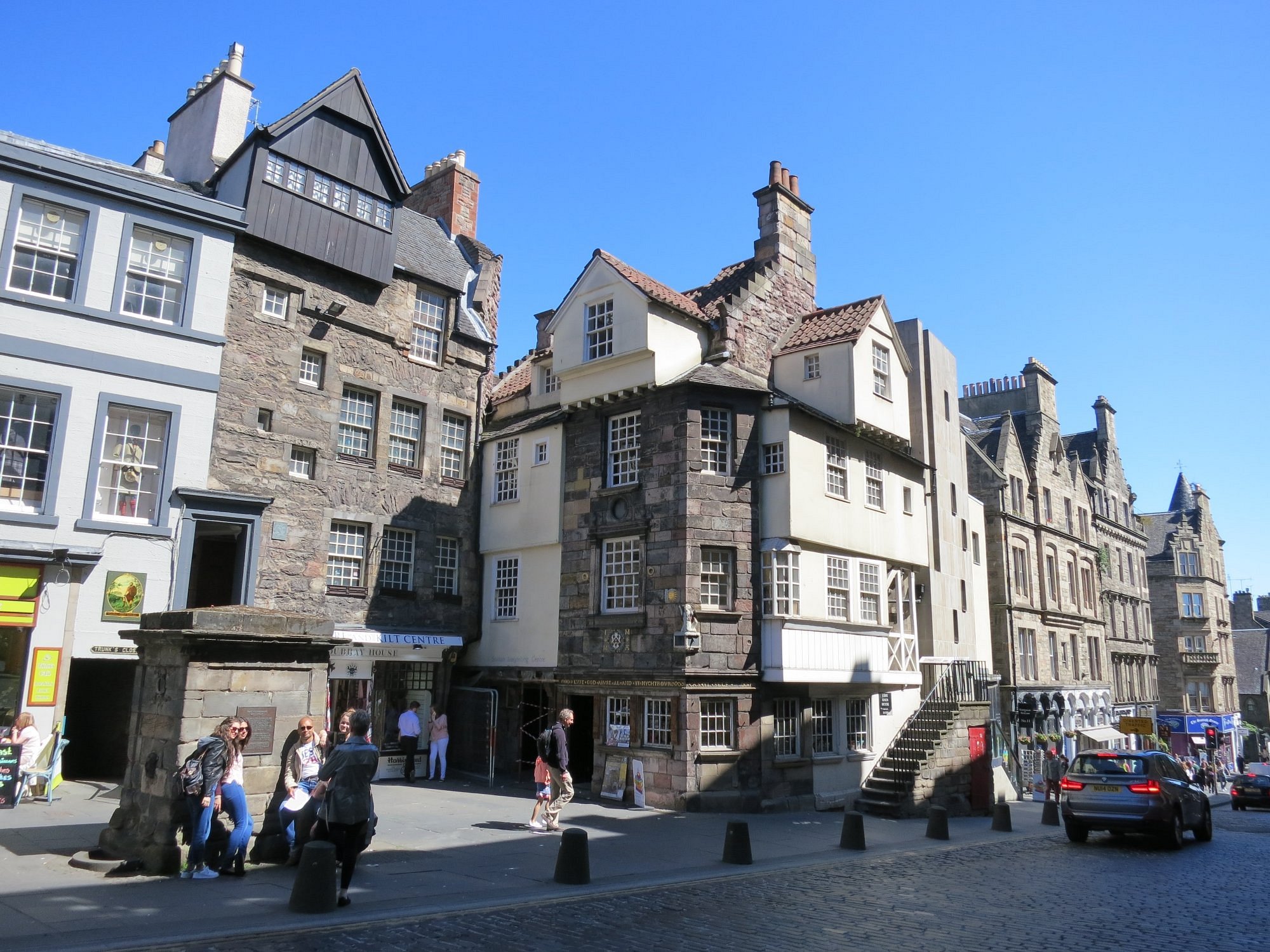
John Knox House in Edinburgh is one of the city’s most evocative and historically rich buildings — a structure that physically embodies Scotland’s medieval past and symbolically represents the turbulent era of the Scottish Reformation. Situated at 43–45 High Street on the Royal Mile, this remarkable house is often regarded as one of the oldest surviving medieval tenements in Scotland’s capital. It forms a powerful link to the life and times of John Knox, the fiery Protestant reformer and key figure in Scotland’s break from Catholicism — although historians debate the exact nature of his connection to this specific building.
Origins and Early History (15th–16th Century)
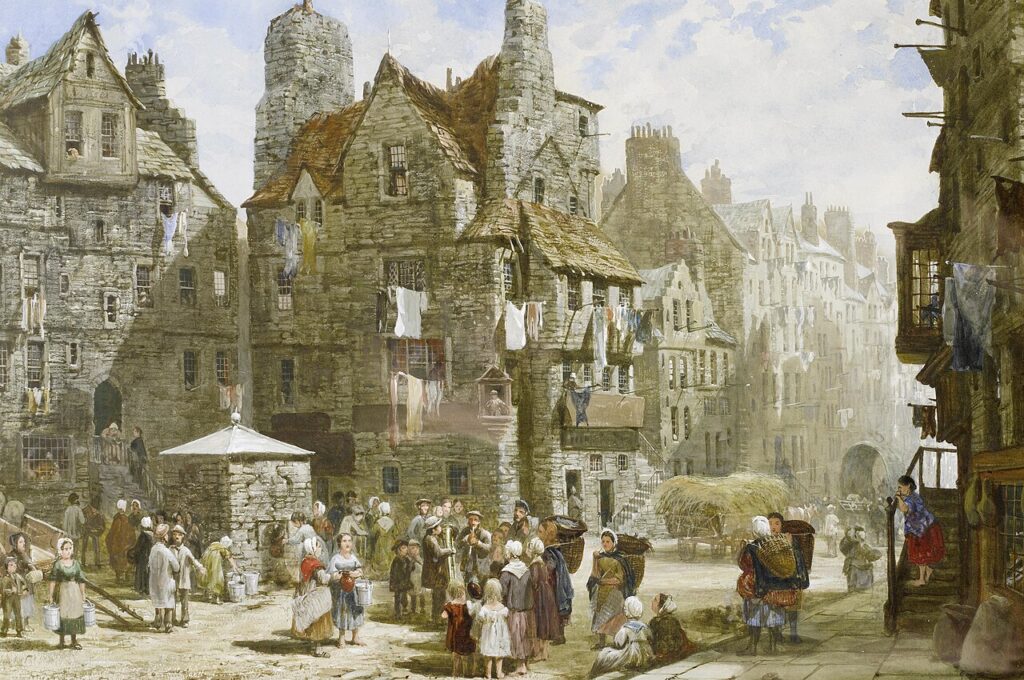
The origins of John Knox House stretch back to around 1470, with the earliest parts of the building dating from the late 15th century. It stands as one of the rare surviving examples of timbered medieval architecture in Edinburgh, complete with overhanging upper stories and galleries that once typified the High Street before modernization swept so many others away. These architectural features — especially the timber galleries — are significant because they are among the only surviving examples of a style once common in the Old Town.
The house’s early recorded ownership begins with Walter Reidpath, whose family held the property until his grandson John Arres inherited it. In 1556, Arres bequeathed it to his daughter Mariota Arres, who married James Mossman — a prosperous goldsmith closely associated with the Scottish court. Mossman’s work included refashioning the crown of Scotland for James V, and he later became known for his loyalty to Mary, Queen of Scots after her forced abdication.
Mossman’s presence in the house represents an important chapter in its history: he used the property as both a residence and workshop, and his influence is still visible in the building’s ornate features. Above the entrance, the couple’s coats of arms remain, alongside an inscription in Scots: “Luve God abuve al and yi nychtbour as yi self” — a moral exhortation that reflects the deeply religious context of the age.
Connection to John Knox and the Reformation
John Knox (c.1514–1572) was the leading voice of the Scottish Protestant Reformation, a movement that reshaped Scotland’s religious and political landscape in the 16th century, leading to civil unrest, revolution, and the eventual establishment of Presbyterianism. Knox’s preaching and writings were instrumental in challenging Catholic influence and enforcing Protestant doctrine across the nation.
Despite its name, whether Knox actually lived in this specific house is debated among historians. Contemporary research indicates he more likely lived nearby, in a property on Warriston Close, now marked by a plaque. Nonetheless, the buildings that now constitute John Knox House were certainly known to him, and the long-standing tradition of associating him with this structure became widely accepted in the 19th century, promoted by Victorian writers and local lore.
What remains undeniable is the symbolic resonance the house has acquired over time. The connection to Knox — even if partly legendary — played a key role in saving the building from demolition in the 19th century. When the house fell into disrepair and the Town Council declared it ruinous in 1849, conservationists, led by figures such as Lord Cockburn and supported by the Society of Antiquaries of Scotland, campaigned to preserve it. Their success ensured that this poignant relic of Scotland’s past would endure.
Architectural Features and Interior Highlights
The building’s exterior remains striking to this day. The jutting stone and timber façade, overhanging upper levels, and distinctive galleries make John Knox House instantly recognisable on the Royal Mile. While the weathered woodwork and carved features reveal centuries of exposure to Edinburgh’s elements, they also speak to the craftsmanship and urban style of the late medieval period.
Inside, the house is arranged across several floors, each offering insights into both domestic life and historical narrative:
Ground Floor
Here visitors can see the remnants of Edinburgh’s medieval luckenbooths — stone-arched stalls that once lined the Royal Mile and served as shops. These are among the few surviving traces of these mercantile structures anywhere in Scotland and give a fascinating glimpse into the daily commerce of the High Street in the 16th–17th centuries.
First Floor
This level typically houses exhibitions on Knox and the Scottish Reformation, with displays of early printed Bibles, such as the Bassandyne Bible (1579) — the first Scottish printing of the English Bible — and other religious texts from Knox’s contemporaries. The exhibits explore not only Knox’s theological influence but also the broader cultural impact of the Reformation on Scottish society.
Second Floor (The Oak Room)
The Oak Room is one of the house’s most celebrated interior spaces. Richly wood-panelled and adorned with an intricately decorated painted ceiling, this chamber reflects the wealth and status of its former occupants. The ceiling — dating from the early 17th century — features detailed Renaissance motifs and is among the most remarkable surviving examples of period interior decoration in Edinburgh.
Throughout the interior, features such as turnpike stairs, thick stone walls, and large fireplaces with historic tiled backings further enhance the sense of stepping back in time. These architectural elements also served practical purposes, providing security and warmth in a city where communal living was common and defensive preparedness was a part of life.
Preservation, Museum Status, and Cultural Role
By the mid-19th century, Edinburgh’s Old Town was undergoing dramatic changes, and historic buildings were being lost to redevelopment. The campaign to save John Knox House was one of Scotland’s earliest examples of community-led conservation, and it helped lay the groundwork for later heritage preservation movements. The house was restored and opened as a museum where visitors could explore both its architecture and its connection to Scottish history.
Today, John Knox House is part of the Scottish Storytelling Centre, an arts venue that hosts live performances, exhibitions, family events, and workshops celebrating Scotland’s narrative and cultural heritage. This integration brings a dynamic contemporary layer to the site — blending historical interpretation with live art and storytelling.
Visiting the house offers a multifaceted experience: you learn about the Reformation, explore social history, and immerse yourself in an authentic medieval space that has stood at the heart of the city for more than half a millennium. Its location, partway down the Royal Mile between Edinburgh Castle and Holyrood Palace, also places it within easy reach of many other major cultural landmarks.
Legacy and Importance
John Knox House stands today not simply as an old building, but as a testament to Edinburgh’s layered history. Its enduring association with one of Scotland’s most influential figures — whether factual or partly mythologised — ensures its ongoing relevance to both local citizens and visitors from around the world. Its architecture embodies the resilience of Scotland’s built heritage, while its museum tells the story of a nation’s spiritual, cultural, and political transformation.
For anyone interested in Scottish history or medieval urban life, John Knox House offers a rich and tangible connection to the past — an opportunity to walk through centuries of change and to appreciate the forces that helped shape the modern Scotland we know today.
