
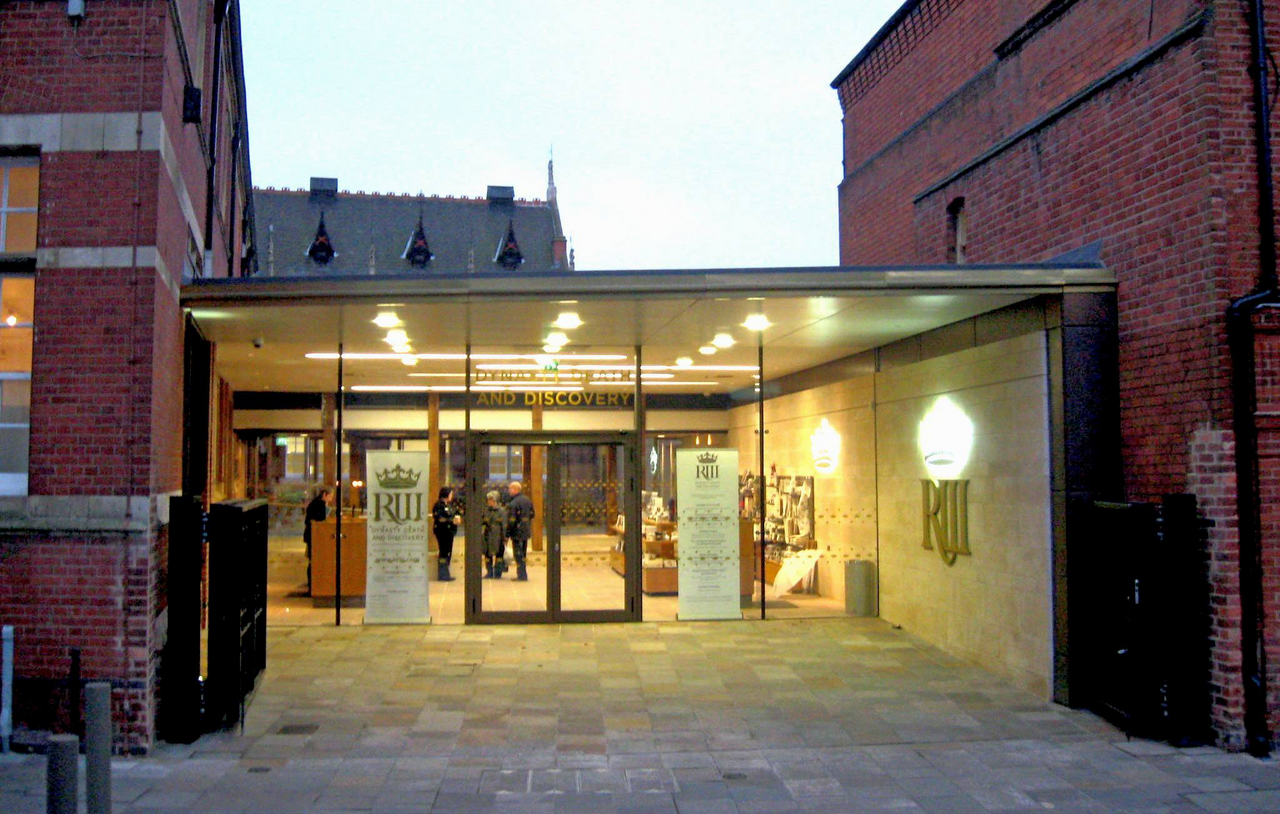
The King Richard III Visitor Centre in Leicester is one of the most significant and compelling heritage attractions in the United Kingdom, not only because of its focus on a controversial medieval monarch, but also due to the extraordinary archaeological discovery that led to its creation. Opened in 2014, the Visitor Centre tells the story of King Richard III’s life, death, and legacy, while also exploring the dramatic events surrounding the Battle of Bosworth and the rediscovery of his remains beneath a Leicester car park in 2012. Through a combination of historical scholarship, archaeology, and immersive storytelling, the Centre offers visitors a nuanced and engaging understanding of one of England’s most debated kings.
Historical Background: Richard III and the Wars of the Roses
King Richard III reigned from 1483 to 1485 during the turbulent period known as the Wars of the Roses, a series of dynastic conflicts between the houses of York and Lancaster. Richard, the last Plantagenet king of England, came to the throne under controversial circumstances following the death of his brother, King Edward IV. The subsequent disappearance of Edward’s sons, famously known as the Princes in the Tower, cast a long shadow over Richard’s reputation and became central to debates about his character and legitimacy.
Richard’s reign was short and ended abruptly at the Battle of Bosworth Field in 1485, where he was defeated and killed by the forces of Henry Tudor, who went on to become Henry VII. Richard’s death marked a turning point in English history, effectively ending medieval kingship in England and ushering in the Tudor dynasty. For centuries, Richard’s reputation was shaped largely by Tudor propaganda and later by William Shakespeare’s portrayal of him as a ruthless, deformed tyrant. The Visitor Centre confronts this legacy directly, encouraging visitors to question long-held assumptions and to consider Richard within the political realities of his time.
The Discovery Beneath the Car Park
What makes the King Richard III Visitor Centre truly unique is its origin story. In 2012, a team led by the University of Leicester, working in collaboration with Leicester City Council and the Richard III Society, carried out an archaeological excavation in a city centre car park. Historical research suggested that the site lay above the former Greyfriars friary, where Richard was believed to have been buried after his death at Bosworth.
Against considerable odds, the excavation uncovered a human skeleton showing signs consistent with historical accounts of Richard’s injuries. Subsequent forensic analysis, radiocarbon dating, and DNA testing confirmed that the remains were indeed those of King Richard III. This discovery captured global attention and transformed Leicester into the centre of an international historical and scientific story. The Visitor Centre was developed close to the excavation site, allowing visitors to engage directly with the location where one of the most remarkable archaeological finds in British history occurred.
Architecture and Location
The King Richard III Visitor Centre is housed in a former Victorian school building, which has been carefully adapted to serve its new purpose. Its design balances respect for the historic urban environment with modern exhibition techniques. Situated close to Leicester Cathedral, where Richard III was reinterred in 2015, the Centre forms part of a wider heritage area that allows visitors to explore multiple aspects of the story on foot.
The Centre’s location is central to the visitor experience. By placing the exhibition so near to the site of the Greyfriars excavation, the building itself becomes part of the narrative. Visitors are not simply learning about history in an abstract sense; they are standing in the very place where history was rediscovered.
Exhibition Design and Storytelling
Inside the Visitor Centre, the exhibitions are arranged across several themed areas that guide visitors through Richard’s life, death, and rediscovery. The storytelling approach is immersive and accessible, combining traditional displays with multimedia elements such as projections, soundscapes, and interactive screens.
The early sections focus on Richard’s upbringing, family, and rise to power, placing him firmly within the context of 15th-century England. These displays help visitors understand the political instability of the period and the complex loyalties that shaped Richard’s actions. Rather than presenting a single interpretation, the Centre encourages critical thinking by presenting evidence and contrasting viewpoints.
One of the most powerful sections explores the Battle of Bosworth. Through dramatic lighting, sound effects, and visual displays, visitors gain a vivid sense of the chaos and brutality of medieval warfare. Richard’s final moments are portrayed with sensitivity, highlighting both his courage in battle and the political consequences of his death.
Archaeology, Science, and Forensics
A central feature of the Visitor Centre is its focus on the scientific methods used to identify Richard III’s remains. This aspect of the exhibition demonstrates how modern archaeology and forensic science can work hand in hand with historical research.
Visitors can learn about the excavation process, the analysis of skeletal injuries, and the evidence of scoliosis that explained historical descriptions of Richard’s physical appearance. DNA analysis, which involved comparisons with living descendants of Richard’s family, is explained in clear and engaging terms. This scientific narrative not only validates the identification but also serves as an educational case study in how science can transform historical understanding.
Challenging the Myth of Richard III
One of the Visitor Centre’s most important contributions is its willingness to challenge the traditional image of Richard III as a villain. While it does not attempt to present him as a flawless hero, it offers a more balanced and evidence-based assessment of his character and reign.
The Centre examines Richard’s legal reforms, such as improvements to the justice system and measures aimed at protecting ordinary citizens from corruption. By placing these achievements alongside the controversies, the exhibition encourages visitors to see Richard as a complex human being shaped by his time, rather than a caricature defined solely by propaganda and drama.
Cultural and Educational Impact
Since opening, the King Richard III Visitor Centre has had a profound impact on Leicester’s cultural identity. It has attracted visitors from around the world, boosting tourism and reinforcing the city’s reputation as a place where history, science, and storytelling intersect.
Educationally, the Centre provides valuable resources for schools, universities, and lifelong learners. Workshops, guided tours, and learning materials help students engage with topics such as medieval history, archaeology, and historical interpretation. The story of Richard III also offers a powerful lesson in how historical narratives are constructed and how they can change in light of new evidence.
Legacy and Continuing Relevance
The story told by the King Richard III Visitor Centre continues beyond the building itself. Richard’s reburial in Leicester Cathedral in 2015 was a moment of national and international significance, symbolising both respect for the past and the resolution of a centuries-old mystery. The Centre plays a key role in preserving and interpreting this legacy for future generations.
In a broader sense, the Visitor Centre highlights the importance of questioning accepted narratives and remaining open to new discoveries. It demonstrates how history is not static, but a living discipline shaped by ongoing research, debate, and technological advancement.
Conclusion
The King Richard III Visitor Centre in Leicester is far more than a museum dedicated to a medieval king. It is a place where history, archaeology, and science come together to challenge myths, illuminate the past, and inspire curiosity. By telling the story of Richard III with balance, depth, and humanity, the Centre invites visitors to reconsider one of England’s most controversial figures and to reflect on how history itself is written. Through its thoughtful exhibitions and powerful origin story, the Visitor Centre stands as a lasting testament to the value of evidence, inquiry, and open-minded exploration of the past.
