
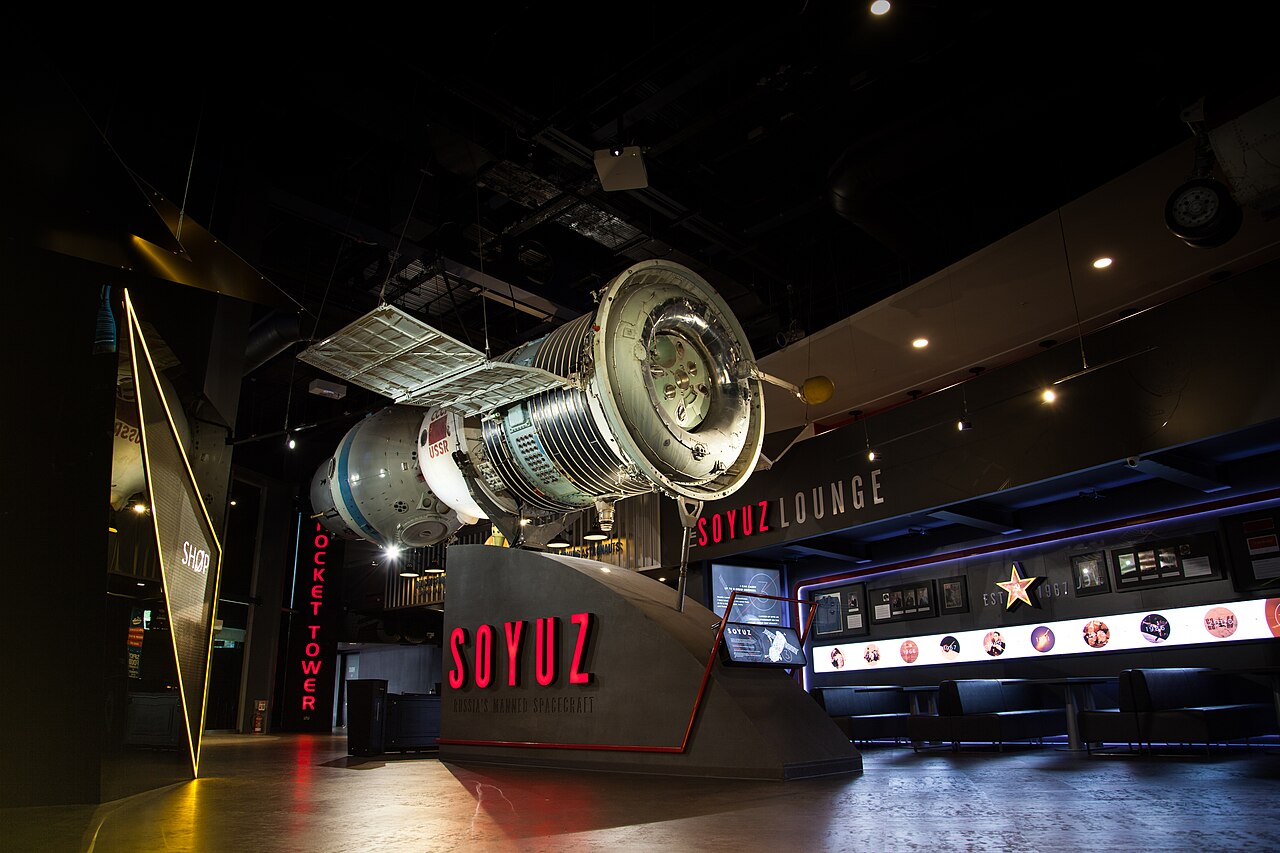
The National Space Centre in Leicester is one of the United Kingdom’s most distinctive science attractions, combining education, research, heritage, and public engagement to inspire curiosity about space and science. Opened in 2001, the Centre has become an internationally recognised landmark, not only for its striking architecture but also for its role in promoting space science, astronomy, and STEM learning to audiences of all ages. Situated just north of Leicester city centre, the National Space Centre reflects both the city’s historical connection to science and its modern ambition to play a leading role in space research and education.
Origins and Purpose
The National Space Centre was established as a Millennium Commission project, designed to celebrate scientific achievement and to encourage public interest in space exploration. From the outset, its purpose was broader than that of a traditional museum. Rather than simply displaying artefacts, the Centre aimed to create an immersive learning environment where visitors could engage with complex scientific ideas in an accessible and inspiring way. Leicester was chosen as the location due to its strong academic links to space science, particularly through the University of Leicester, which has a long-standing reputation for research in astronomy, planetary science, and space instrumentation.
Since its opening, the Centre has played a crucial role in bridging the gap between cutting-edge scientific research and the general public. It presents space science not as a distant or abstract subject, but as a field that directly influences modern life, from satellite communications and GPS systems to climate monitoring and technological innovation.
Architecture and Design
One of the most immediately recognisable features of the National Space Centre is its iconic Rocket Tower, a 42-metre-high translucent structure that dominates the surrounding skyline. The tower houses several historic rockets, including the Blue Streak and Thor Able, which are displayed vertically to give visitors a sense of their true scale. The building’s modern, futuristic design mirrors the themes of innovation and exploration that the Centre represents.
The use of glass, steel, and open internal spaces creates a sense of transparency and openness, symbolising the Centre’s mission to make science accessible. Inside, the layout is carefully designed to guide visitors through a chronological and thematic journey, moving from the early days of astronomy and spaceflight through to contemporary missions and future exploration.
Exhibitions and Galleries
The National Space Centre features a wide range of permanent and temporary exhibitions that cover astronomy, cosmology, human spaceflight, robotic exploration, and space technology. One of its key strengths is the way it combines real artefacts, interactive displays, multimedia presentations, and hands-on activities.
Among the most notable exhibits are genuine space hardware, including satellites, spacecraft components, and instruments that have flown on real missions. These artefacts provide a tangible connection to space exploration, reinforcing the idea that space science is a practical, ongoing endeavour rather than purely theoretical.
The galleries explore major topics such as the formation of the universe, the life cycle of stars, planetary science, and the search for life beyond Earth. Human spaceflight is another central theme, with exhibits covering the Space Race, the International Space Station, and the experiences of astronauts living and working in space. Through videos, simulations, and personal accounts, visitors gain insight into both the technological challenges and the human stories behind space exploration.
The Sir Patrick Moore Planetarium
A major highlight of the National Space Centre is the Sir Patrick Moore Planetarium, named in honour of the renowned British astronomer and broadcaster. As the largest planetarium in the UK, it offers an immersive experience that allows audiences to explore the night sky, travel through the solar system, and journey across the universe.
The planetarium’s state-of-the-art projection system creates highly detailed visualisations of astronomical phenomena, from the motion of planets to the structure of distant galaxies. Shows are designed for different age groups and levels of knowledge, making them suitable for school groups, families, and enthusiasts alike. Importantly, the planetarium also enables the Centre to respond to current events, such as eclipses, planetary alignments, and major space missions, ensuring that its content remains relevant and up to date.
Education and Outreach
Education lies at the heart of the National Space Centre’s mission. The Centre works extensively with schools, colleges, and universities, offering curriculum-linked workshops, lectures, and interactive sessions. These programmes are designed to support teaching in subjects such as physics, mathematics, chemistry, and geography, while also encouraging critical thinking and problem-solving skills.
School visits often include hands-on experiments, guided tours, and planetarium shows tailored to specific key stages. By presenting science in an engaging and memorable way, the Centre helps to spark interest in STEM subjects and careers. This is particularly important in addressing skills shortages in science and engineering and in encouraging young people from diverse backgrounds to consider futures in these fields.
Beyond formal education, the Centre runs public lectures, science festivals, and special events that bring leading scientists and communicators into direct contact with the public. These events help demystify complex topics and foster a sense of shared curiosity and discovery.
Research and Academic Links
The National Space Centre is closely linked to the University of Leicester’s Space Research Centre, one of Europe’s leading academic institutions for space science. This relationship gives the Centre a unique status, as it is not only a place of public education but also part of an active research environment.
Many of the missions and instruments featured in the Centre’s exhibits are directly connected to research conducted in Leicester. This includes work on space telescopes, planetary probes, and Earth observation satellites. By showcasing this research, the Centre highlights the UK’s contribution to international space science and demonstrates how academic research translates into real-world applications.
Cultural and Economic Impact
The National Space Centre has had a significant impact on Leicester’s cultural and economic landscape. As a major tourist attraction, it draws visitors from across the UK and beyond, contributing to the local economy and enhancing the city’s reputation as a centre for science and innovation.
Culturally, the Centre has helped to position Leicester as a city that values education, creativity, and forward-thinking ideas. It complements other local institutions, such as museums and universities, creating a broader cultural ecosystem that supports learning and engagement.
Future Vision and Relevance
As space exploration enters a new era, with renewed interest in lunar missions, Mars exploration, and commercial spaceflight, the National Space Centre remains highly relevant. It continues to update its exhibits and programmes to reflect developments in space science and technology, ensuring that visitors gain an accurate and current understanding of the field.
The Centre also plays an important role in addressing wider societal issues, such as climate change and sustainability, by highlighting the role of satellites in monitoring the Earth and understanding environmental change. In this way, it demonstrates that space science is not just about distant planets, but also about protecting and understanding our own.
Conclusion
The National Space Centre in Leicester stands as a powerful symbol of human curiosity, scientific achievement, and the desire to explore the unknown. Through its innovative exhibitions, iconic architecture, educational programmes, and strong links to academic research, it successfully brings the story of space to life for a wide and diverse audience. More than just a museum, it is a dynamic centre for learning and inspiration, reflecting both Leicester’s scientific heritage and the UK’s ongoing contribution to space exploration. As our understanding of the universe continues to expand, the National Space Centre remains a vital place where the public can engage with the wonders and challenges of space science.
