
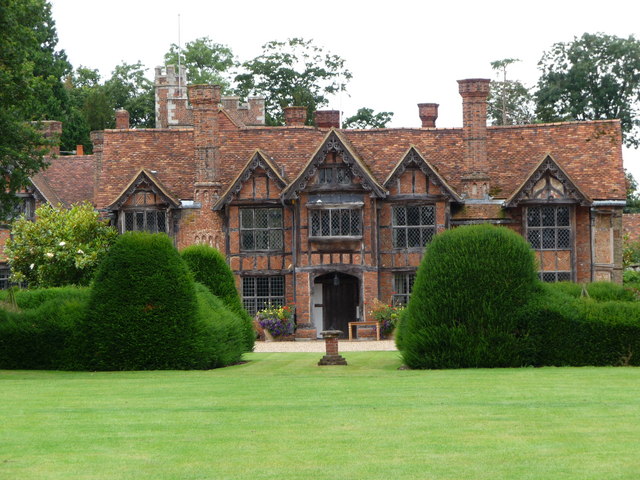
Nestled within the charming village of Dorney in Buckinghamshire — just a stone’s throw from Windsor, Eton, and the River Thames — Dorney Court stands as a remarkable testament to England’s architectural heritage, rural life, and the continuity of a single family’s stewardship over almost five centuries. Dorney Court is one of England’s oldest surviving Tudor manor houses, a Grade I listed building, and a rare example of a historic home that remains a lived‑in family residence while still welcoming the public to explore its history and setting.
Origins and Early History
The manor of Dorney predates the construction of the present Dorney Court by several centuries, having been recorded in the Domesday Book of 1086, when it was held by Miles Crispin, a Norman baron. Over the following centuries, the property passed through various owners — families such as Cave, Parker, Newnham, Paraunt, Carbonell, Scott, Restwold, Lytton, Bray, and Hill — as the manor evolved and the surrounding agricultural community grew.
The existing manor house, however, was built in the early 15th century, around 1440, in the early Tudor style that characterises its timber‑framed structure with red brick infill, tall gables, and bold star‑shaped chimneys. Its survival in such a complete and recognisable form makes it historically significant among England’s manor houses — remarkably little changed in six centuries, apart from the inhabitants themselves.
The Palmer Family: 400 Years of Continuity
In 1542, Dorney Court entered a new chapter when Sir William Garrard, later Lord Mayor of London, purchased the manor. Through marriage — his daughter Martha married Sir James Palmer of Wingham — the estate came into the hands of the Palmer family in 1624. Since that time, the Palmers have lived in Dorney Court in unbroken succession for over 14 generations and more than 400 years.
This lineage of family ownership is what gives Dorney Court its unique character: not a museum preserved behind glass, but a living home filled with generations of furniture, artwork, family portraits, and collected treasures. Walk through its rooms today and visitors see both history and ongoing life — from antique oak and lacquer furnishings to the signs of modern domestic habit.
Architecture and Interior
Dorney Court’s exterior is quintessential Tudor: timber framing, steeply pitched roofs with old tile, and a harmonious combination of structural function and decorative detail. According to its Historic England listing, the front façade reflects its circa‑1500 origins and bold architectural elements such as the oriel window above an open porch, gabled bays, and intricate paneled interiors.
Inside, the Great Hall and rooms echo centuries of living history. The hall contains linenfold panelling from Faversham Abbey in Kent and a large, ornate fireplace — testimonies to both craftsmanship and the mansion’s early status. Family portraits by prominent artists such as Lely, Kneller, and Janssen hang on walls that have witnessed generation after generation of Palmers.
Rooms filled with antique furniture, tapestries, and objects collected over hundreds of years give a vivid sense of how wealthy gentry lived through the Tudor, Stuart, and later periods. Many pieces are extraordinary in their own right, and visitors intrigued by English furniture, design, or interior culture find Dorney Court particularly evocative.
Gardens, Parkland, and Landscape
Beyond the house itself, the grounds and gardens at Dorney Court offer a tranquil and picturesque complement to the historic manor. Surrounded by lush lawns, ancient yew hedges, and herbaceous borders, the gardens reveal layers of design — from traditional Tudor influences through later Victorian and Arts and Crafts‑inspired plantings.
Walking through the gardens, one might discover long‑established trees, blooming herbaceous borders, and water features such as Saxon Pike Pond — home to carp, kingfishers, and herons. Stone paths and shrub‑lined avenues lead to secluded corners known as the Dell, where seasonal bluebells, snowdrops, and daffodils transform the space in spring.
South of the house lies a rose garden centered around a contemporary fountain shaped like an Indian elephant — a whimsical nod to the Palmer family’s historic connections with the sub‑continent. These subtler design details — from formal lawned areas to more natural woodland edges — help make the gardens both visually appealing and deeply rooted in English country garden traditions. dorneycourt.co.uk
The surrounding parkland, once a commercial orchard in the post‑war period, is now grazed by sheep and serves as an idyllic setting for weddings, events, and leisurely walks, placing the historic house within an expansive rural landscape. dorneycourt.co.uk
St James the Less: The Norman Church
Just adjacent to Dorney Court sits the ancient St James the Less Church, whose origins trace back to the 12th century and earlier. The church’s chancel — part of the original Norman structure — includes a carved stone font and medieval architectural details. The Tudor tower, added later, rises impressively and remains the highest point in the village. dorneycourt.co.uk
The south porch, built in 1661 to mark the birth of Lady Anne Palmer, connects the church’s history directly with the Palmer family. In this way, the spiritual and domestic history of the estate intertwine, offering a holistic view of village and manor life across centuries. dorneycourt.co.uk
Cultural Significance and Popular Culture
Over the past half‑century, Dorney Court has been recognised not only as a historic home but as a film and television location. Its striking Tudor exterior and historic interiors have appeared in a variety of productions — from period dramas to contemporary series. Titles that have filmed at Dorney Court include Bridgerton, The Sandman, The Essex Serpent, 24, Elizabeth: The Golden Age, The Other Boleyn Girl, Poirot, Inspector Morse, and many others.
This cinematic presence has made Dorney Court familiar to millions, even if they don’t know its name — viewers may recognise its façade or stately rooms from filmed scenes. Its continued use as a filming location highlights how well the house preserves its historic atmosphere while remaining accessible and visually compelling for modern storytelling.
Visiting Dorney Court Today
Today, Dorney Court welcomes visitors from around the world, offering guided tours of the house, gardens, church, and estate. While it remains a private home, the Palmer family opens its doors during selected Bank Holidays and summer days, and private tours can be arranged year‑round by groups.
Visitors can explore ancient rooms filled with artefacts, walk through the garden paths, and enjoy the woodland and parkland surrounding the manor. Events, weddings, and cultural programmes further integrate Dorney Court into contemporary life — not merely as historic preservation but as a living part of the community.
Legacy and Continuing Story
The story of Dorney Court is uniquely English — it weaves together medieval origins, Tudor architectural heritage, continuous family ownership, evolving landscape design, and modern cultural relevance. It stands as a reminder that history is not only recorded in books but built into the bricks, gardens, and everyday life of places that have adapted, survived, and thrived across centuries.
From the Norman manor recorded in the Domesday Book to the present‑day estate welcoming visitors and filming crews alike, Dorney Court represents the enduring appeal of England’s rural history and the living legacy of the families who have shaped it.
