
Windsor Great Park is one of England’s most remarkable and enduring landscapes, a place where natural beauty, royal history, and public recreation come together across more than a thousand years of continuous use. Covering approximately 4,800 acres, the park lies to the south of Windsor Castle and stretches into parts of Berkshire and Surrey. Although it is managed by The Crown Estate, Windsor Great Park is largely open to the public, making it a rare example of a working royal park that functions as both a historic estate and a living, accessible green space.
Origins and Royal Heritage
The origins of Windsor Great Park date back to the Norman Conquest. William the Conqueror established Windsor Forest in the 11th century as a royal hunting ground, taking advantage of the dense woodland and abundant wildlife. Over time, areas of the forest were enclosed and managed more formally, evolving into what we now know as Windsor Great Park. For centuries, the land was used almost exclusively for royal hunting, with deer parks, lodges, and carefully maintained woodland supporting this purpose.
During the reign of Henry VIII, the park became more structured and ornamental. Henry was particularly fond of Windsor, and his influence can still be felt in the layout of the landscape and the emphasis on long sightlines and open spaces. Later monarchs continued to shape the park, but perhaps none left a more visible mark than George III in the 18th century. His reign saw significant landscaping work, including the creation of the Long Walk, one of the park’s most iconic features.
The Long Walk
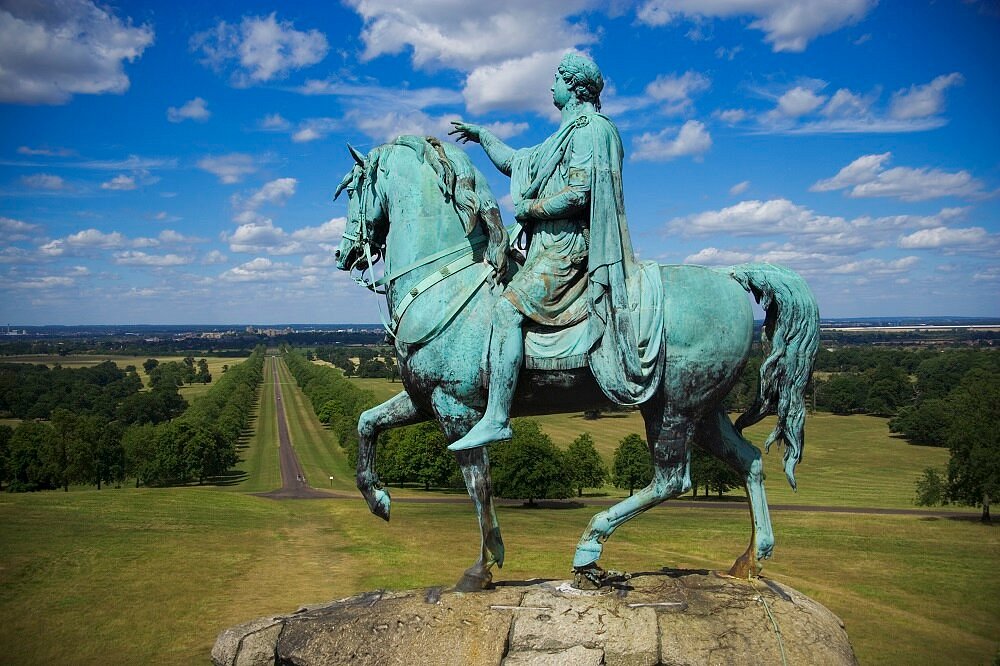
The Long Walk is a straight, tree-lined avenue extending approximately 2.65 miles from Windsor Castle southwards into the park. Flanked by rows of elm and chestnut trees, it offers one of the most recognisable views in England, with Windsor Castle rising majestically at its northern end. The Long Walk was originally laid out by Charles II in the late 17th century, inspired by the grand avenues of European royal parks.
Today, the Long Walk serves multiple purposes. It is a ceremonial route, often used during royal events and processions, but it is also a popular walking and jogging path for visitors. The gentle incline, open views, and sense of scale give walkers a strong impression of the power and symbolism of the monarchy, while remaining entirely accessible and informal.
Landscapes and Natural Features
Windsor Great Park is divided into several distinct areas, each with its own character. These include the Deer Park, the Home Park, and the southern heathland areas such as Virginia Water and the Valley Gardens.
The Deer Park is home to herds of red and fallow deer, which roam freely much as they have for centuries. Seeing deer grazing against the backdrop of ancient trees is one of the most memorable experiences the park offers and provides a strong sense of continuity with its medieval past. Visitors are encouraged to admire the animals from a distance, respecting both their welfare and the historic nature of the park.
Virginia Water is perhaps the most picturesque part of Windsor Great Park. This large artificial lake was created in the mid-18th century and is surrounded by carefully designed landscapes, classical follies, waterfalls, and ornamental plantings. The lake reflects the fashion of the time for romantic, idealised nature, blending natural forms with subtle human intervention. Features such as the Cascade, the Roman Ruins (relocated architectural fragments arranged as a folly), and the Totem Pole gifted by Canada add layers of cultural and historical interest.
The Valley Gardens, adjacent to Virginia Water, are known for their impressive collection of flowering plants, including azaleas and rhododendrons. In spring and early summer, these gardens are particularly spectacular, drawing visitors from across the country. The careful planting and winding paths create an intimate contrast to the vast open spaces found elsewhere in the park.
Trees and Ecology
One of Windsor Great Park’s greatest treasures is its collection of ancient and veteran trees. Many oak trees within the park are several hundred years old, some dating back to the medieval period or earlier. These trees are of immense ecological importance, supporting fungi, insects, birds, and mammals that depend on old woodland habitats.
The park plays a vital role in conservation, balancing public access with environmental protection. Deadwood is often left in place to support biodiversity, and grazing by deer helps maintain grassland ecosystems. The Crown Estate works closely with conservation bodies to ensure that the park remains both historically authentic and ecologically resilient.
Architecture and Monuments
Scattered throughout Windsor Great Park are a variety of architectural features that reflect different periods of its history. Cumberland Lodge, for example, is a former royal residence now used as an educational centre promoting dialogue and leadership. Its presence highlights how the park continues to adapt to modern needs while retaining its historic character.
The Copper Horse statue of King George III, located at the southern end of the Long Walk, is another prominent landmark. Cast in the early 19th century, the statue depicts the king on horseback and serves as a visual anchor for the Long Walk, reinforcing the connection between monarch, land, and authority.
Other structures, such as Queen Anne’s Gate, small lodges, and garden temples, add further depth and interest. These buildings are not merely decorative; they tell stories about changing tastes, political priorities, and the evolving relationship between monarchy and landscape.
Public Access and Recreation
Despite its royal ownership, Windsor Great Park is very much a public space. Millions of people visit each year to walk, cycle, picnic, and enjoy nature. The park offers a sense of escape and tranquillity, even though it lies close to major urban centres such as London, Slough, and Reading.
Designated paths and trails allow visitors to explore the park responsibly, while open areas provide space for informal recreation. Events such as charity runs and outdoor exhibitions are occasionally held, reinforcing the park’s role as a shared national asset rather than a closed royal preserve.
There are also cafés, visitor centres, and car parks strategically placed to support tourism without overwhelming the landscape. This balance between accessibility and preservation is one of the park’s greatest achievements.
Cultural and Symbolic Importance
Windsor Great Park is more than just a beautiful green space; it is a symbol of continuity and national identity. Its long association with the monarchy reflects the enduring role of the Crown in British history, while its openness to the public embodies modern democratic values.
The park has witnessed countless historical moments, from royal hunts and military musters to modern ceremonial events. At the same time, it provides a deeply personal experience for visitors, who come to reflect, exercise, or simply enjoy the changing seasons.
Conclusion
Windsor Great Park stands as a living landscape shaped by history, power, and nature. Its ancient trees, sweeping vistas, and carefully designed gardens tell a story that spans nearly a millennium, yet it remains relevant and vibrant today. As both a royal estate and a public park, it occupies a unique place in England’s cultural and environmental heritage.
Whether viewed as a historical monument, a conservation success, or a place of personal enjoyment, Windsor Great Park continues to inspire awe and appreciation. It reminds us that landscapes, like institutions, can evolve over time while still preserving their essential character — a testament to thoughtful stewardship and enduring significance.
